Photos Courtesy of Company
Story by Editor-in-Chief Carolina Ogliaro
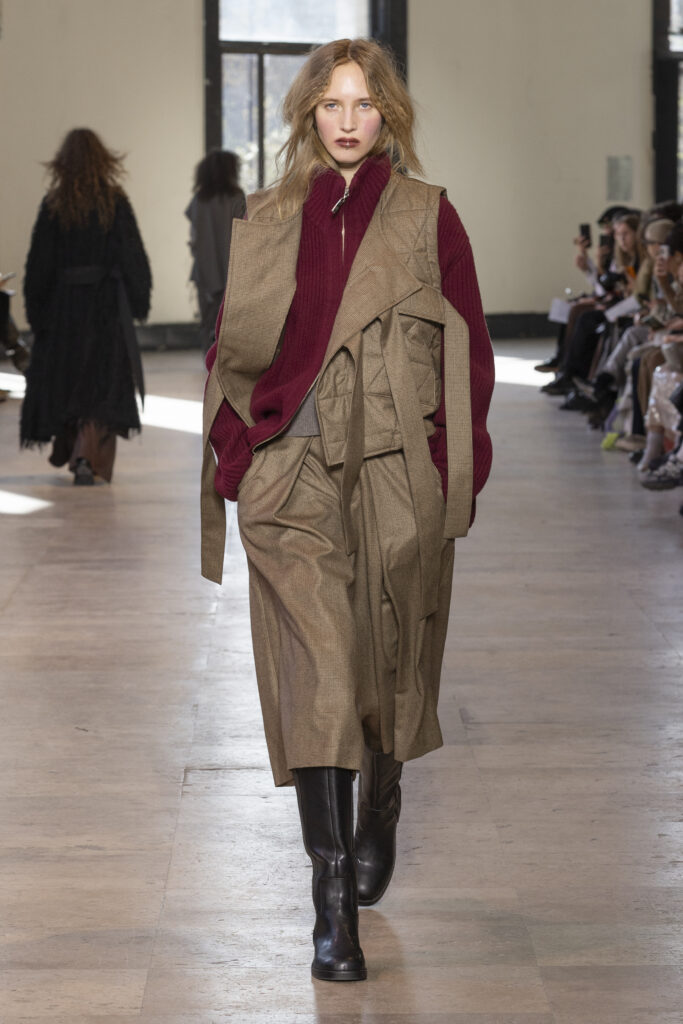
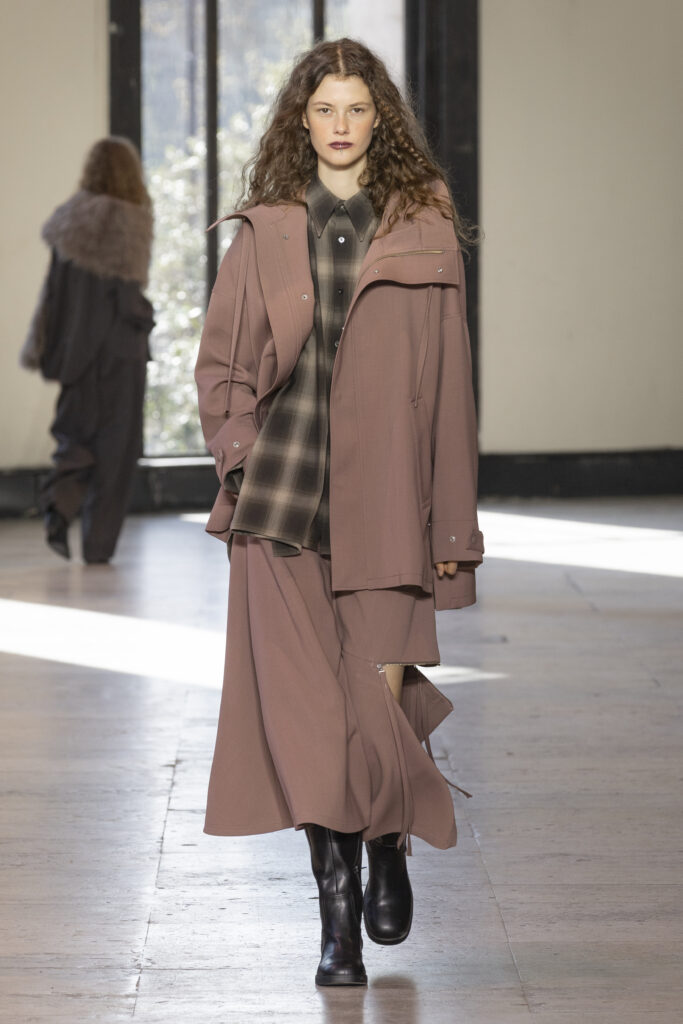
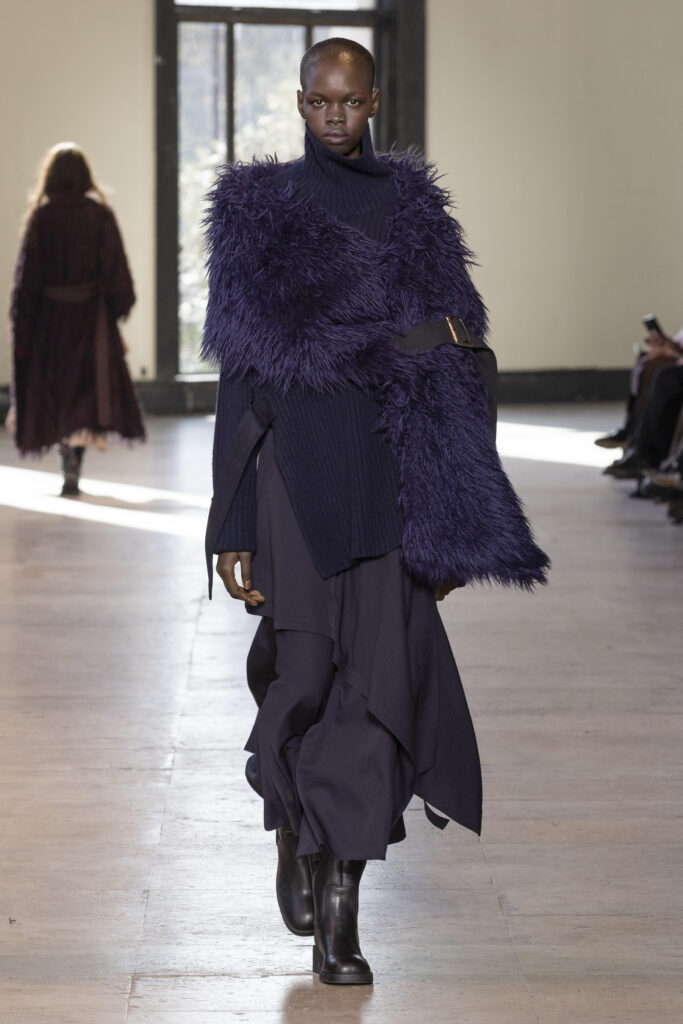
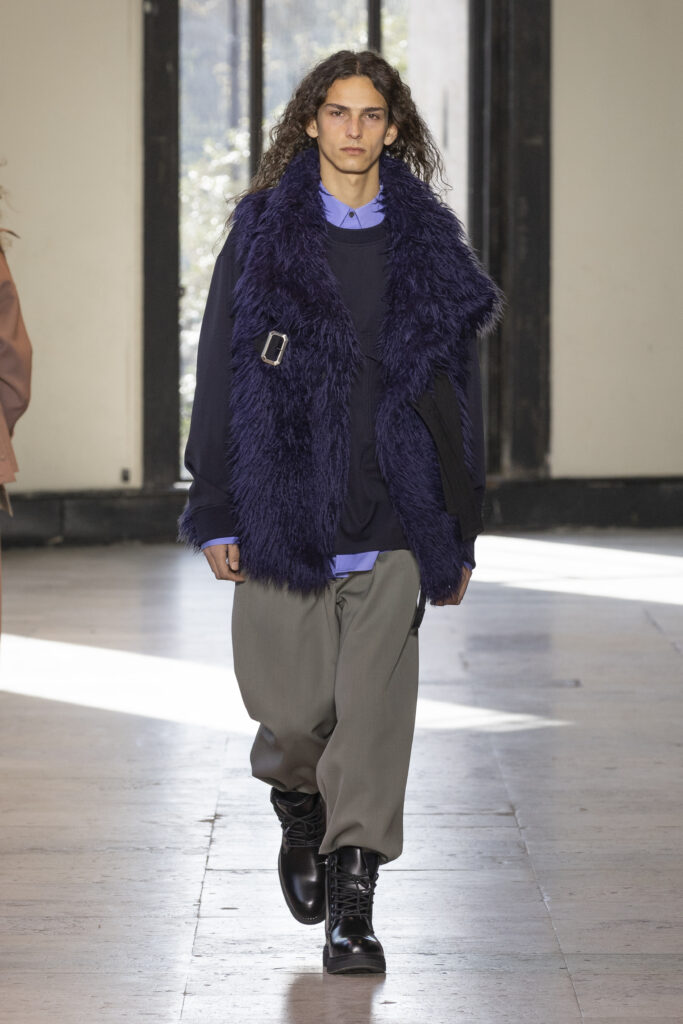
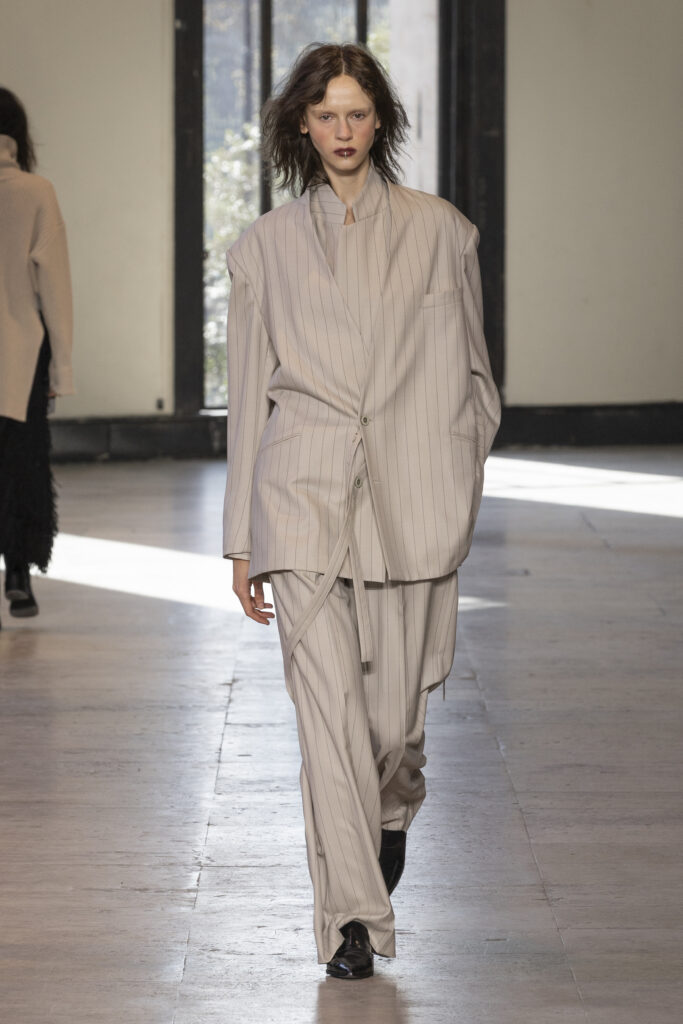
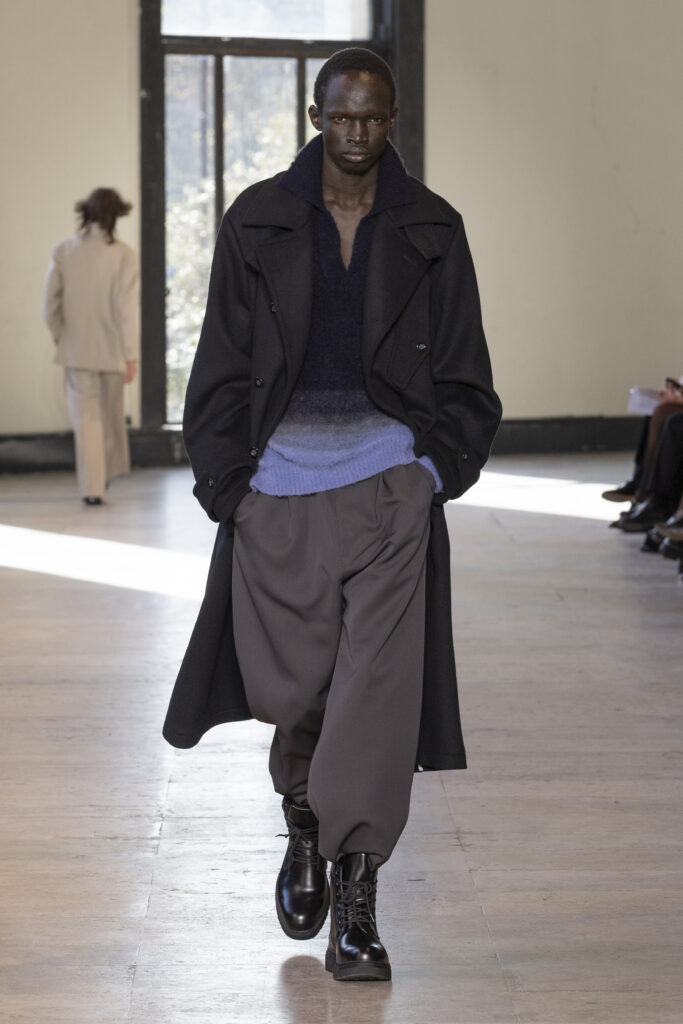
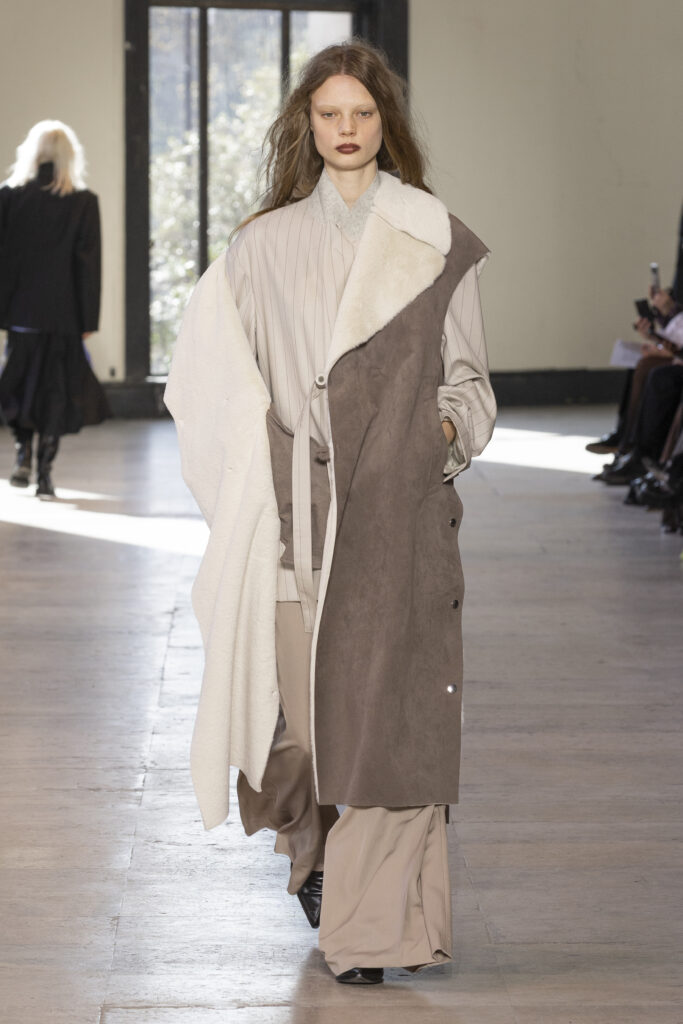
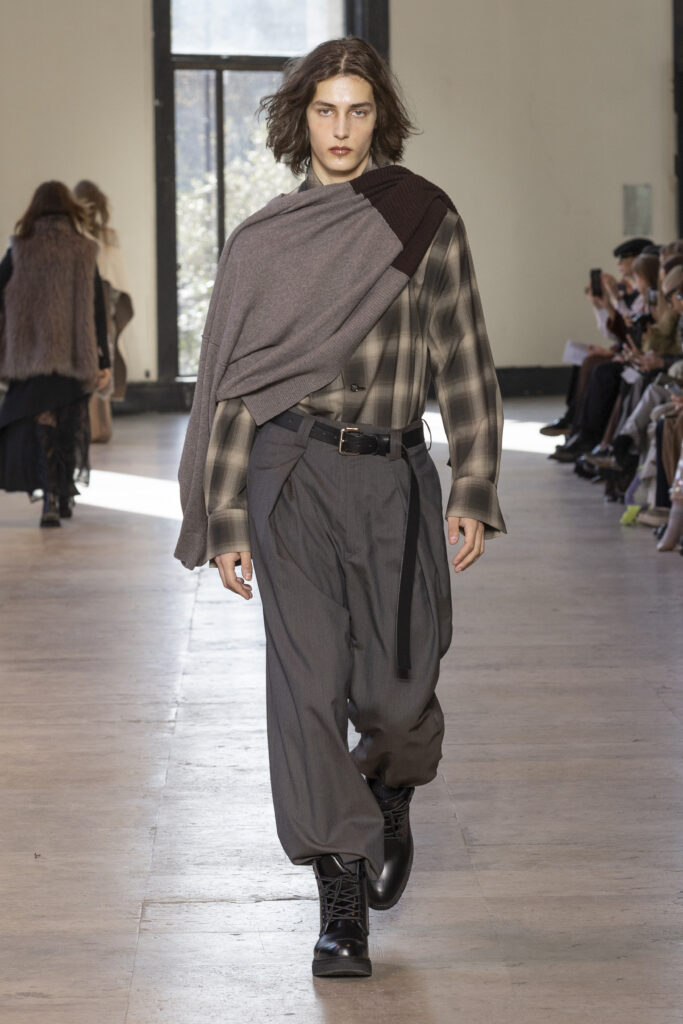
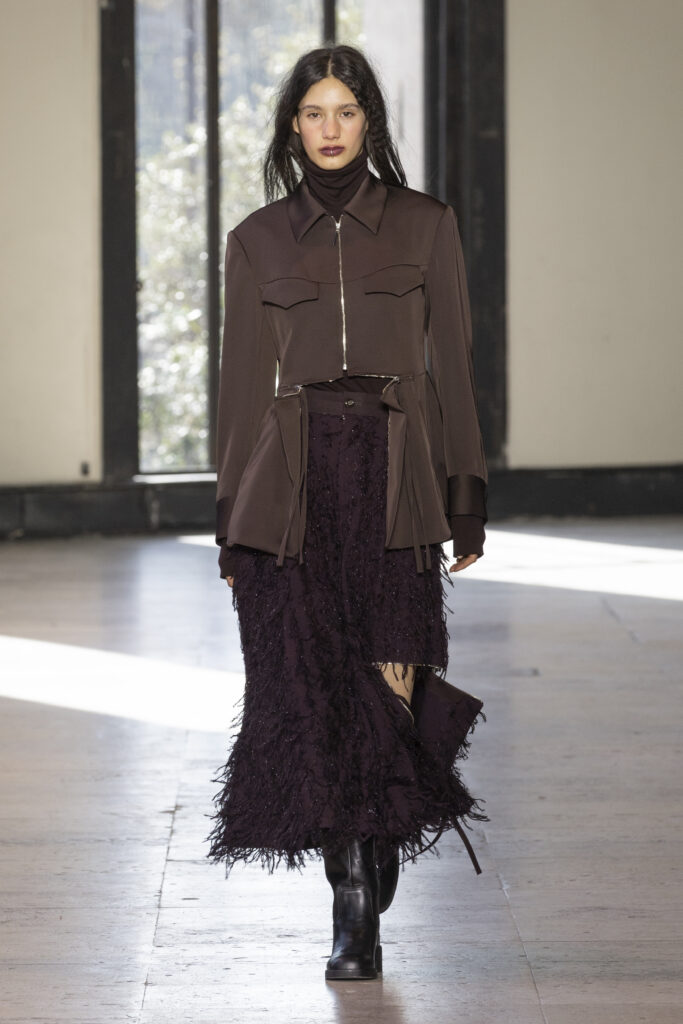
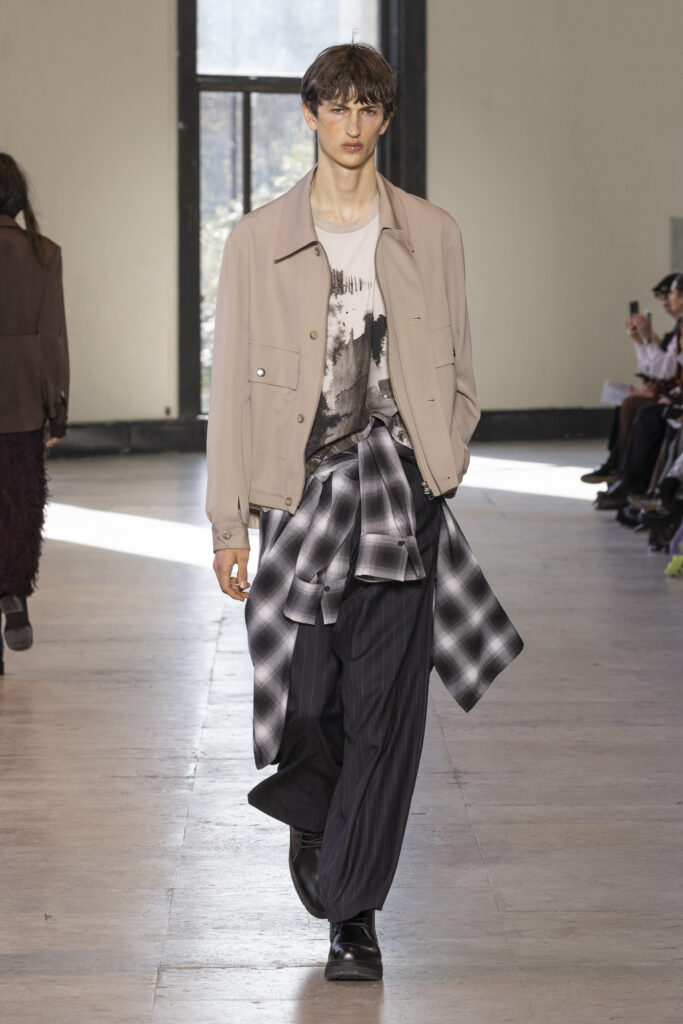
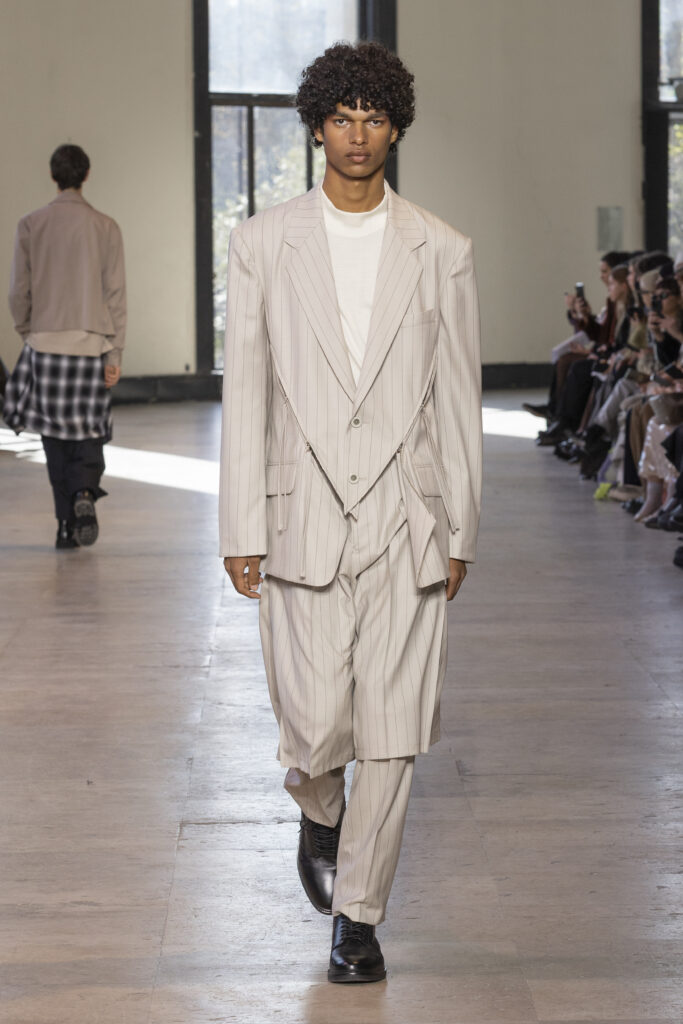
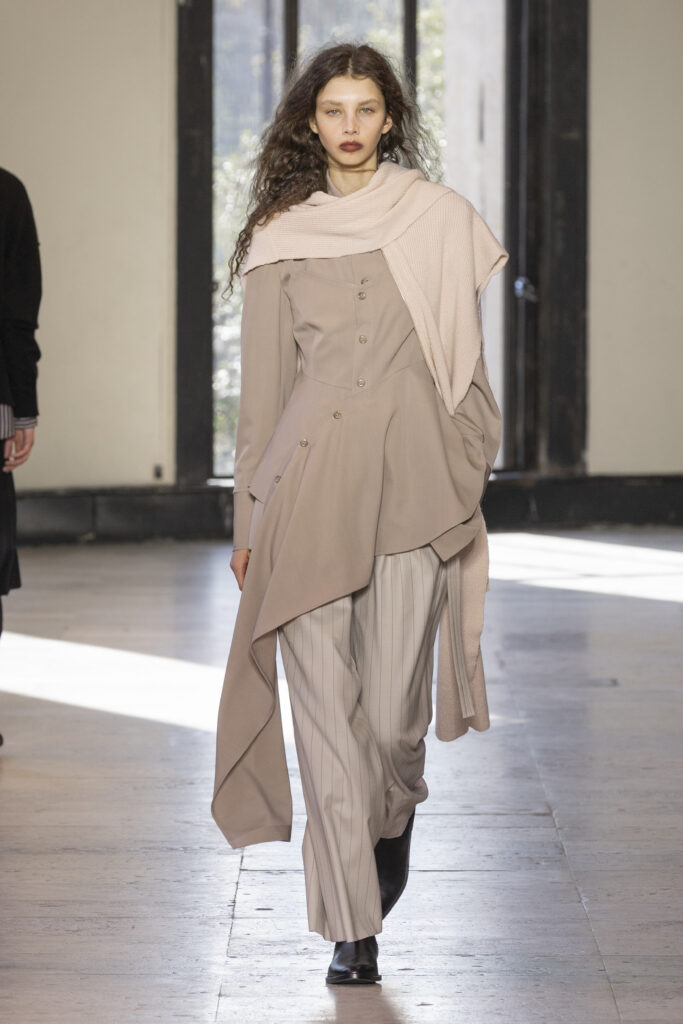
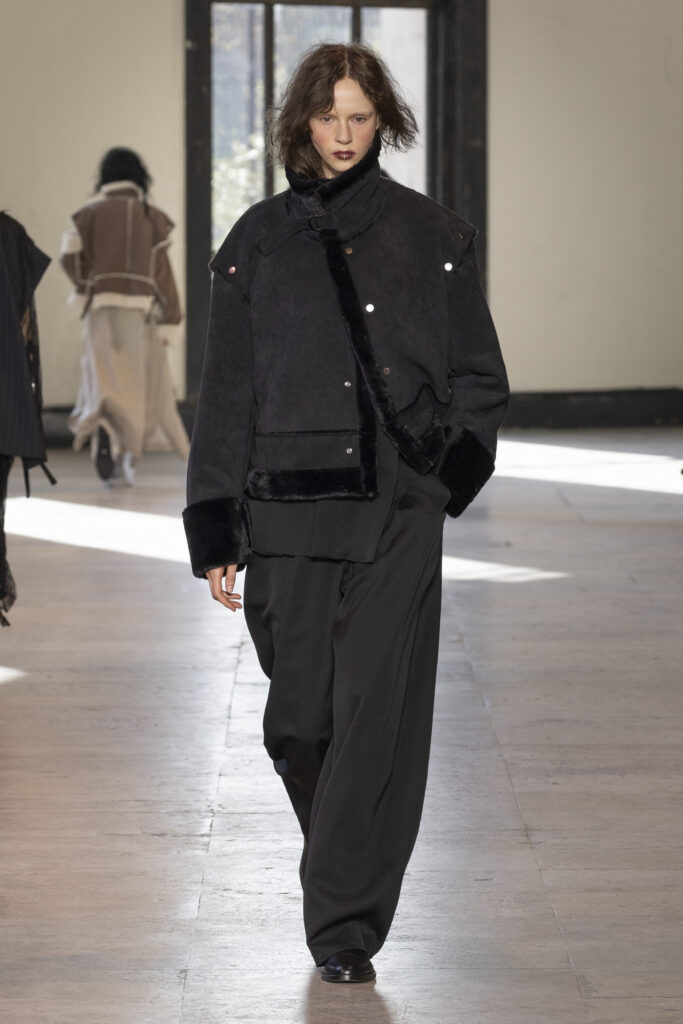
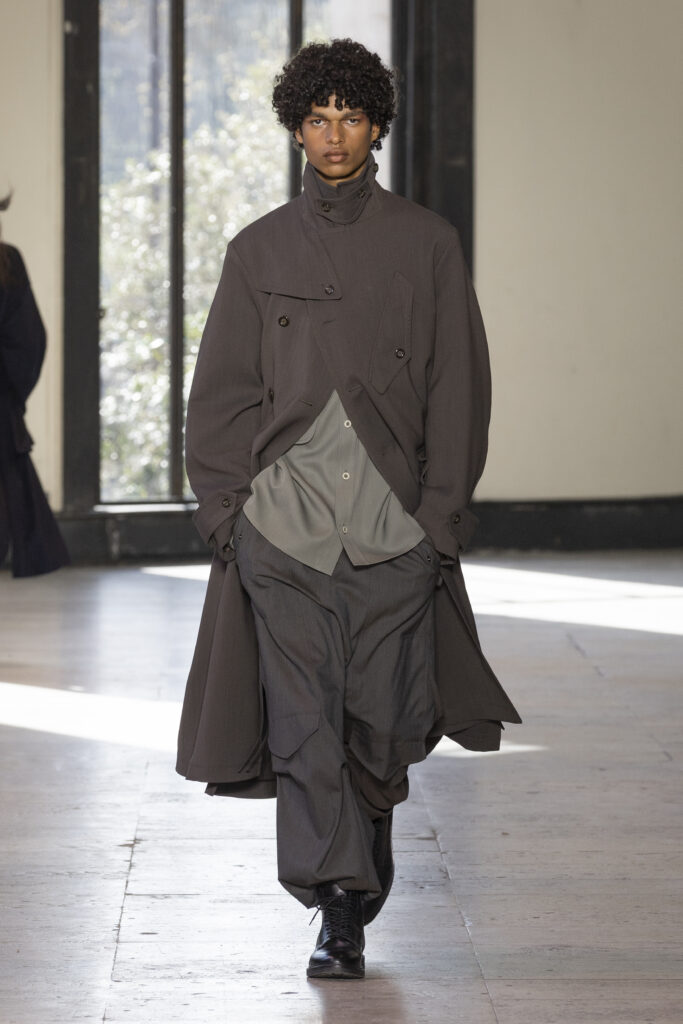
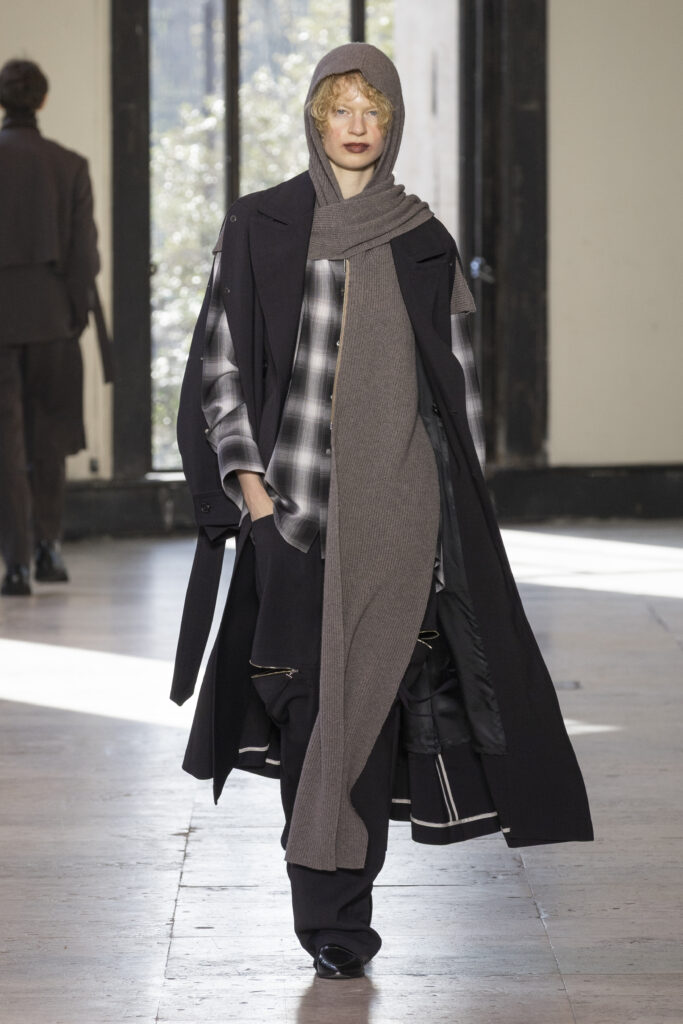
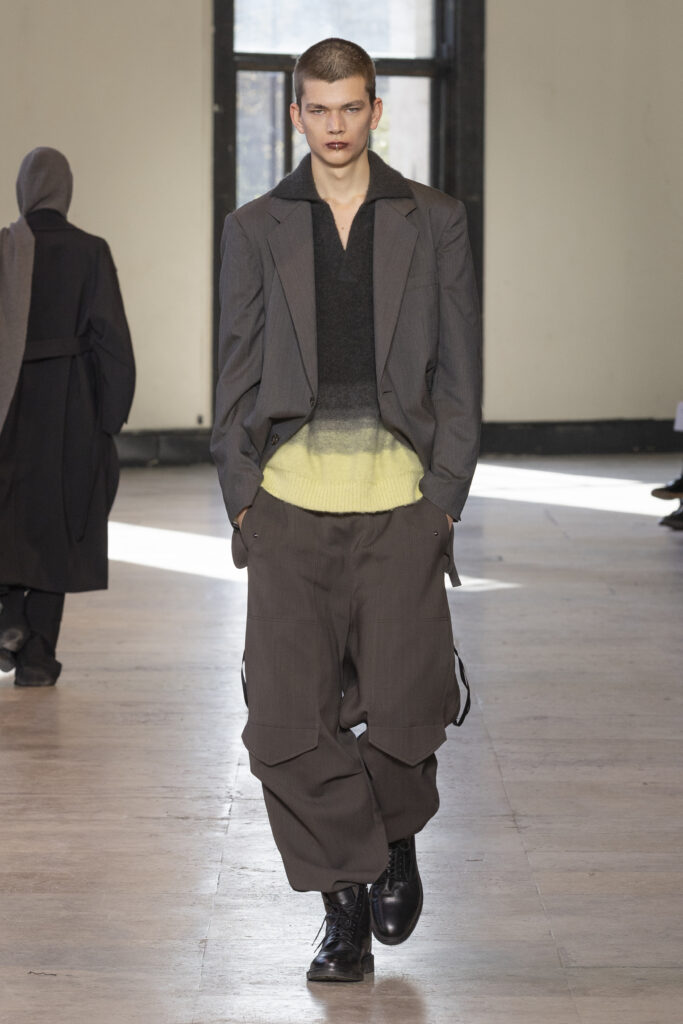
In the lexicon of modern fashion, the word “antithesis” often signals a rupture, a clean break from the past. But for Mitsuru Nishizaki, the former Yohji Yamamoto pattern maker behind the Japanese label UJOH, it is something far more nuanced. It is a questioning. Presented on the final day of Paris Fashion Week, UJOH’s Fall/Winter 2026-2027 collection, titled “Antithesis,” was a stripping bare of the brand’s foundations. If the previous seasons were about the fluidity of the line, this one was about the tension of the cut.
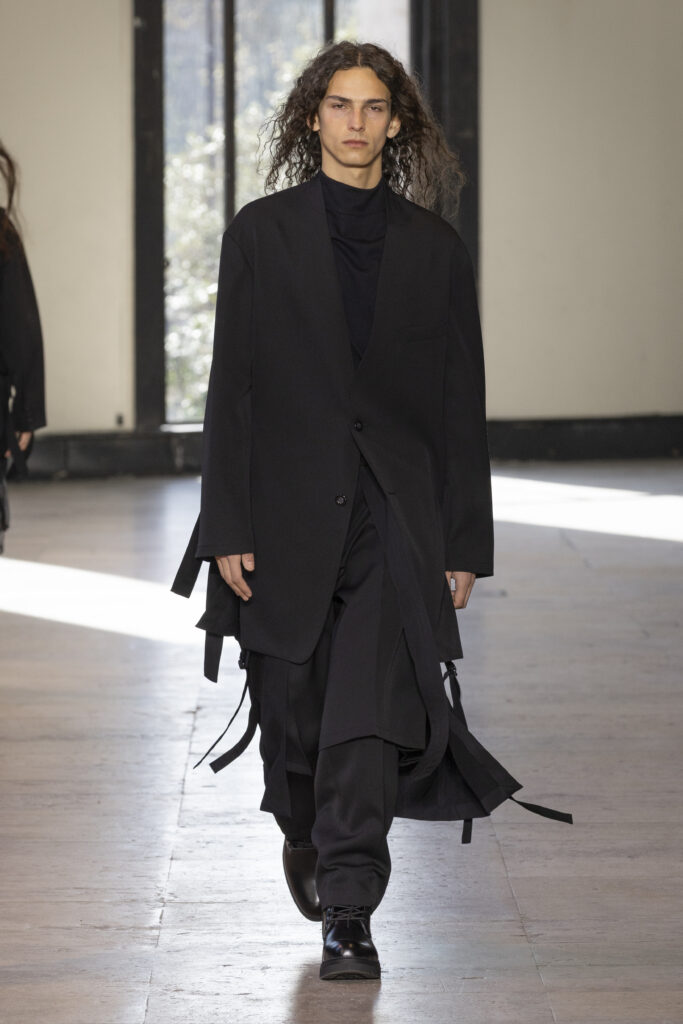
Mr. Nishizaki, who spent seven years honing his awareness of the space between body and cloth at Yamamoto, is a designer who understands that true power lies in the details. For Fall Winter 2026 2027, he has infused his signature minimalist tailoring with a jolt of 1990s grunge energy, a “rock spirit” that feels less like a state of mind.
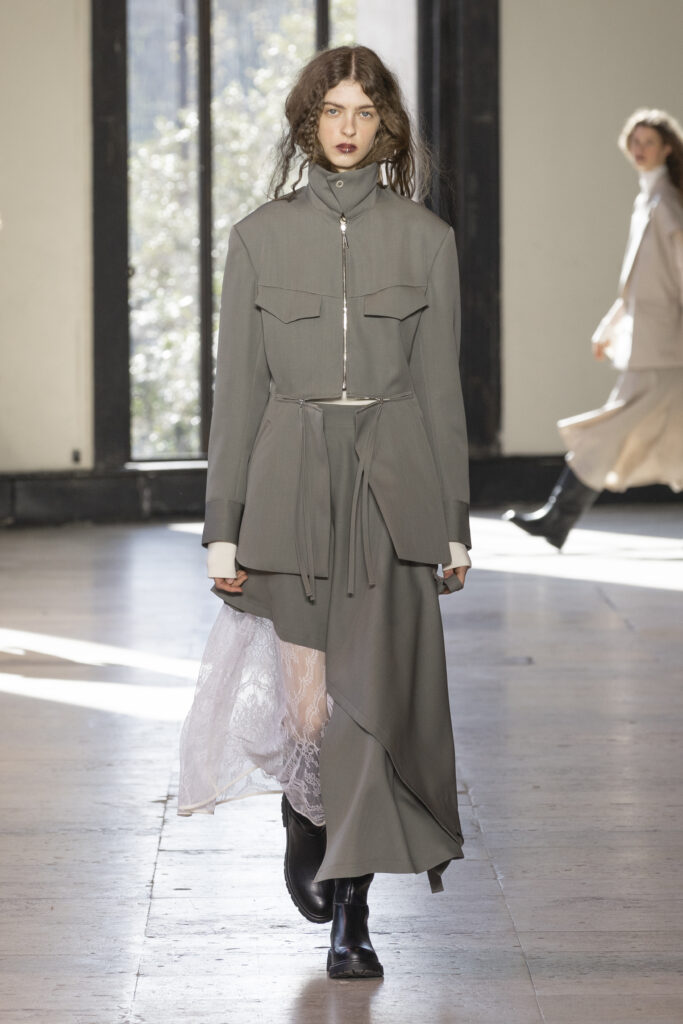
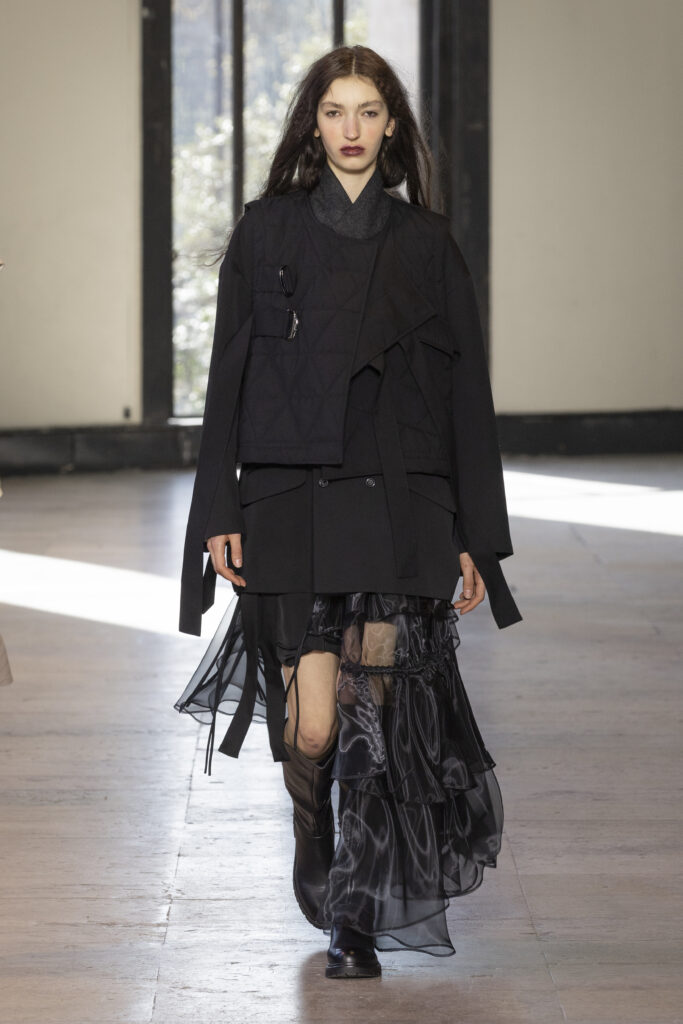
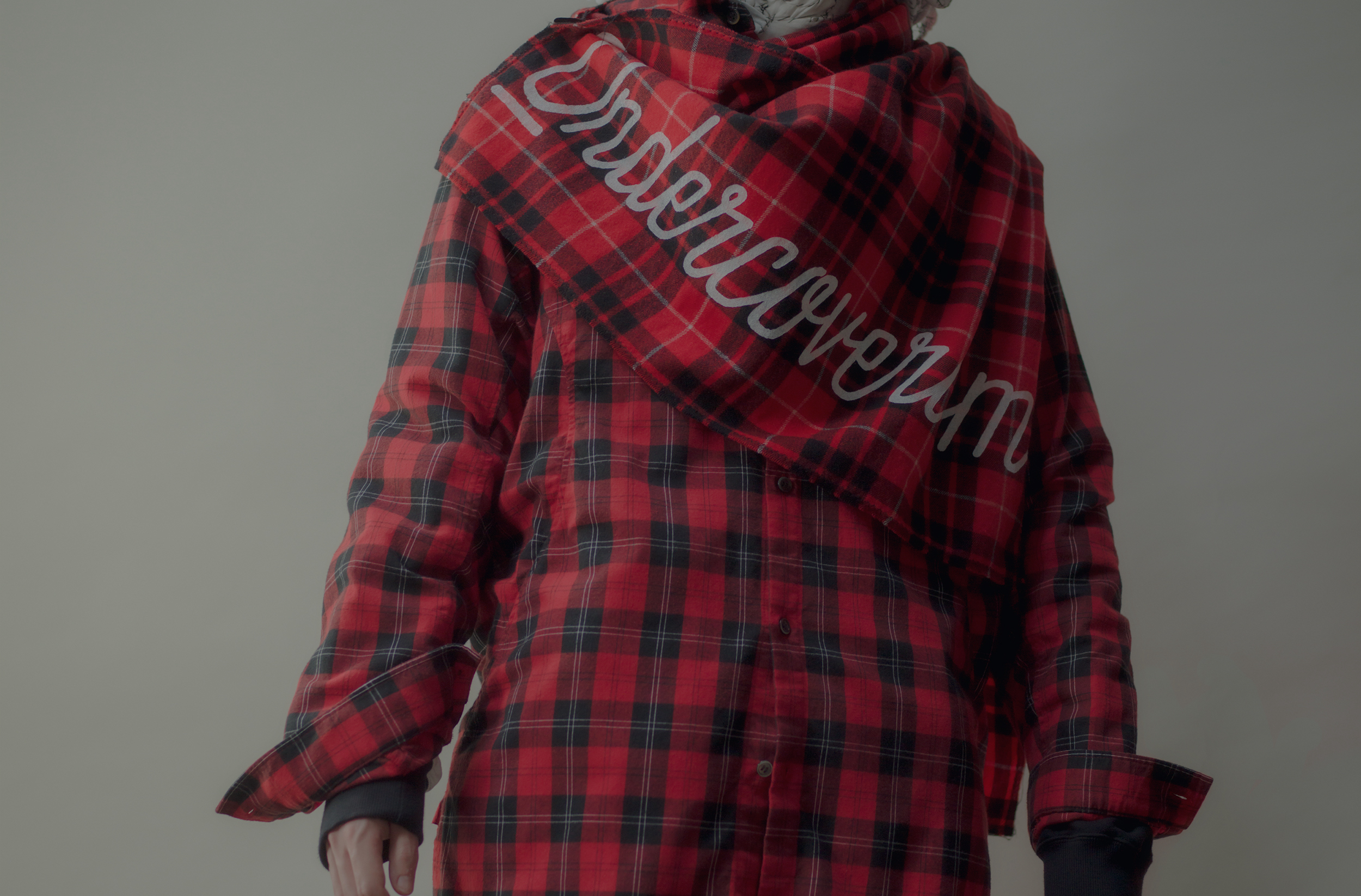
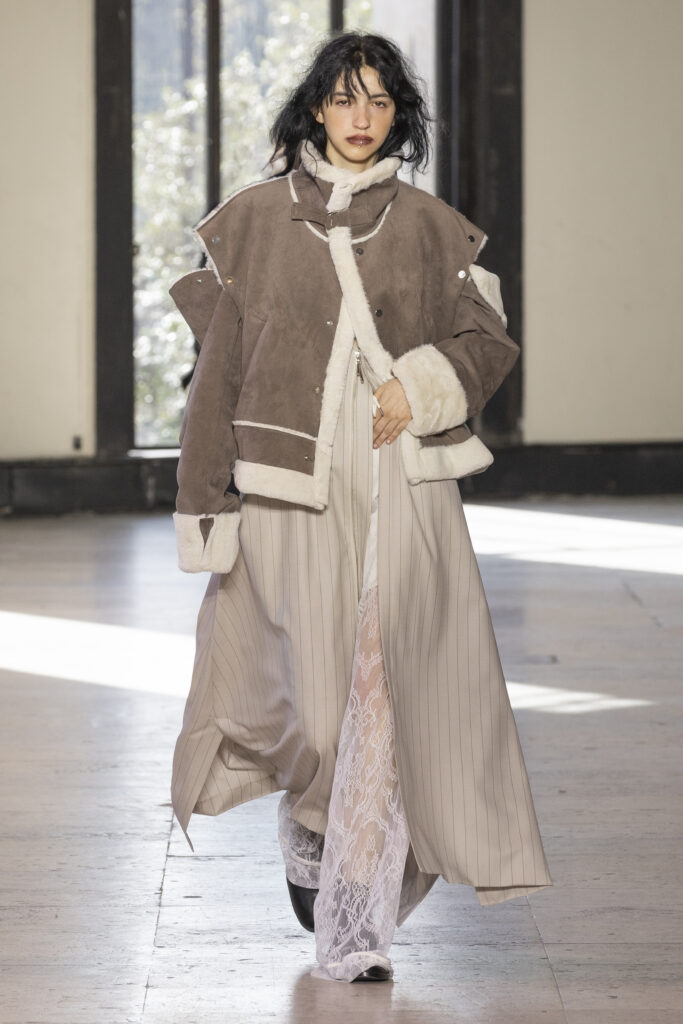
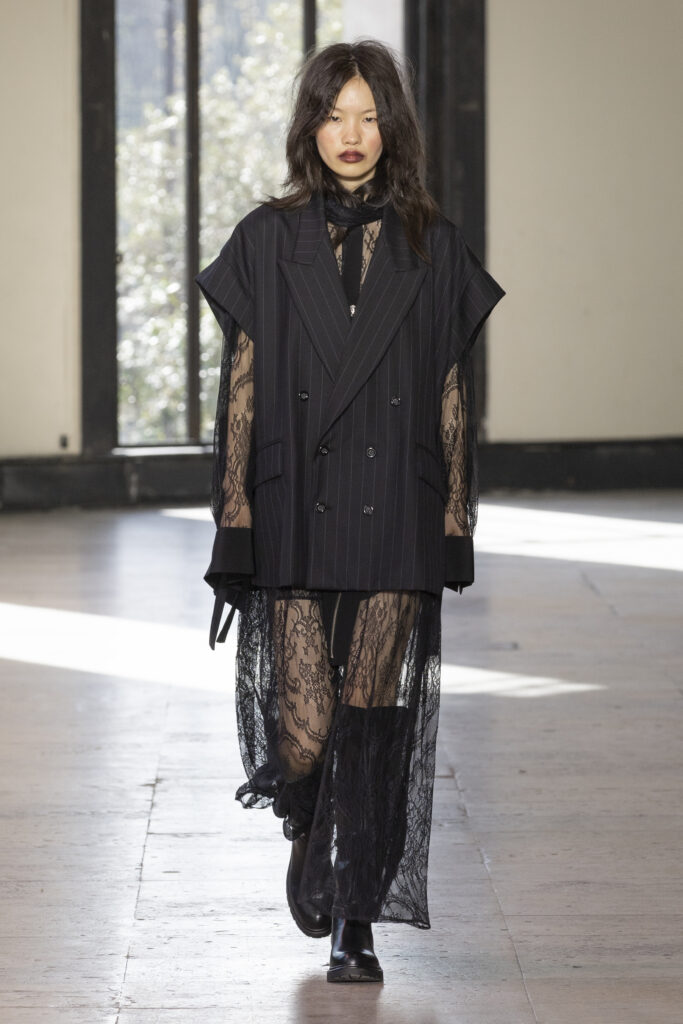
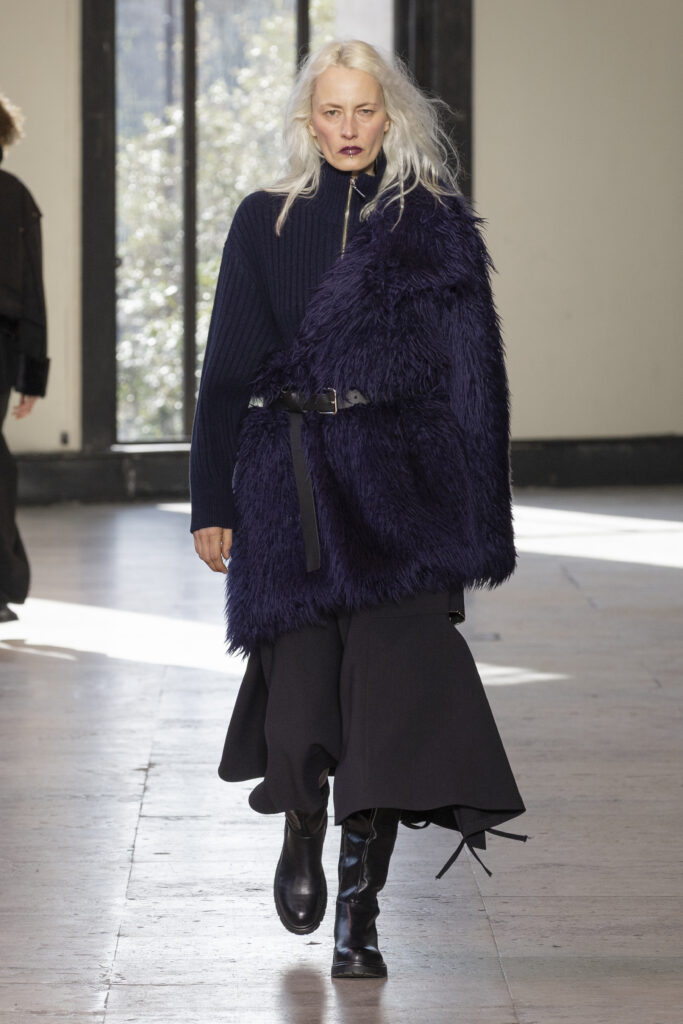
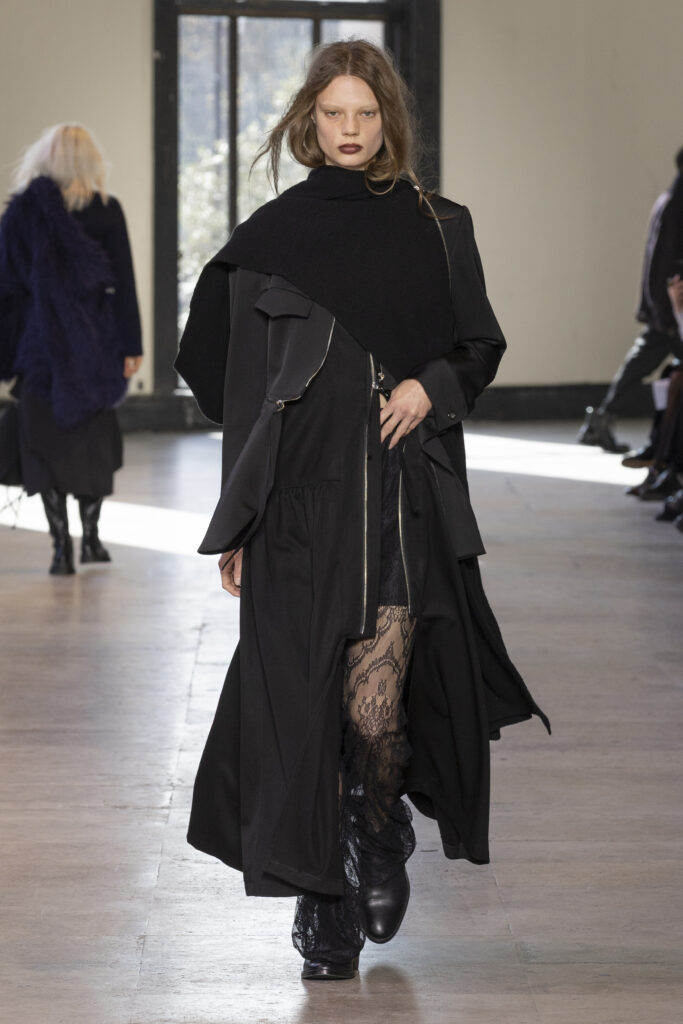
The collection was a study in what Mr. Nishizaki calls the “elegance of disobedience.” Consider the way zips sliced through disciplined lines or the unexpected emergence of lace in a rugged, aviator-inspired silhouette. These weren’t just stylistic flourishes but acts of sartorial subversion.
The UJOH Blueprint and The FW2627 Translation
The Technique : Slow-weaving on 1960s Schöherr looms; 5x slower than modern production.
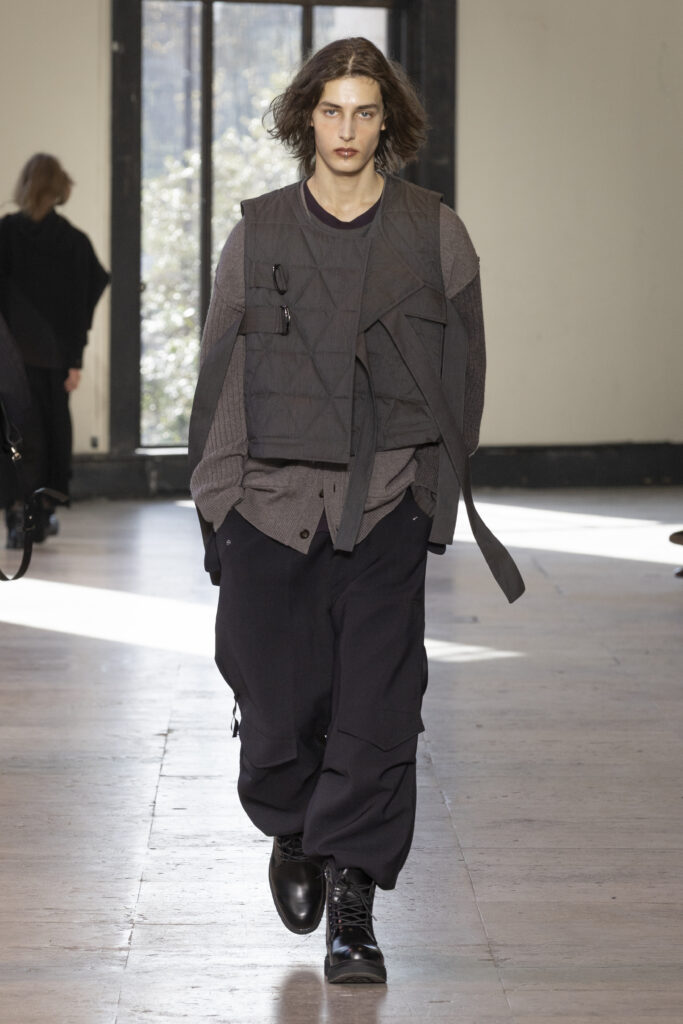
The Silhouette : Sharpened lines meeting loosened volumes; a stripping bare.
The Palette : Dark, earthy tones: black, chocolate, and rosewood, punctuated by fern green.
The Collaboration : Stage costumes for Japanese pop duo DREAMS COME TRUE.
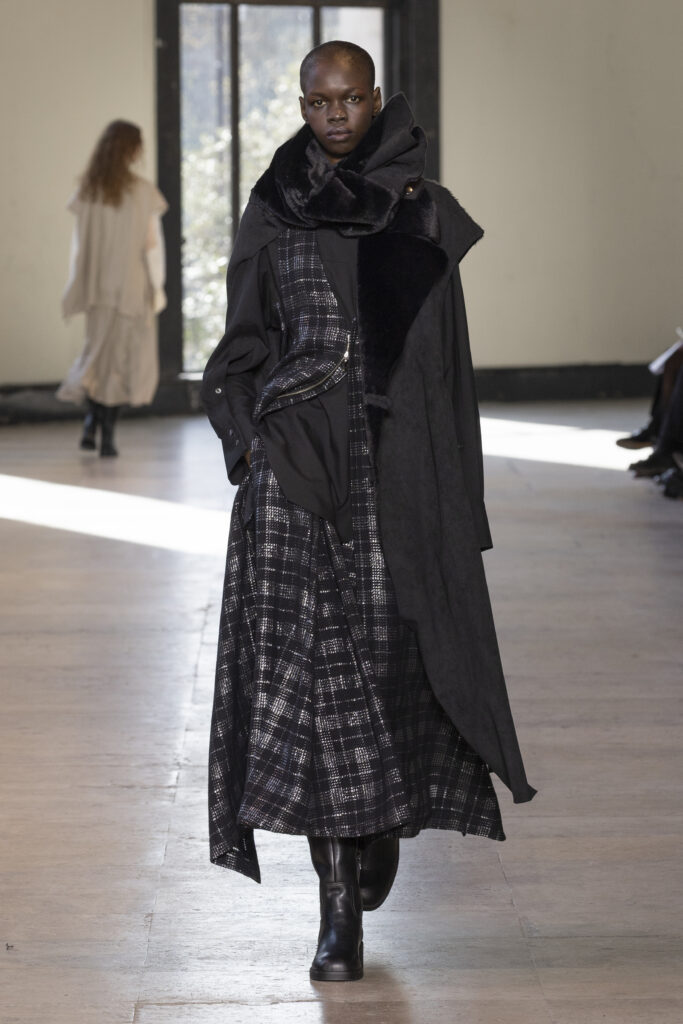
At the heart of the collection was a commitment to material that borders on the obsessive. Select fabrics were woven in Japan on a 1960s Schöherr machine, a process five times slower than modern looms. Where haste and overconsumption are seen everywhere, this pace is itself a form of rebellion. The resulting materials, innovative nylons and sheer textures, had a depth and “revived” quality that simply cannot be replicated by high-speed machinery. The palette was appropriately somber, dominated by black, chocolate, and rosewood, but it was the sharkskin shades of white and beige and the flashes of dark fig that gave the collection its modern edge.
Perhaps the most telling moment was the collaboration with the iconic Japanese musical duo DREAMS COME TRUE. Mr. Nishizaki designed the stage costumes for their upcoming tour, and the craftsmanship from that partnership bled into the main collection. Fashion is not just a story to be followed on a runway but a wardrobe to be explored in the real world.
Indeed, the runway staging itself was disrupted. There was no traditional procession; pieces appeared in a free order, inviting the viewer to engage with the clothes on their own terms. UJOH is making a compelling case for “knowing exactly what you’re doing, and choosing to do the opposite.” It is a sophisticated bet on the enduring value of the artisanal and the intentional.
For the modern woman and man, as the brand continues to expand its men’s line, UJOH offers more than just a well-cut suit. It offers a way to navigate the world with a sense of light, disciplined disorder.