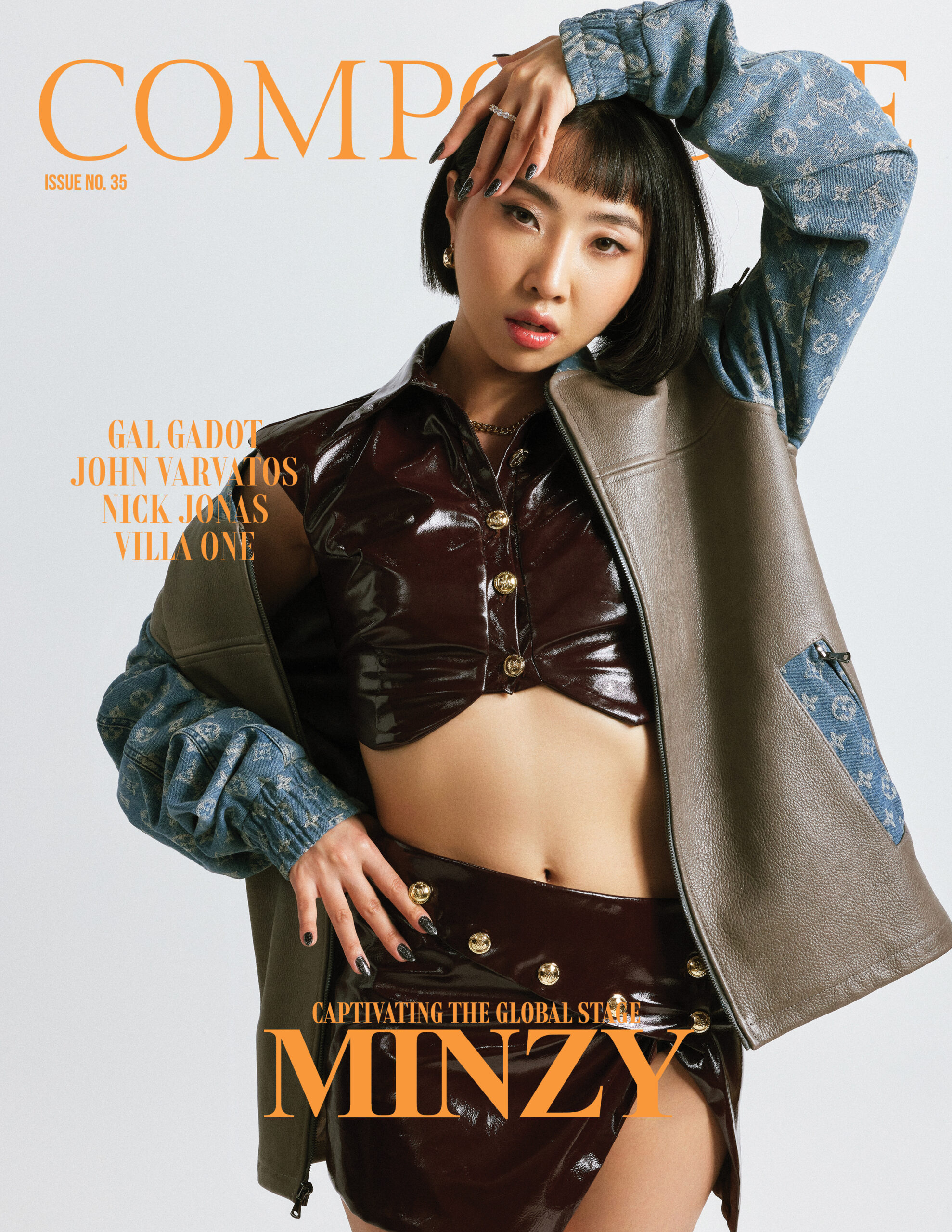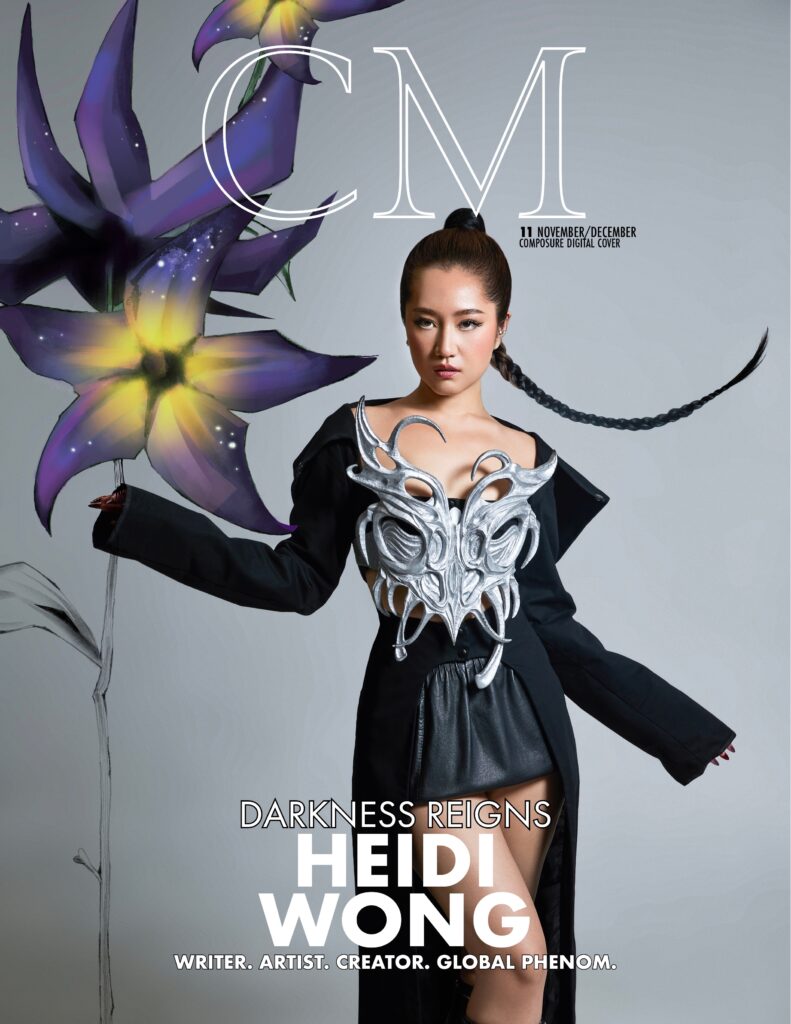
Cover Look: Jacket by Tania Orellana, Top by Diana Couture by Diana M Putri, Skirt Stylist Owned, Shoes by Dsevht
Photographer: Reinhardt Kenneth for ArtCoded
Digital Illustration: E.L
Fashion Stylist: Anica Buckson
Beauty Coordinator: Tianna D
Make Up Artist: Maddie Chamberland
Hair Stylist: C Stella
Manicurist: Rholonie
Lighting Director: Kabir Animashaun
Digitech: Oliver Barile
Videography: Danny Lairon
Photographer’s Assistant: Jazz + Sibila Galanis
Fashion Assistant: Mary G
Production ArtCoded
Heidi Wong on Slowing Down in a Culture That Won’t
There are conversations that linger long after they’ve ended, those that don’t just convey information but shift the way we perceive the world around us. They are born from curiosity, a deep observation of culture, and a willingness to look beneath the surface. In fashion, design, and creative expression, such conversations are rare: they demand voices that can navigate both nuance and scale, detail and idea.
This is precisely the territory we enter today, speaking with someone whose work embodies this rare balance. A designer whose creations feel inevitable yet full of surprises, whose attention to detail is matched only by the thoughtfulness of her vision. She operates in a space where craft becomes storytelling, where material choices carry cultural resonance, and where every gesture, be it a line, a texture, or a form, is deliberate, considered, and deeply human.
These creatives inhabit space, shaping how we perceive the world long after we’ve looked away. Heidi Wong is one of those rare voices. At once poet, visual artist, and digital storyteller, she navigates the terrain between memory and imagination, horror and beauty, intimacy and spectacle. Her creations linger in the mind because they softly insist upon it, revealing layers only to those willing to look closely.
Raised across Beijing, Hong Kong, and New York, Heidi’s sensibilities are shaped by a confluence of cultures, histories, and narratives. Her poetry, nominated for the Pushcart and Dylan Thomas Prizes, explores identity, femininity, and the unseen currents of emotion, while her digital work reaches millions, translating cinematic and literary sensibilities into content that feels immediate, visceral, and profoundly human. In fashion and editorial collaborations, she brings the same precision: turning mood, material, and story into a singular vision that is both hauntingly elegant and unmistakably her own.
In this conversation, we trace the impulses behind Heidi’s creativity, the rituals that sustain her, the cultural threads she weaves through her work, and the ways she transforms the ordinary into something charged, unexpected, and luminous. More than design, more than storytelling, her work is a study in presence since true impact lies in the subtle, persistent power of intention.
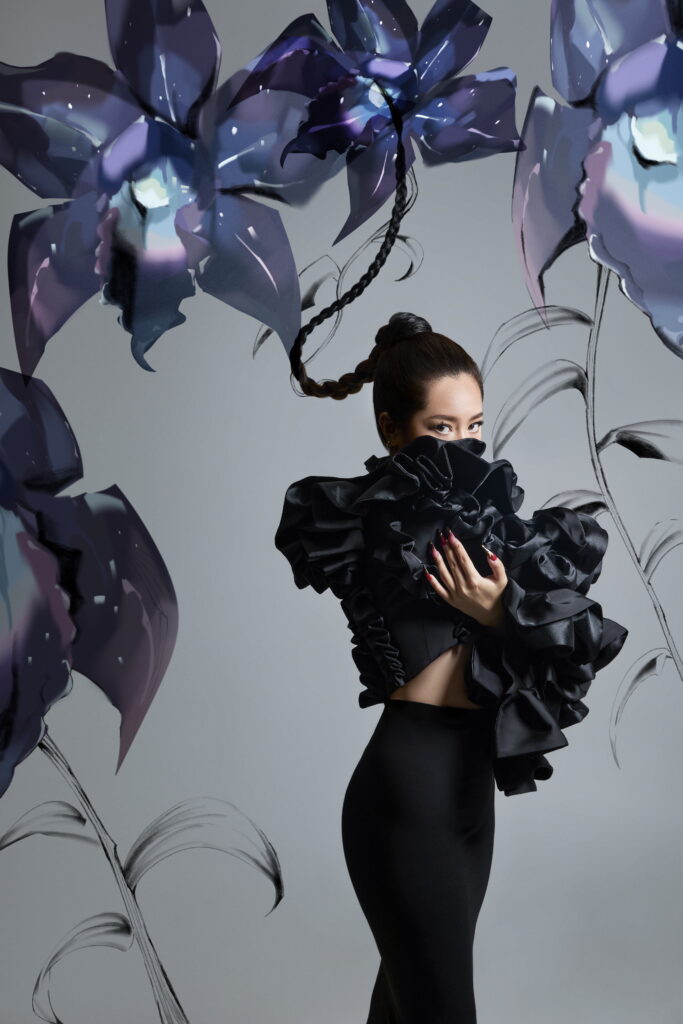
Top by 2madison Avenue, Skirt by KAUMERO
You trained in classical art starting as a child in Beijing. How does that visual arts background influence the way you tell horror stories today?
Not only did my training in classical arts inform my discipline in all aspects of life, but it also allowed me to develop my creative intuition at a young age. I learned so much from my peers, instructors, and professors about how physically demanding the arts are, and how to elevate the information I studied into my own style.
Your TikToks weave together illustration, narration, and music. How do you decide which sensory mode (voice, image, sound) leads a particular story?
For me, the act of creation in all mediums is not led by head nor heart. Everything is led by my intuition. Some stories lend themselves to more narrative styles, such as my “imagine” videos, and some feel more like a skit. Usually, my skits are snapshots of a movie, and my spoken videos are more of the overarching plot, so it also depends on what aspect of the movie resonates with me the most. Also, sometimes I just can’t be on camera and want to write scary stories and scripts in the dark in my apartment in silence, so there’s also that! Some stories also aren’t for social media at all, so I prefer to let those breathe, let it have the time it needs, and write a full-length feature script or novel. The art makes the decision. I adapt to what the art desires.
Many creators in the horror genre focus on shock, but your work often emphasizes emotional depth. What does horror mean to you on a more psychological or poetic level?
Mike Flanagan’s The Haunting of Hill House changed my life. I studied creative writing (BA and later MFA). But The Haunting of Hill House was the first time it clicked for me that poetry, my heart, and horror, my lifelong calling and soul passion, could seamlessly become one. After that, I wanted to dedicate the next chapter of my career as a creative towards building my own universe of beautifully horrific and poetic stories.
How has your academic journey, from a BA in Creative Writing and Fine Arts to an MFA in poetry, informed the way you build and structure your content?
I kind of see my skits, specifically, as a moving storybook. I usually film in front of basic or white backgrounds to accentuate the words. I want people to feel like they’re entering into a horror storybook when they’re scrolling through my page. And once my feature film comes out, people will really see how the horror and poetry blend together seamlessly. Once a poet, always a poet. Even when there’s not a whole lot of poems in the mix!
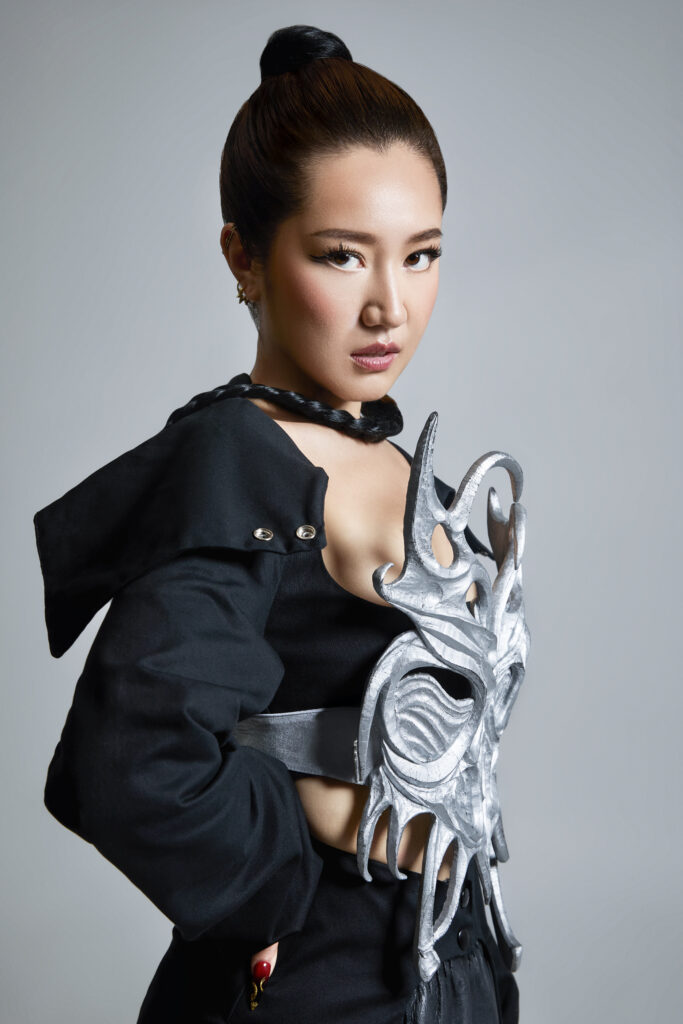
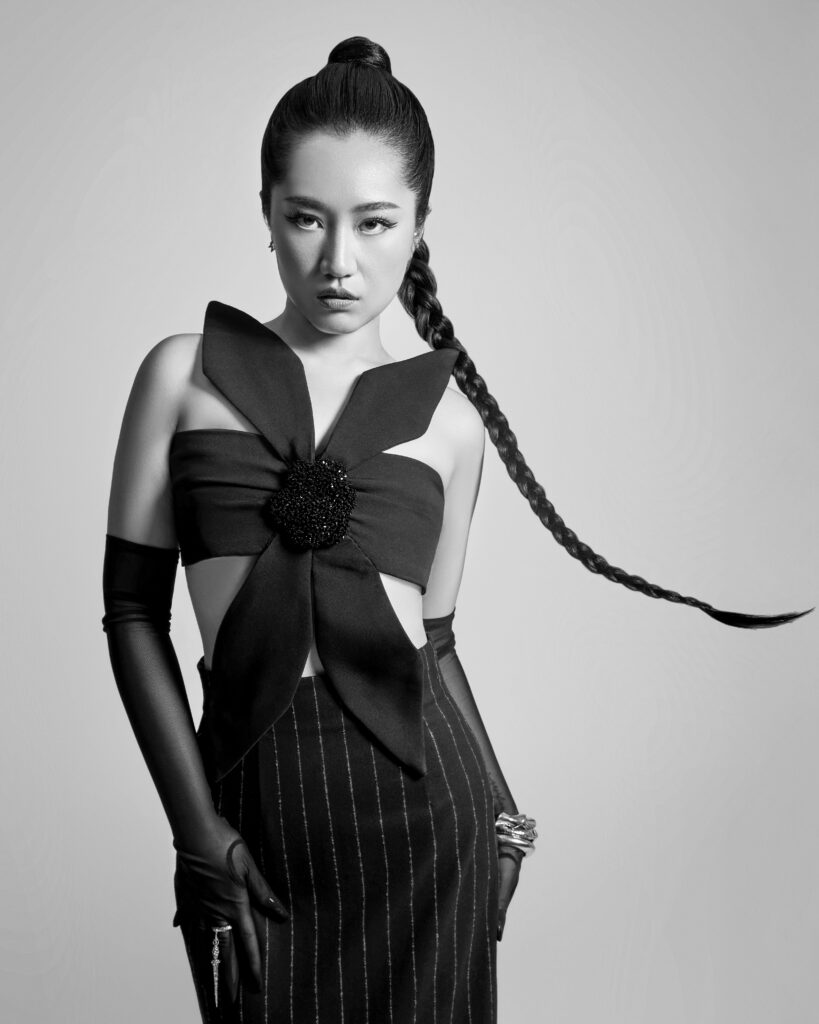
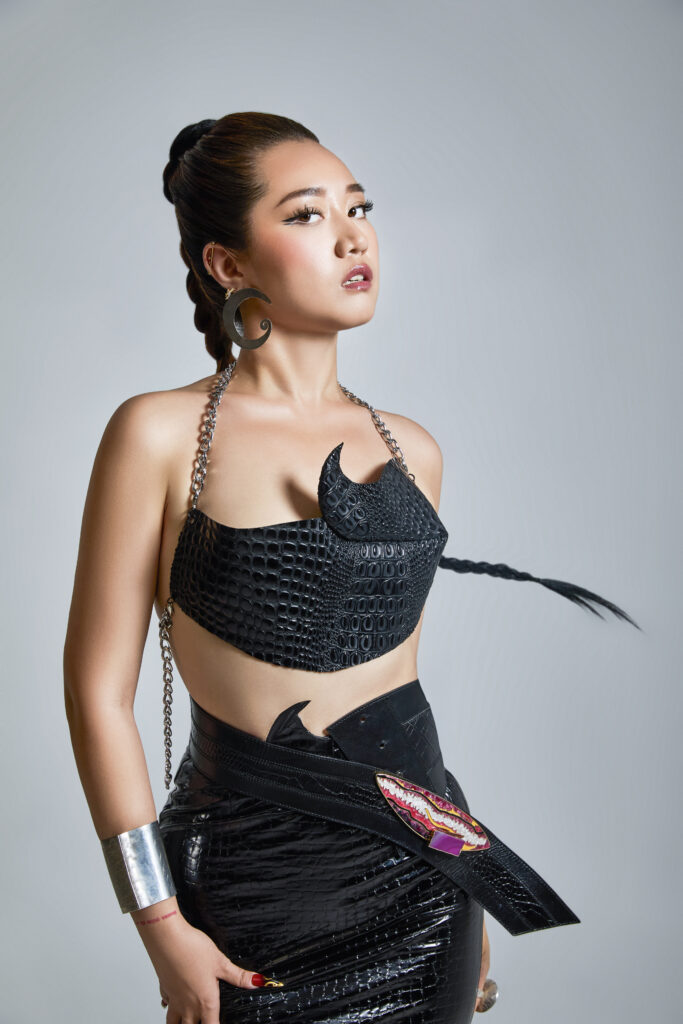
Look three: Top and Skirt by Roff Ael, Jewelry by Exuberant, Belt by The Confessional Showroom
When you first began posting anonymously on TikTok, anxiety held you back from showing your face. What changed, and how has that vulnerability shaped your relationship with your audience?
I wanted to prove to myself, and through that also the world, what I was capable of, more than I wanted to validate my anxiety. Being the “Horror Queen” also means not letting fear stop me from reaching my potential. I have to honor that name by repeatedly facing my fears and turning them into art.
You collaborate with major entertainment brands like Netflix, AMC, and Warner Bros. How do these brand partnerships influence your creative freedom, if at all?
I don’t think anyone or anything influences my creative freedom. Sometimes I don’t even post about viral, recent, or upcoming movies. I just post whatever I happen to be watching in that phase of my life! I love discovering things that fit with my taste. With my own stories, though, I figure since it’s so much inspired and tied to my personal taste and style, people will either resonate or not. So, for lack of better phrasing, it kind of just “is what it is!”
One experience I’ve been lucky enough to have as a creator that really stuck with me was at an advanced screening of Oz Perkins’ Keeper. He went on stage and spoke to us for a bit, then, before he walked off, he said something along the lines of “I hope you like it, but if you don’t, that’s cool too.” I just thought to myself, “That’s the mindset of a true artist.”
I hope people resonate with what my soul authentically wants to create. But if they don’t, this time, maybe next time I’ll get them!

Top by levorchy, Skirt by Qayna, Braclet by LNB Jewelry, Ring by Bybay Atelier, Heels by Roff Ael
As a content creator in horror and as someone from a visible minority background, how do you navigate representation and diversity in your storytelling?
I think the way I respect and love myself, honor my heritage, protect my peace, and take up space in this industry is the most authentic representation I can give anyone who resonates with me. I want to be the best version of myself I can be, and am working every day to be that person. If you see yourself in me, then that is my message to you. Protect your peace. Dedicate yourself to your craft. Enhance every aspect of your true self, and no barriers, figurative or otherwise, will be able to stop your shine.
What directors, writers, or other creators in horror (especially Asian horror cinema) have most influenced you, and how do you channel that inspiration into your own work?
I learned English by reading R.L Stine and Stephen King. I love Clive Barker’s stories and Mike Flanagan’s seamless blend of literary influences and horror filmmaking. James Wan was the first Asian horror director I looked up to. In some ways, he showed me what was possible and that the dream can be realized. I greatly admire Oz Perkins’ uniqueness and boldness in his vision. Takashi Miike scared me to my core. Takashi Shimizu made one of the scariest movies I’ve ever seen, Ju On.
I love them all, but I don’t think I’m similar to any of them, because I don’t generally look for inspiration externally. I’m interested in alchemizing my own experiences navigating the world into horror storytelling, so most of my inspirations are internal. I want to break open an aspect of horror cinema that doesn’t yet exist, a space that can only be for me, because the stories I want to tell are so authentic that they have no choice but to stand out and take up space. When you Google “top horror directors in the world,” almost none are women. And quite literally, none are Asian women. Hong Kong, where I’m from, is generally never even in the equation! So I think the best inspiration for my stories, if my goal is to be brutally honest, are still hidden within me. My job is to uncover the horror and beauty within my own soul and reflect that onto the world. The way I can be the “representation” in this genre is to, first and foremost, believe as boldly as I can that there is a space for me in it.
You’ve spoken about your long-term goal: telling your own original stories. What form do you imagine those taking,short film, novel, anthology, and why?
I am currently working on 2 feature scripts, 1 novel, and 1 TV series!
When you create horror content, do you think about the balance between scaring people and making them think? How deliberate is that tension?
Honestly, I do feel like the use of shock and gore can be valuable in horror storytelling. I definitely have plenty of it in the movies I’m writing! For instance, I’m a fan of body horror as a subgenre because I find it interesting that people are so afraid or even repulsed by their own bodies. There’s a closeness to ourselves we experience when we’re faced with disgust, repulsion, and fear. I think horror movies can be a way to feel that closeness to ourselves and to understand a layer of our own triggers that everyday life may be insufficient to provide. Horror movies are a safe space for people to be afraid. If that fear is internalized, analyzed, alchemized, the tension can be dispersed and elevated into understanding.
Storytelling platforms evolve so quickly, from TikTok to podcasting (like your upcoming Crime House collaboration). How do you see your creative voice evolving in the next few years?
I’m so grateful for my team at Crime House. My show, Twisted Tales, has been a brilliant experience so far. It’s my first podcast, so I’m not going to lie, I was a bit scared to take the leap, but I wouldn’t be your Horror Queen if I let fear stop me. I’m learning every day, and that’s truly the most exciting aspect about being a creator. The next step- I’m 100% locked in on getting at least one of my original ideas made into a movie!
Finally, what do you hope your audience takes away from your work, not just in terms of fear or intrigue, but emotionally and intellectually?
Be the most authentic, weird, unique, bold, contradictory, nonsensical, amorphous, multi-hyphenate version of yourself.
I also would love to influence people to read more! I try to do this with my skits to highlight the creative writing aspect of my page as much as possible, but in the age of social media, I would love for the younger generation, especially, to experience more of the joy of reading and literature.
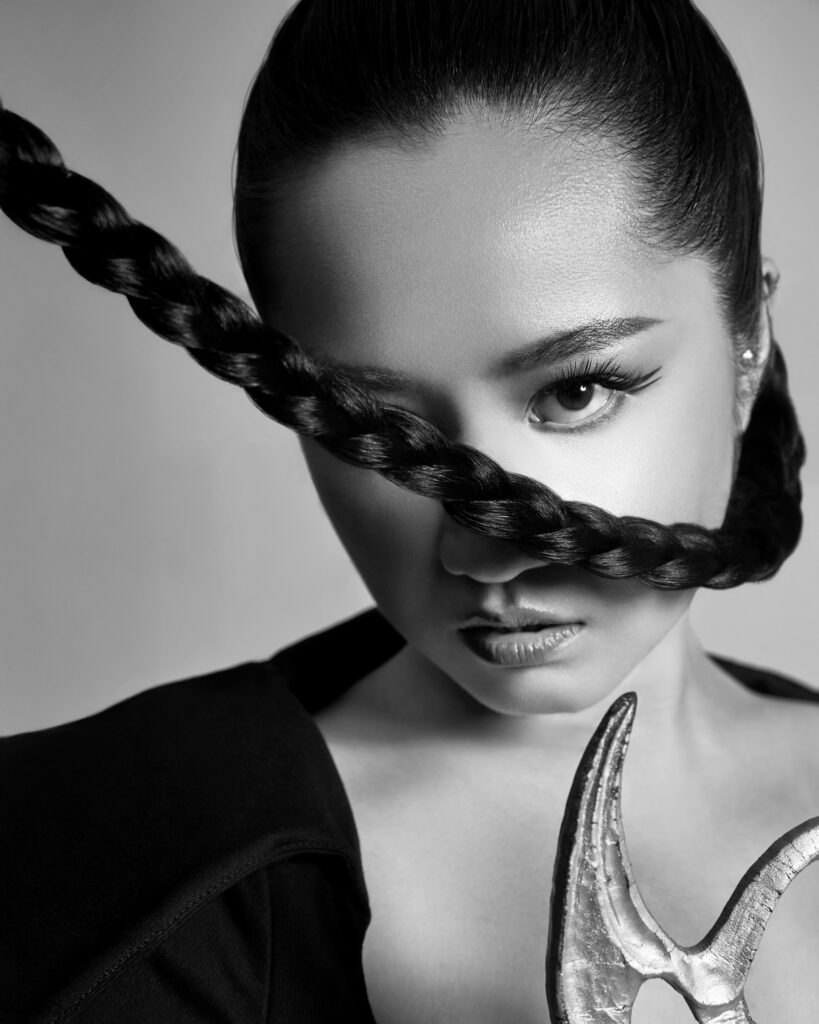
Heidi Wong is deliberate in her refusals. She avoids overstatement, resists the language of trends, and shows little interest in translating her work into something more immediately legible. Throughout the conversation, she returns to process, editing, and restraint, less concerned with how the work is received than with whether it remains accurate to its original intent.
This position requires discipline. Wong is acutely aware of the cultural mechanisms that reward speed, repetition, and constant visibility, and she chooses to operate outside of them. She speaks openly about slowing down, about withholding, about allowing work to exist without explanation or amplification. It is not a romantic gesture but a practical one: clarity is often the result of subtraction rather than accumulation.
There is also a refusal of spectacle in the way she frames her practice. Even when her work carries a strong emotional or visual charge, she is careful not to aestheticise excess. Instead, she privileges structure, pacing, and a sense of internal coherence. The result is work that does not announce itself loudly but asserts itself over time through repetition, familiarity, and endurance rather than immediacy.
What emerges is a practice that is self-contained and selective. It does not seek validation through consensus, nor does it attempt to broaden its appeal. That choice sharpens authorship. In a landscape increasingly shaped by algorithmic logic and surface-level engagement, Wong’s work insists on a different contract with its audience: one based on attention, patience, and discernment.