Photos Courtesy of Company
Story by Editor-in-Chief Carolina Ogliaro
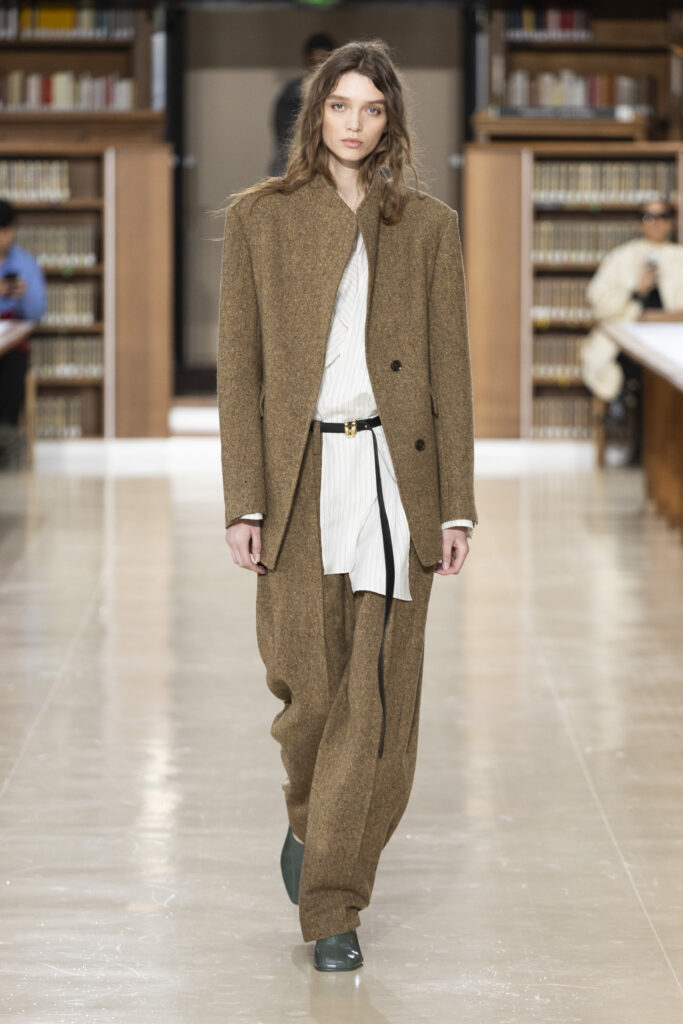
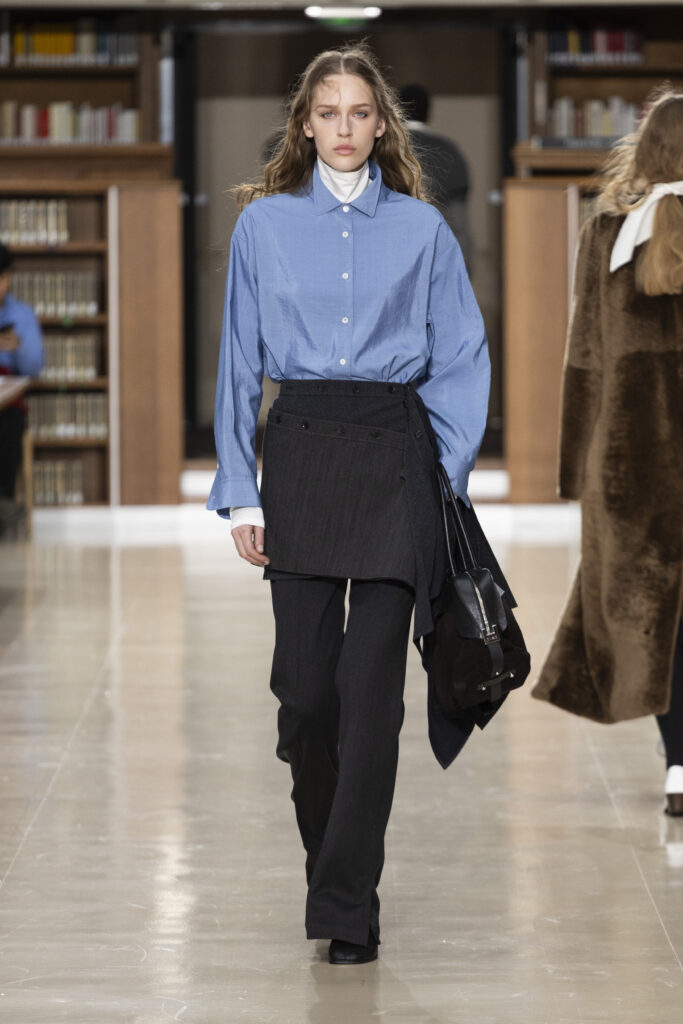
In the high-domed, hushed sanctity of the Bibliothèque nationale de France’s Richelieu site, where the walls are literally lined with the sediment of human thought, a different kind of history was being layered on Monday.
The brand is TIME. The origin is Seoul. And the message, delivered via a Fall/Winter 2026 2027 collection titled “Layers of Time,” was a sharp manifesto that, in an era of “fast” everything, there is a profound power in the slow accumulation of identity. If you haven’t been paying attention to TIME, it’s time to start. Born in 1993, a year of grunge and postmodern upheaval, the brand grew up alongside a generation of South Korean women who were breaking glass ceilings in sensible, yet impeccably cut, suits. Under the creative direction of Jung In Choi, TIME is now taking that heritage of empowerment and translating it for a global stage that is increasingly weary of logo-mania and hungry for substance.
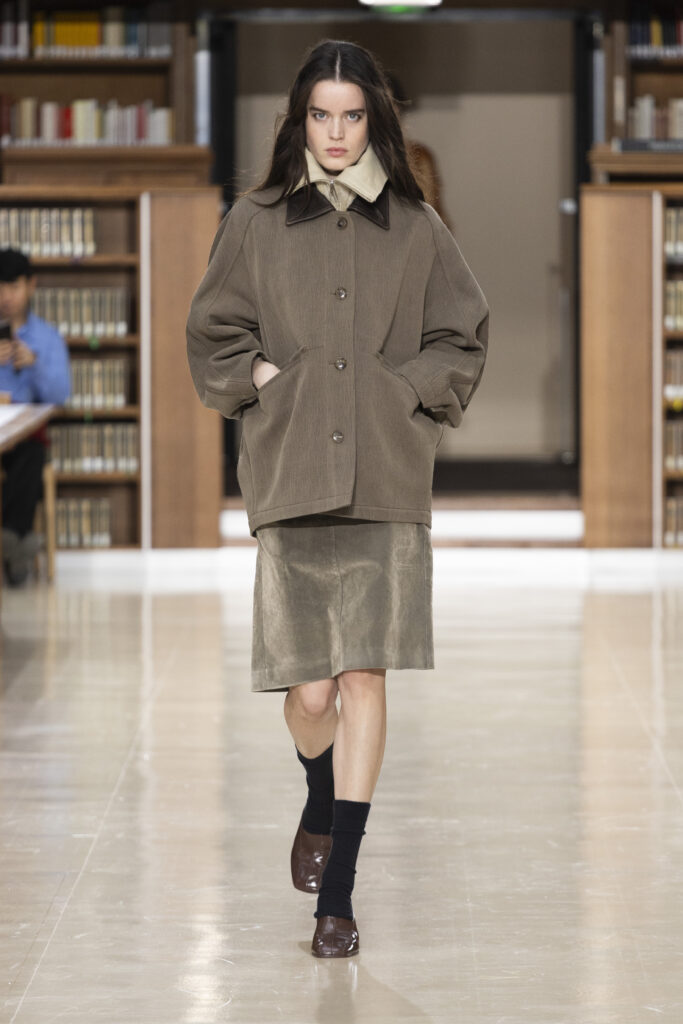
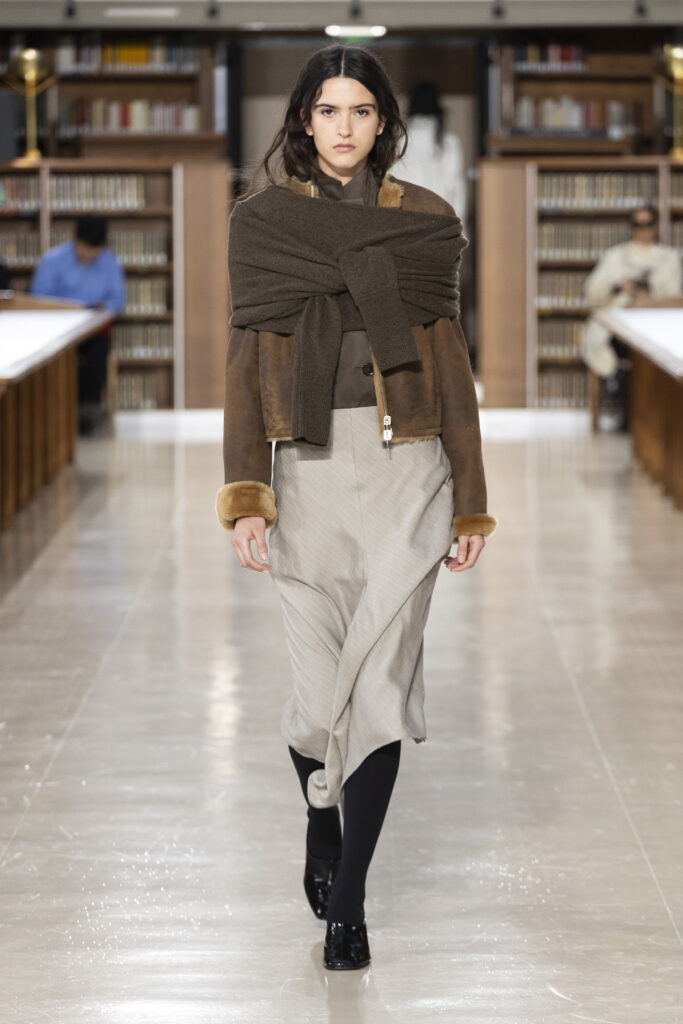
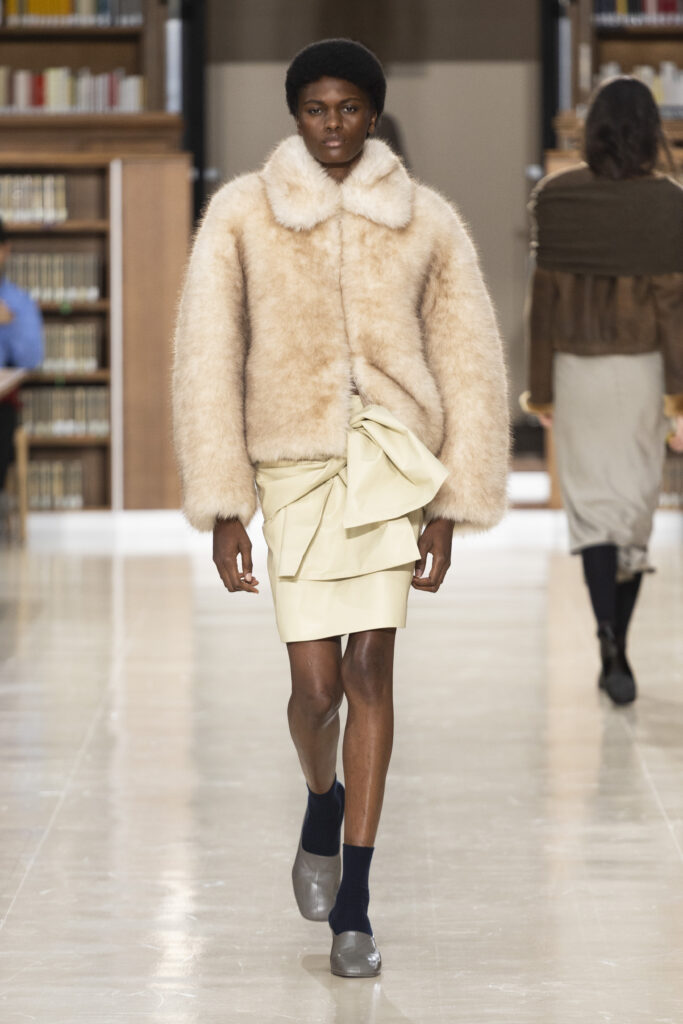
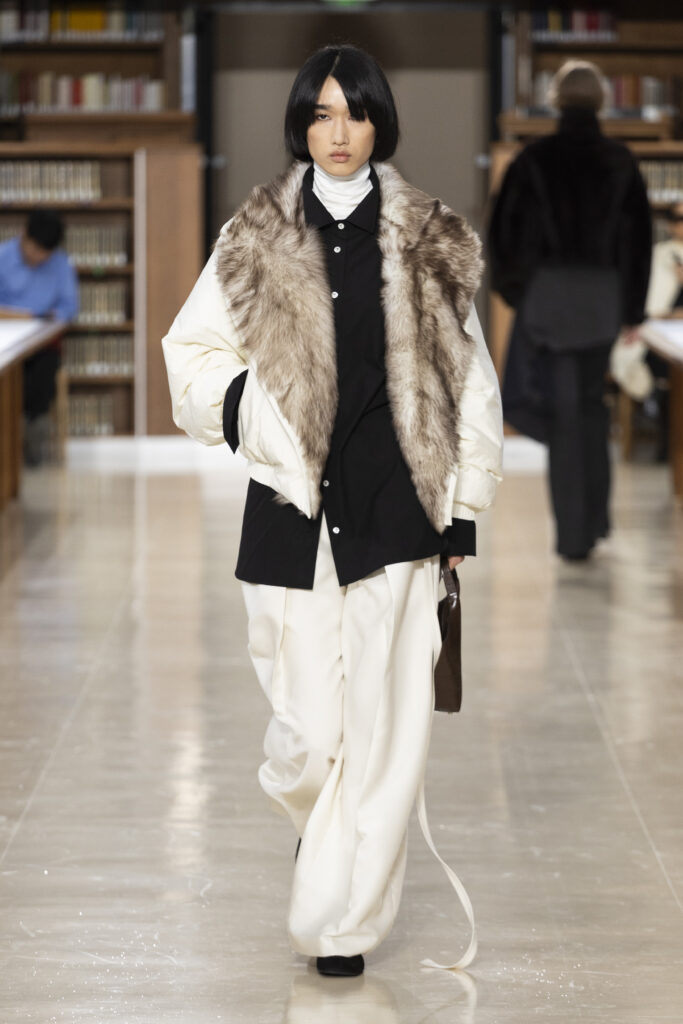
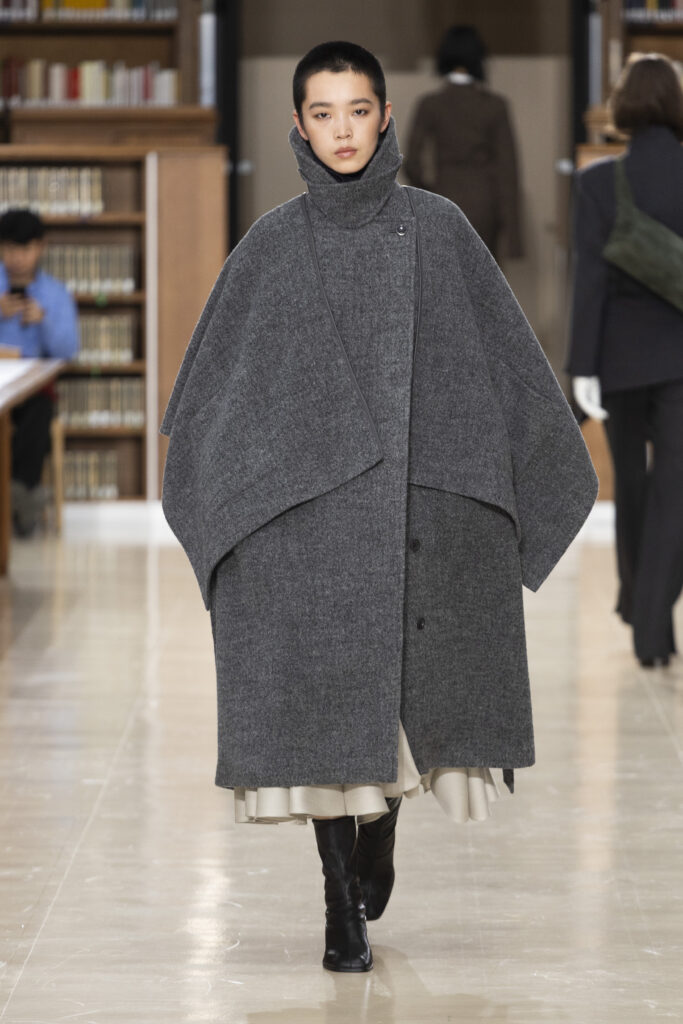
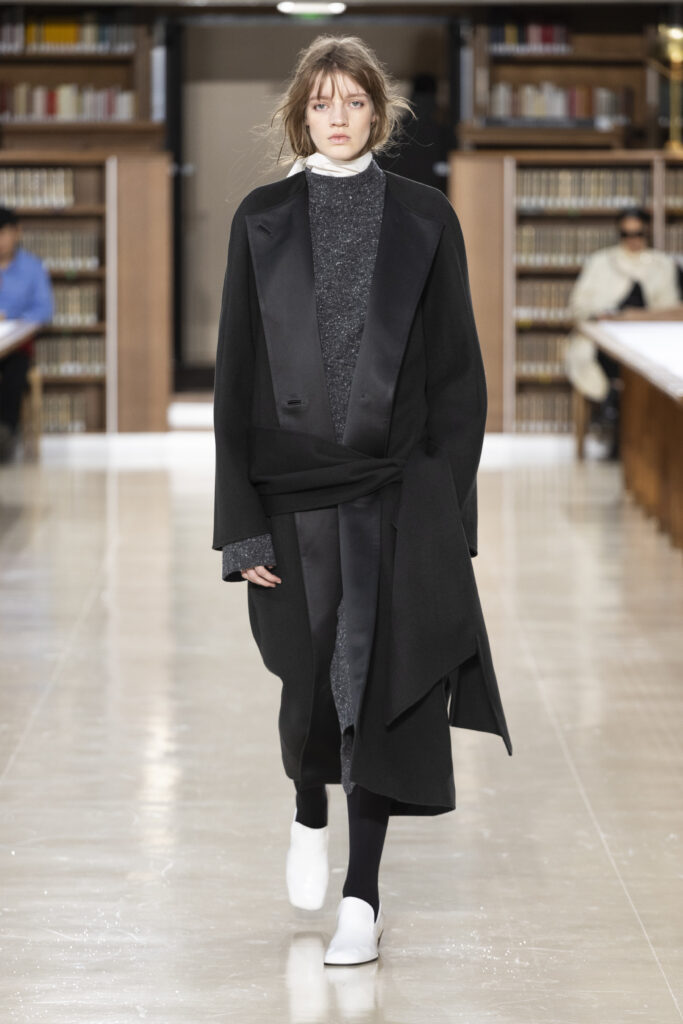
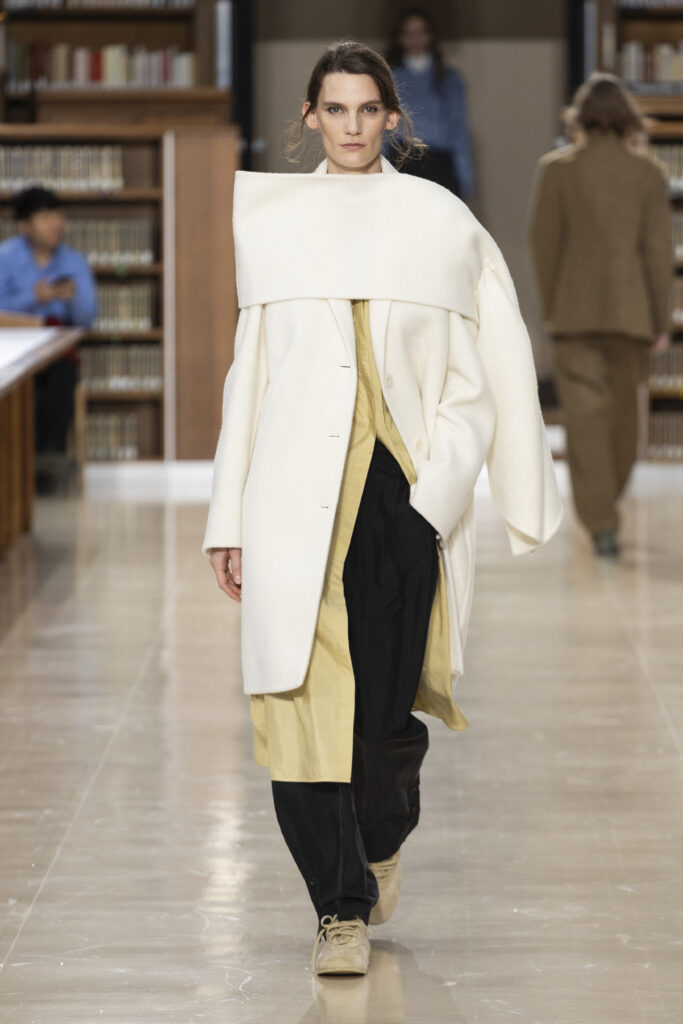
Ms. Choi’s proposition for the coming winter is not about the “new” in the sense of a radical break from the past. Instead, it is about the “next” as an evolution of what came before. “Time does not simply pass; it accumulates in layers,” the show notes read. It’s a philosophical stance that manifested in garments that felt less like clothes and more like soft sculpture.
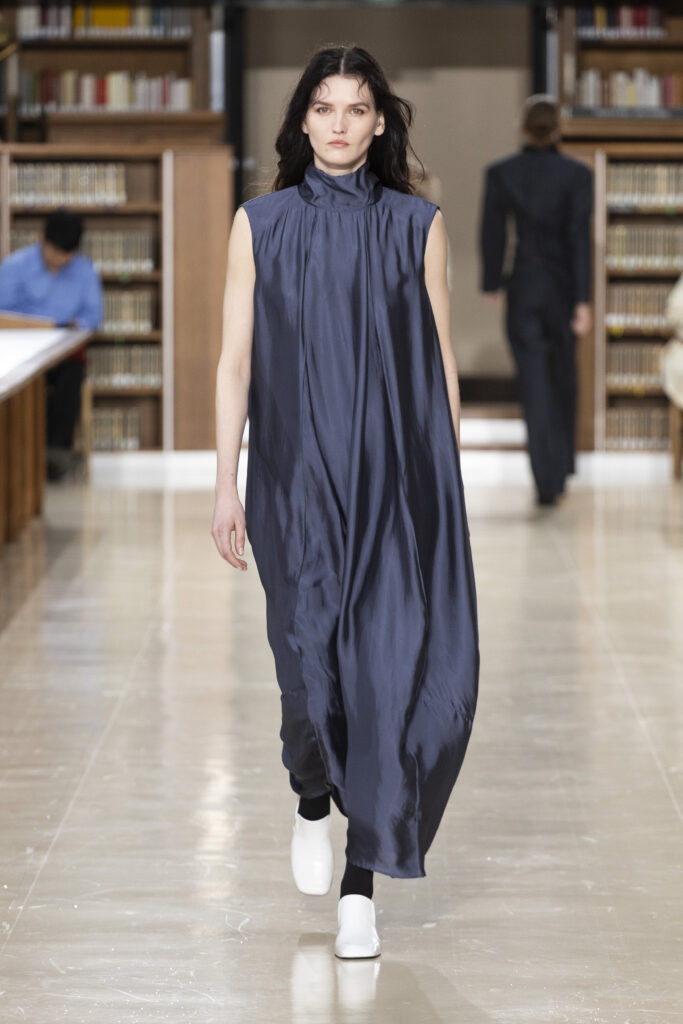
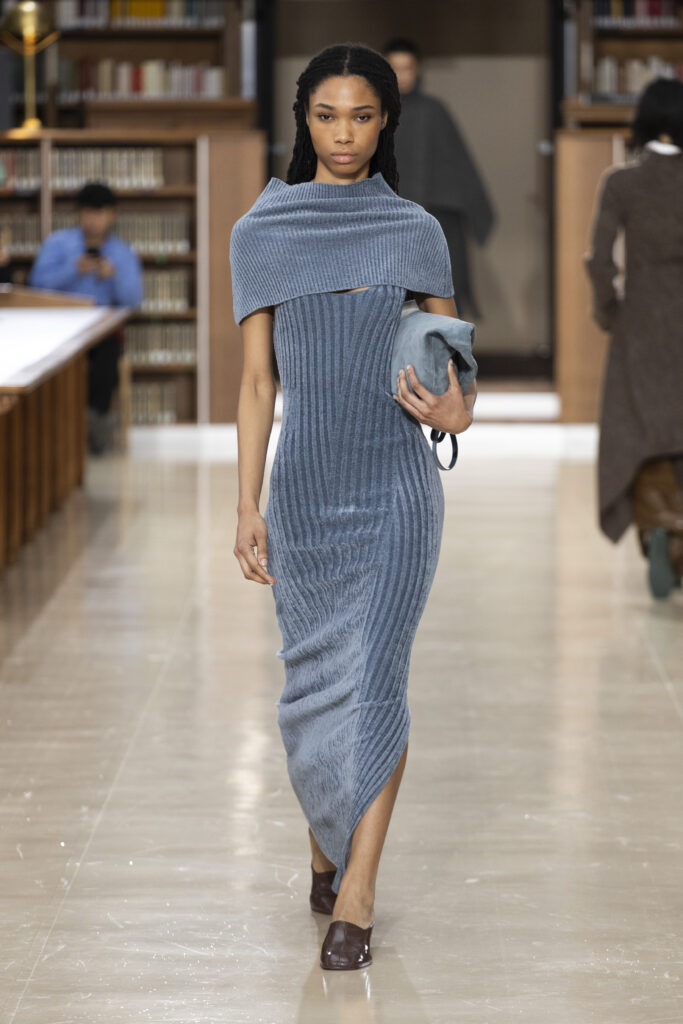
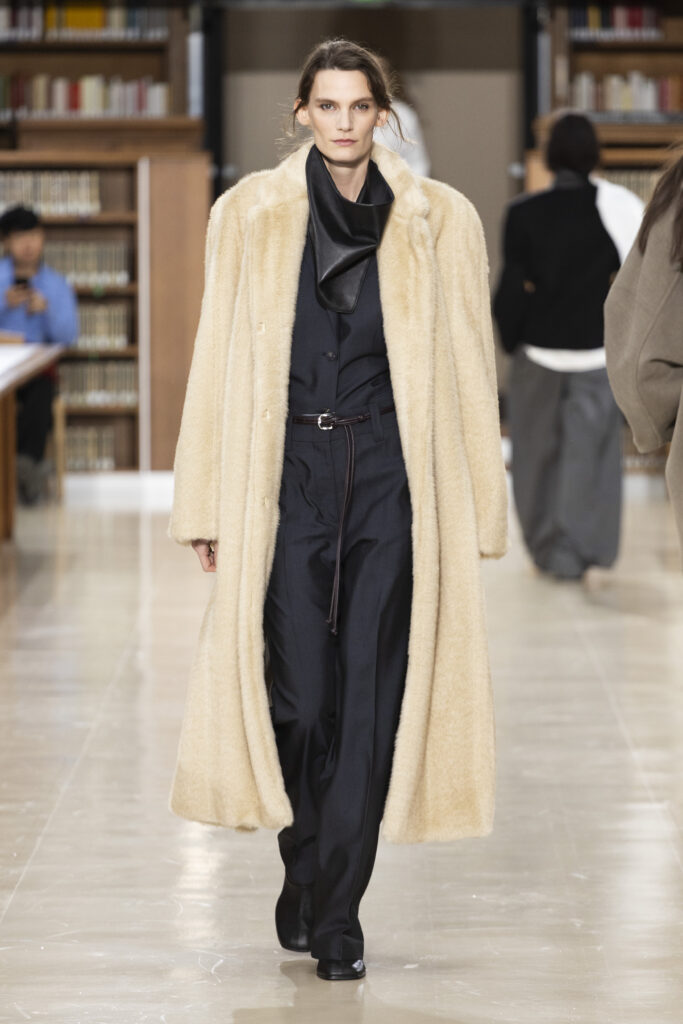
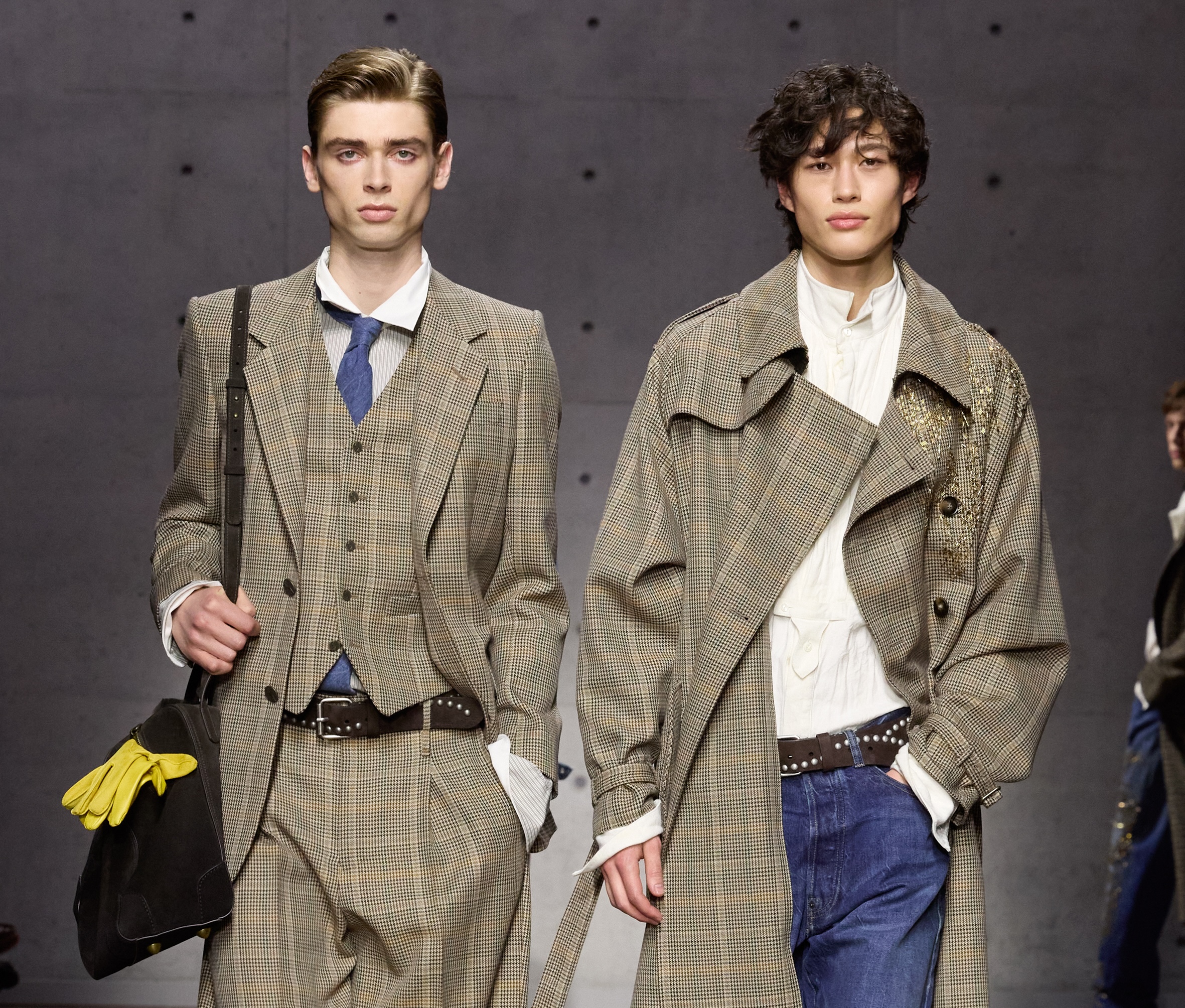
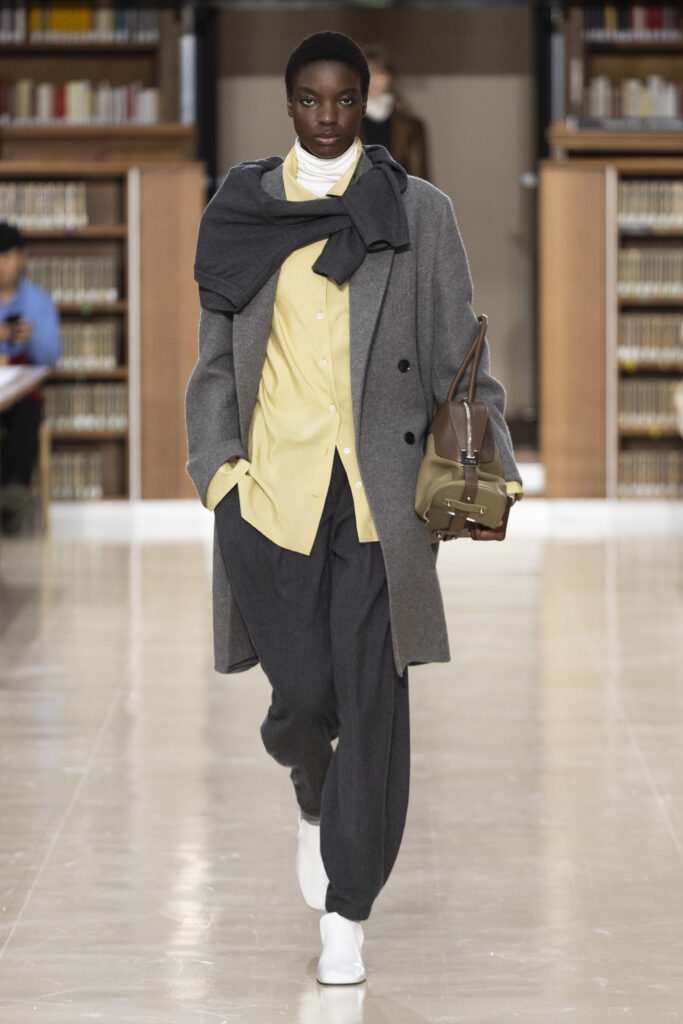
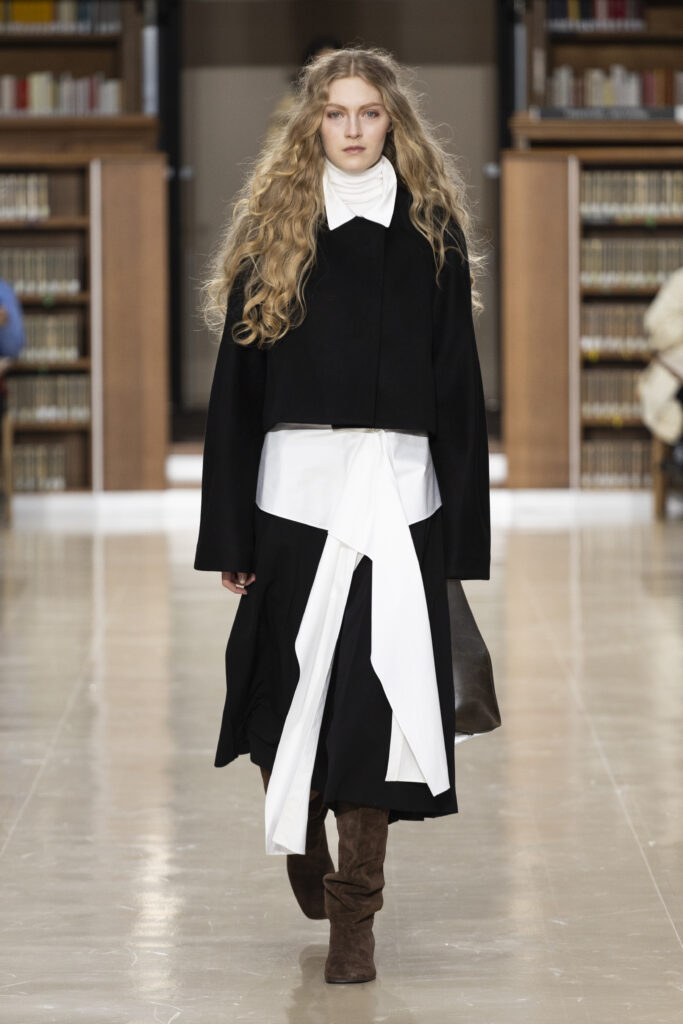
Consider the trench coats: reimagined with architectural volume that managed to look both protective and aerodynamic. Or the shirts with modular necklines that could be adjusted, literally shifting the “frame” of the wearer. These weren’t just styling tricks but were “sculptural language,” as the brand puts it. The silhouettes played a sophisticated game of tension. Exaggerated, voluminous trousers were paired with sleek, disciplined skirts, creating a silhouette that felt extremely fluid. It was a study in contrasts, matte vs. shine, structure vs. drape, all rendered in a palette of chic monotones and “nuanced” neutrals that whispered rather than screamed.
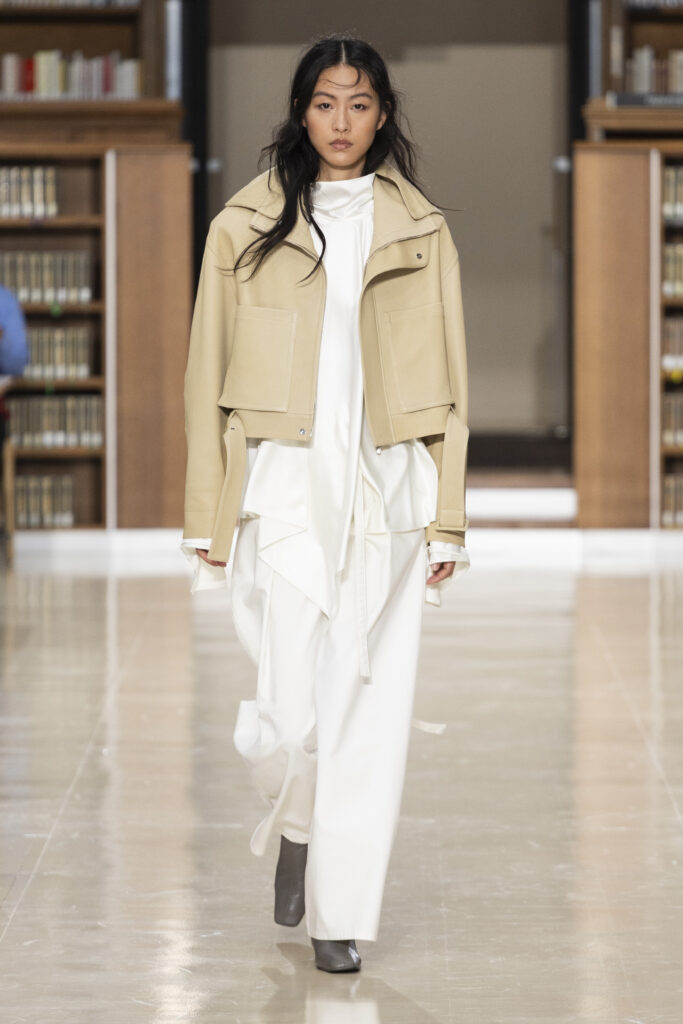
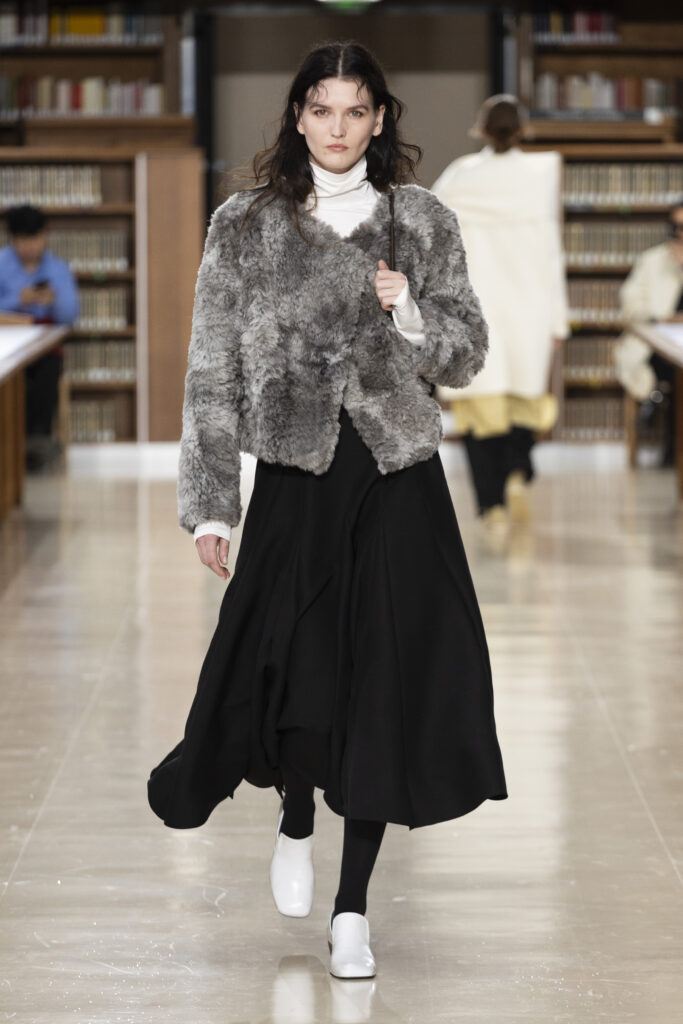
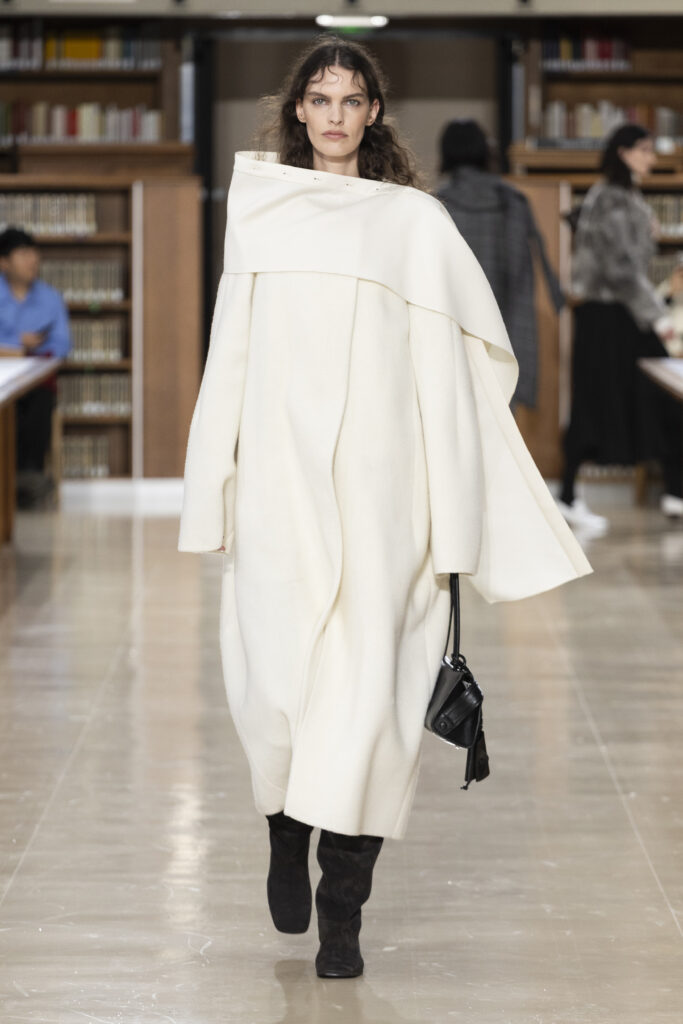
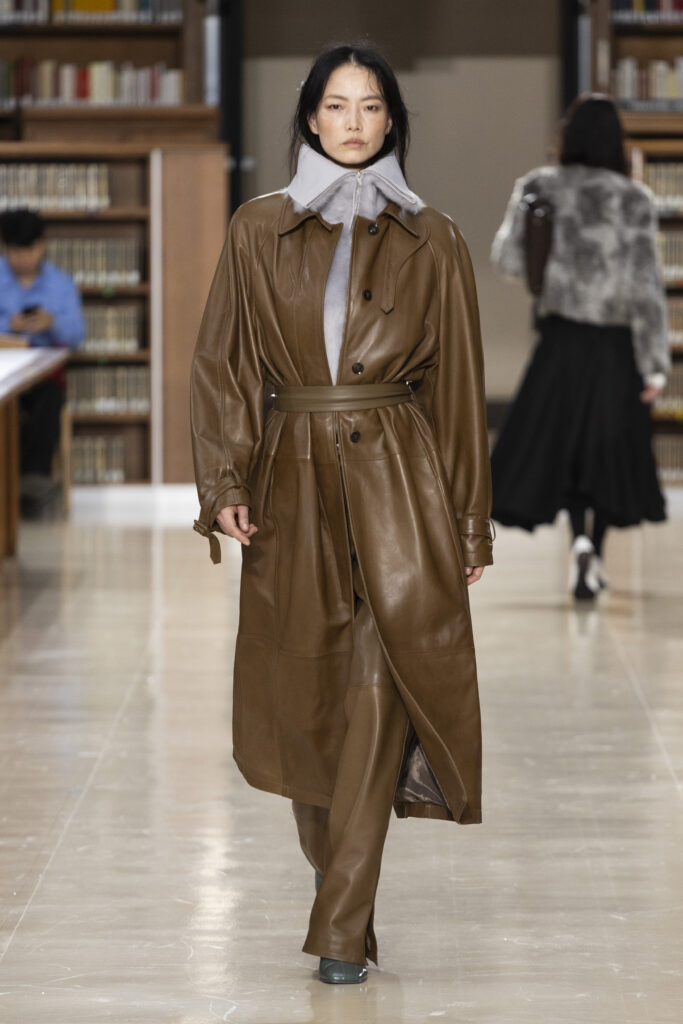
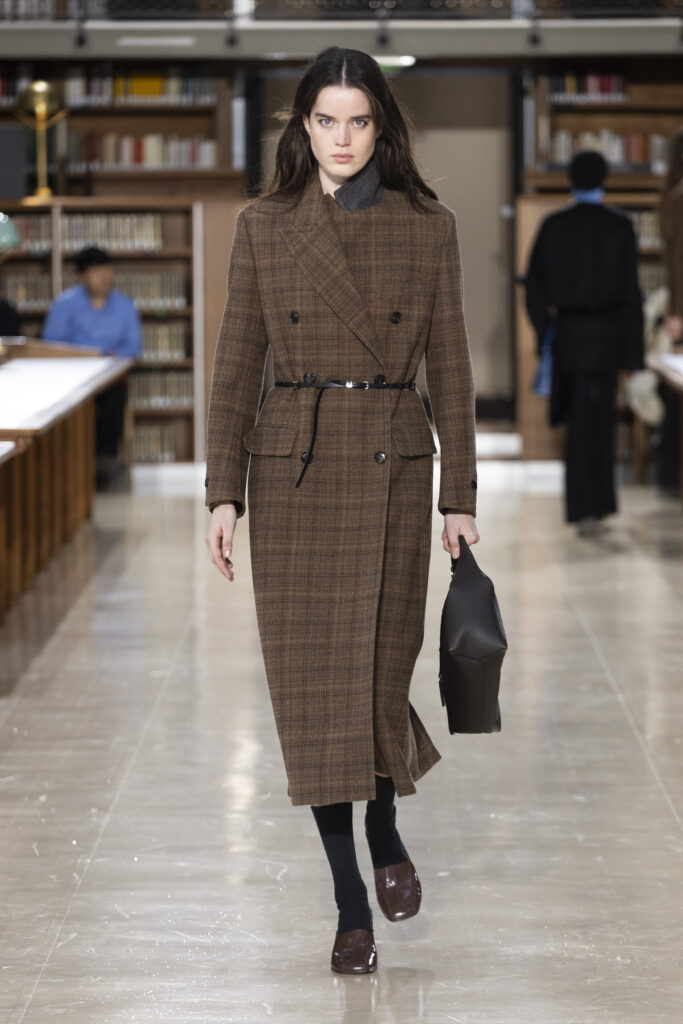
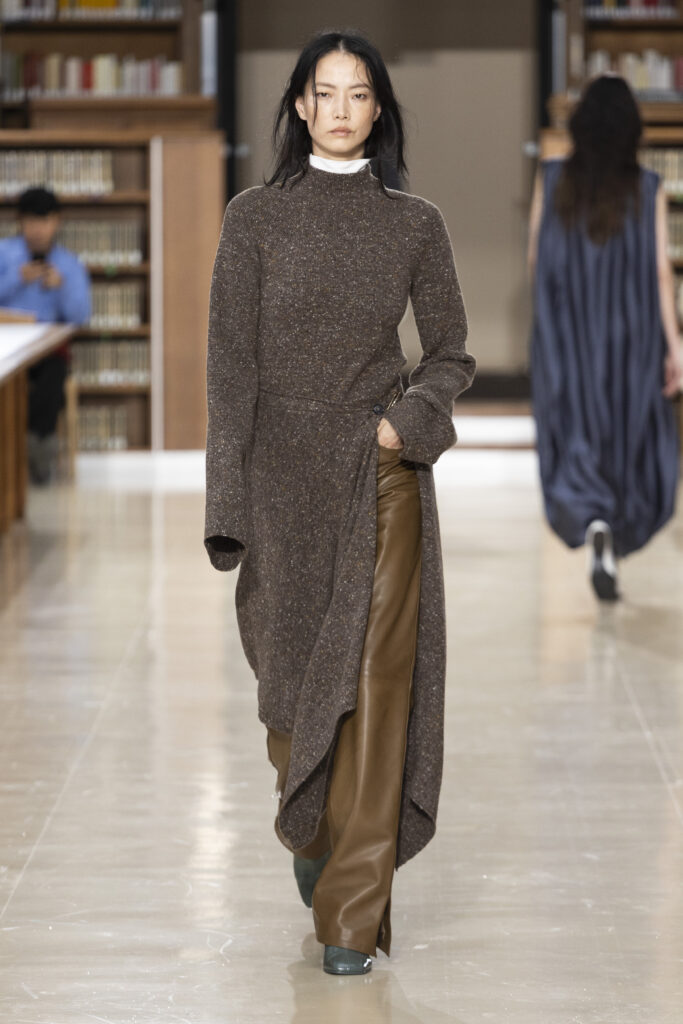
Key Element in The TIME FW 2026-2027 Interpretation
The Silhouette: Architectural volume meeting classical form in a minimalistic femininity.
The Materiality: A heavy emphasis on leather treatments and “sculptural” layering of textures.
The Accessory: Sculptural handbags created in collaboration with Fernando Bonastre.
The Venue: BnF Richelieu: A symbolic backdrop of stacked archives and classical symmetry.
The collaboration with Fernando Bonastre, the man whose rigorous, modernist aesthetic helped define the iconic bags at Lemaire, felt particularly astute. The two new signature handbags introduced this season didn’t just complement the clothes but anchored them. Like the garments, the bags felt timeless yet distinct, a phrase that is becoming the brand’s calling card.
In the grand scheme of Paris Fashion Week, we have seen brands compete to see who can be the loudest, while TIME’s presence at the BnF was the real masterclass in atmospheric resonance. By choosing a venue where knowledge is physically stacked in layers, Ms. Choi made a compelling case for fashion as a form of archival living.
For the modern woman, the one TIME has been dressing in Korea for over three decades and is now courting globally, this is about a wardrobe that acknowledges where she’s been while giving her the structural integrity to face where she’s going. We talk a lot about the “politics of appearance.” What TIME is suggesting is a “philosophy of appearance”, one where style is a foundation. It’s a bold bet on the enduring value of the “accumulated grain of time.” And based on what we saw in the Richelieu, it’s a bet that is likely to pay off.