with
Photography by Reinhardt Kenneth for ArtCoded
Styling + Wardrobe Direction by Savannah Yarbrough-Tyson
Stylist Antonio Soto
Makeup by Archangela Chelsea for The Wall Group
Hair by Travis Takara
Lighting Director Ralphy Valle
Digitech Suimay Lee
Wardrobe Assistant Antonio Soto
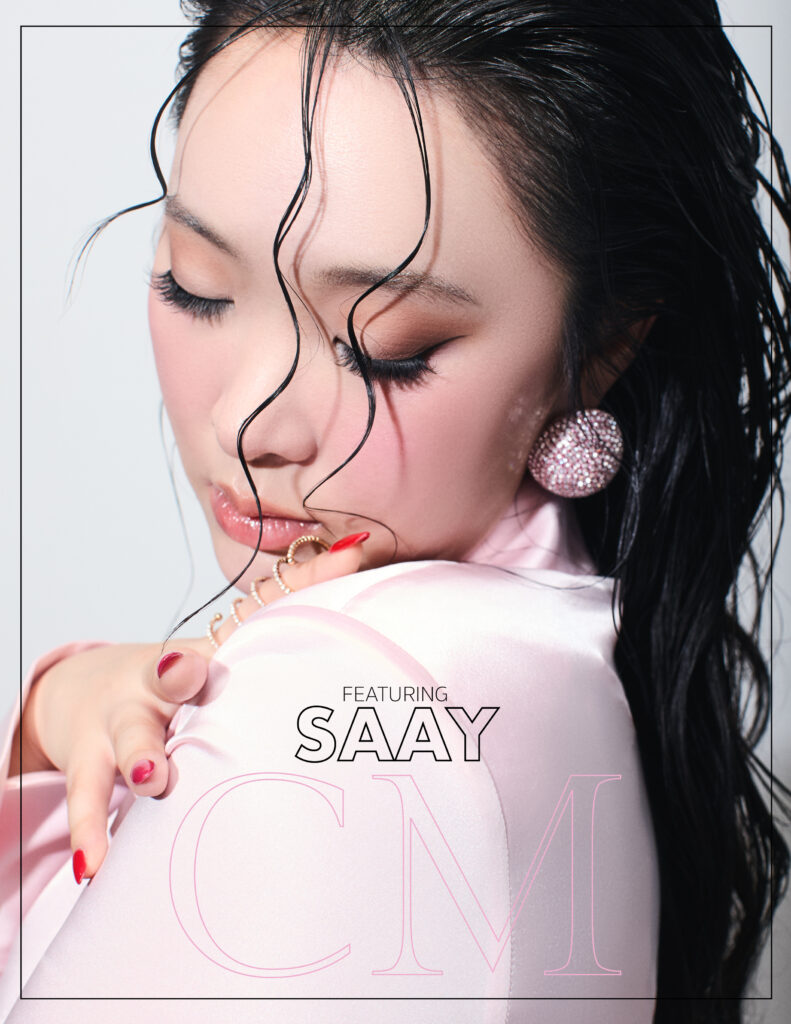
SAAY has written hits for other people, directed her own world, and built an album like a film. Her message to a generation raised on the feed: you are allowed to live before you create.
Her name is a verb. For SAAY, it has doubled as a manifesto and a job description, and for most of her career the second one kept her busy. She began in 2012 as the leader of the girl group EvoL, and after the group disbanded in 2015, she spent years writing songs for other musicians. Those credits are not small. Her work with producer partner DEEZ includes tracks for Baekhyun, aespa, Billlie and Viviz. Her own debut arrived in July 2017 with a single called “Circle,” and what followed was a body of R&B that critics described as smoky, siren-esque and fluid, with a signature that no one else could have made quite the same way.
Then came S:INEMA, the 2022 album that she has described as a goodbye to her twenties, turning those years into her own movie. Its lead track, “Talk 2 Me Nice,” came with a black-and-white video of SAAY in a suit and fedora, with choreography and performance direction by SAAY herself. Her first instrument, though, was neither a synth nor a laptop. It was the janggu, the Korean hourglass drum, which she learned alongside her mother, and she first performed on stage at six.
So when a woman with that résumé tells you that you do not have to spend your life proving who you are, it lands differently. This is not a wellness slogan from someone who has never been in the room. It comes from an artist who entered the industry very young, learned rejection early, and kept producing through every cycle the industry could throw at her. In a feed economy where “consistency” has become another word for “constant output,” her most radical sentence is that you are allowed to step away.
Diving deep with SAAY, on identity and borders, algorithms and eras, craft and cinema, and what a person leaves behind when the numbers are removed. Her answers return to one idea in many forms. Value does not wait for accomplishment, and an artist is allowed to be many things at once.
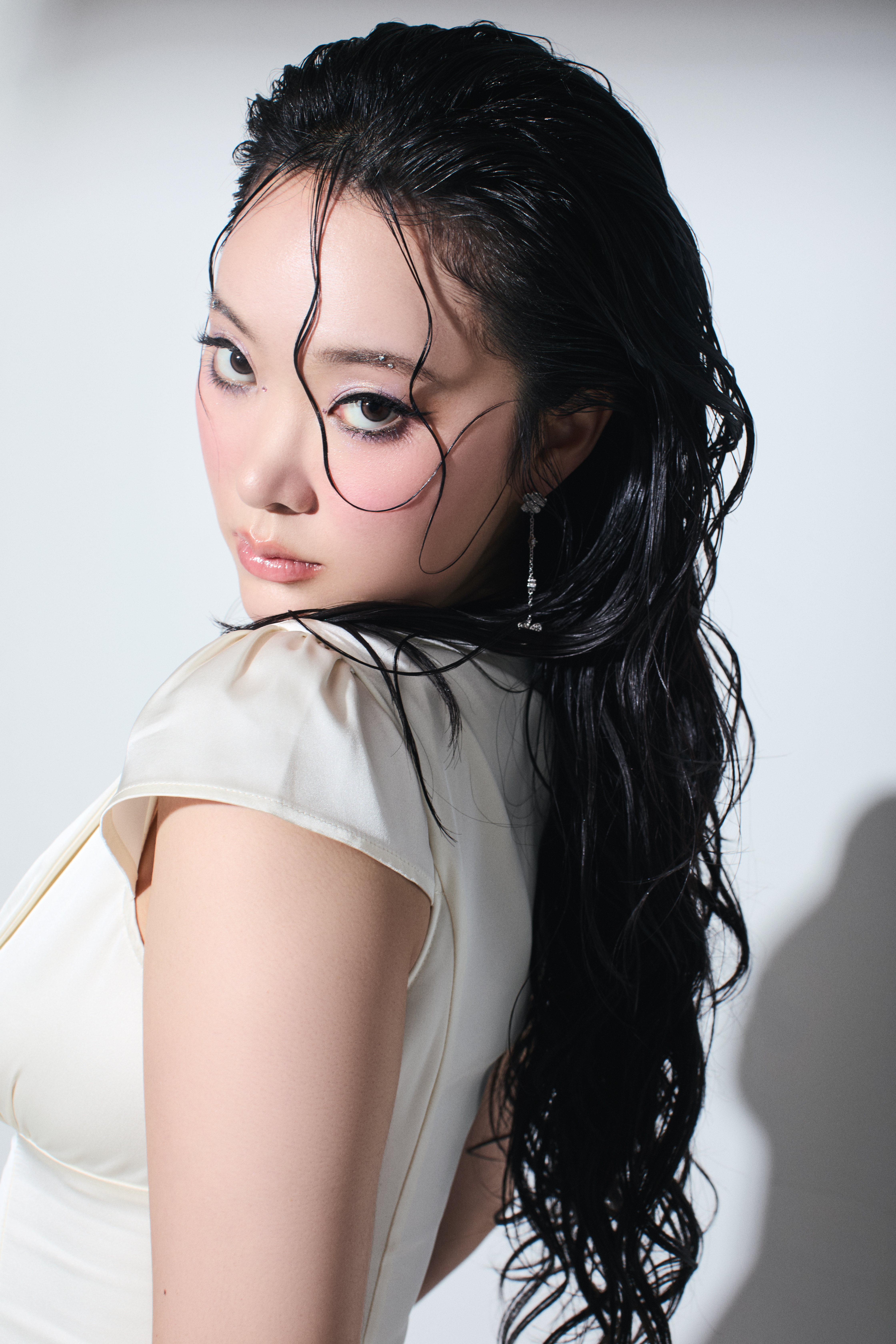
Top by Tiger Mist @tigermist | Jewelry by Nana Jacqueline @nanajacqueline
“SAY” means to speak. Your name almost sounds like a manifesto: say something. After years of making music, producing for others and building your own creative world, what is the one thing you still feel compelled to say that you haven’t said yet?
I think what I still want to say is that we don’t have to spend our entire lives proving who we are.For a long time, I believed that I had to constantly create, achieve, and push myself further to justify my existence as an artist. But the more I experience life, the more I realize that our value doesn’t come from how much we accomplish or how visible we are to the world.Music has always been my way of understanding myself, and I think I’m entering a chapter where I want to create from a place of freedom rather than pressure.I still have so much to say, but maybe the most important thing is that we are already enough, even before we accomplish anything.
You grew up absorbing Korean traditional music alongside jazz, R&B, hip-hop, classical music, and pop. Today, Gen Z moves through culture without respecting the borders between genres, countries, or eras. Do you think we are witnessing the end of cultural categories or simply creating new ones?
I don’t think cultural categories are disappearing. I think we’re finally becoming more comfortable with the idea that identity can exist beyond those categories.I grew up surrounded by Korean traditional music and dance, but I was equally fascinated by jazz, soul, R&B, and Western pop culture. To me, those influences were never contradictory. They were simply different languages expressing human emotions.What’s exciting about this generation is that people are becoming less interested in where something belongs and more interested in how it makes them feel.But I also believe that understanding where music comes from is important. Freedom doesn’t have to mean forgetting our roots. In fact, the deeper we understand our origins, the more creatively we can move beyond boundaries.
There is a very particular contradiction in being an independent artist today: technology has given musicians more freedom than ever, but algorithms can also make everyone feel pressured to become the same. How do you protect your individuality when visibility itself has become a currency?
By constantly reminding myself why I started making music in the first place.I think one of the biggest challenges for independent artists today is confusing visibility with value. Algorithms can make you feel like you’re disappearing if you’re not constantly producing content or staying in front of people.I’ve definitely experienced that pressure myself.But I’ve learned that being seen and being understood are two very different things. I don’t want to sacrifice the depth of my work just to remain visible.Sometimes protecting your individuality means having the courage to step away, become quiet, and reconnect with what genuinely inspires you.I’d rather create something timeless than spend my life chasing something temporary.
You don’t simply perform your music, but you write it, produce it, choreograph it, and shape its visual language. Where does the artist end and the creative director begin? Or, for you, have those two identities never really been separate?
For me, they’ve never really been separate.When I write a song, I often see images, movements, colors, and entire scenes in my head. Music has always been a multidimensional experience for me.I don’t approach visual direction or choreography as something that comes after the music. They’re all different expressions of the same emotion.Of course, being involved in every part of the creative process can be exhausting, especially as an independent artist. But having that level of creative ownership is also one of the greatest privileges.I don’t necessarily want to control everything. I just want every element of my work to speak the same emotional language.
Korean culture has moved from being “discovered” internationally to becoming one of the world’s most influential cultural forces. As someone who is part of that generation of Korean artists, do you feel a responsibility to represent where you come from, or do you sometimes want the freedom to simply be SAAY?
I think both can exist at the same time.I’m incredibly proud of where I come from. Korean culture isn’t something I have to consciously represent because it’s already part of how I think, feel, and create.My earliest artistic experiences were actually rooted in Korean traditional percussion and dance. The janggu was my first instrument, long before I discovered the musical world I’m working in today.At the same time, I don’t want my identity to be limited by nationality or genre.I want people to experience my music as something human first, while naturally discovering the cultural roots that shaped me.I think the most meaningful representation comes from being completely authentic, not from trying to represent something.
You have experienced rejection on a scale most people would probably find unbearable before finding your own path. What changed first: your circumstances or your definition of success?
My circumstances changed first, but changing my definition of success has been the much deeper journey.I entered the entertainment industry at a very young age, and rejection became a familiar part of my life. For years, I believed success meant finally being accepted, recognized, or validated by someone else.Even after achieving things I once dreamed about, I realized that the feeling of needing to prove myself didn’t automatically disappear.That’s when I started questioning what success actually meant to me.Today, I’m learning to measure success by how honestly I live, how deeply I grow, and how much freedom I feel in my own creative process.I think real success is when you no longer need the world to constantly confirm your worth.

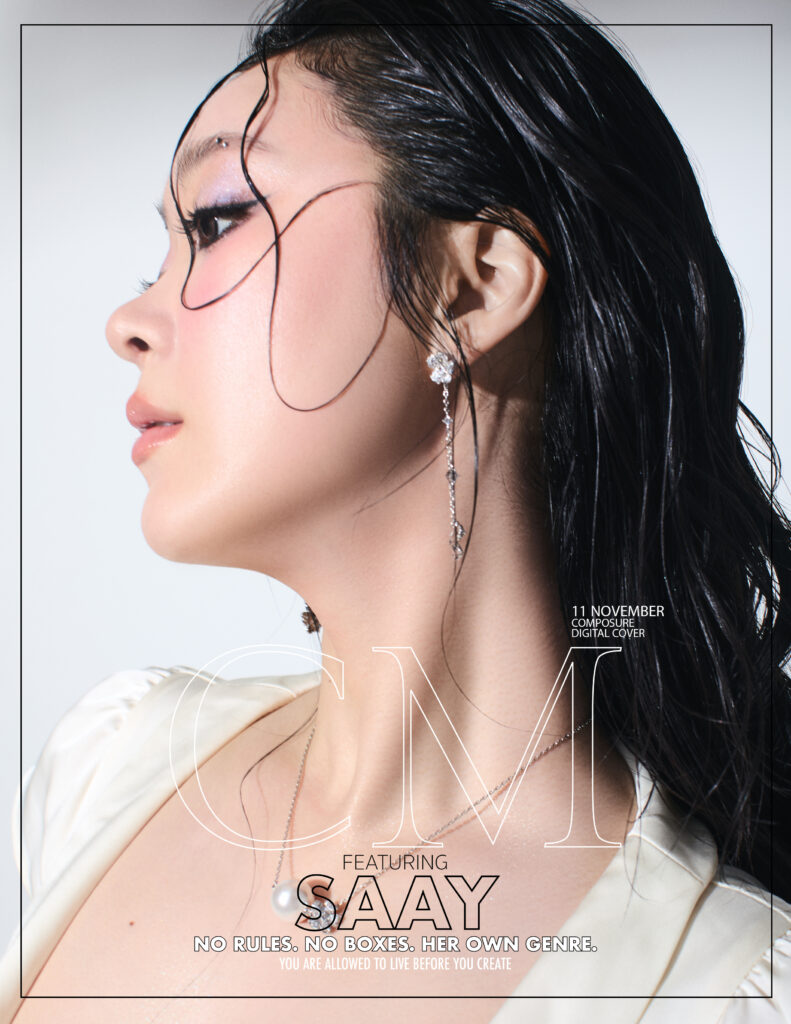
Top by Nana Jacqueline @nanajacqueline | Earrings by Saule @saulelabel | Ring by Ettika @ettika
Fashion, music, cinema, and visual art increasingly exist as one conversation. When you create an era or a project, do you begin with a sound, an image, a movement, a colour, or with an idea?
Almost always, it begins with an emotion.Sometimes that emotion becomes a melody. Sometimes it’s a color, a particular movement, or a cinematic scene that appears in my imagination.I think in atmospheres before I think in genres.For example, I might imagine the feeling of walking alone through a city at night, or the tension between vulnerability and desire. From there, the sound, visuals, and movement begin to reveal themselves.I’m particularly drawn to the relationship between music and cinema because both allow us to communicate things that words alone cannot explain.For me, creating an era is really about building a world where every detail carries the same emotional truth.
We live in a world obsessed with immediacy: new song, new look, new post, new trend, new version of yourself. Yet your work has a strong sense of craftsmanship. Do you think young artists today still have permission to take their time?
I think they absolutely deserve that freedom, but the industry doesn’t always make it easy.We’re living in a time when consistency is often confused with constant productivity. There’s an expectation that artists should always be releasing, posting, and reinventing themselves.But meaningful art doesn’t always happen on a schedule.Some ideas need time to mature. Some experiences need to be lived before they can become music.I’m learning that stepping away from the spotlight doesn’t mean you’re falling behind. Sometimes the most important growth happens when nobody is watching.I hope younger artists understand that they don’t have to turn every moment of their lives into content.You’re allowed to live before you create something from that life.
You have described music as something deeply connected to your personal experiences. But once a song leaves the artist, it becomes part of somebody else’s life. Do you prefer people to understand exactly what you meant, or do you think the most successful art is the art that people misunderstand in their own way?
I actually love the idea that a song can mean something completely different to someone else.When I write music, it usually comes from a very specific emotion or personal experience. But once I release it, I don’t think that story belongs exclusively to me anymore.Someone might hear a love song and think about grief. Someone else might hear the same song and feel empowered.Neither interpretation is wrong.I think that’s one of the most beautiful things about art. It creates a connection between people who may have completely different lives but recognize something familiar in the same piece of music.My responsibility is to be honest when I create it. What happens after that belongs to the listener.
Imagine we remove everything that currently defines an artist’s public image: the numbers, the streaming platforms, the followers, the trends, the industry, and even the word “career.” What would you want people to remember about SAAY, not as a singer, but as a person who happened to make art?
As someone who lived honestly, loved deeply, and never stopped being curious about life.For a long time, I thought my purpose was to become a great artist. But I’m beginning to understand that being a great artist and living a meaningful life aren’t necessarily the same thing.I don’t want music to become the only measure of my existence.I want to be someone who continues to learn, who experiences the world with an open heart, and who has the courage to change.If my music remains after I’m gone, I hope people can feel that there was a real human being behind it. Someone who was imperfect, vulnerable, passionate, and constantly searching for truth.More than being remembered as successful, I’d like to be remembered as someone who was genuinely alive.
On S:INEMA, you turned music into something almost cinematic, moving through different emotional and sonic landscapes rather than treating an album as simply a collection of songs. Looking back at that project today, is there a version of yourself in S:INEMA that you no longer recognise or one that you still haven’t outgrown?
When I look back at S:INEMA, I see a younger version of myself who was trying to understand life through every emotion she experienced.There was so much intensity, curiosity, vulnerability, and ambition in that album. I was exploring different sides of myself, almost like different characters in a film.I don’t think I’ve completely outgrown that version of myself, and I don’t necessarily want to.What has changed is my relationship with those emotions. Back then, I often felt like I had to fully immerse myself in every feeling to understand it. Today, I’m learning that I can observe my emotions without being completely consumed by them.S:INEMA reminds me of how passionately I was searching for myself. I still have that curiosity, but I think I’m approaching it with more perspective and peace now.
“Circle” and “Talk 2 Me Nice” reveal two very different sides of your artistic language: one more introspective and emotionally circular, the other sharper, playful and almost confrontational. Do you see these contrasting versions of yourself as different characters or are they simply different ways of telling the same story?
I think they’re different expressions of the same person.Human beings are full of contradictions. We can be vulnerable and confident, sensitive and confrontational, playful and deeply introspective, sometimes all in the same day.Circle represents a more reflective side of me, the part that questions, remembers, and tries to understand emotional patterns.Talk 2 Me Nice comes from a different energy. It’s bold, playful, and unapologetic.But neither one is a character I invented. They’re both real parts of who I am.I think the freedom of being an artist is that I don’t have to choose just one version of myself. I can allow all those contradictions to coexist, and that’s what makes the story human.
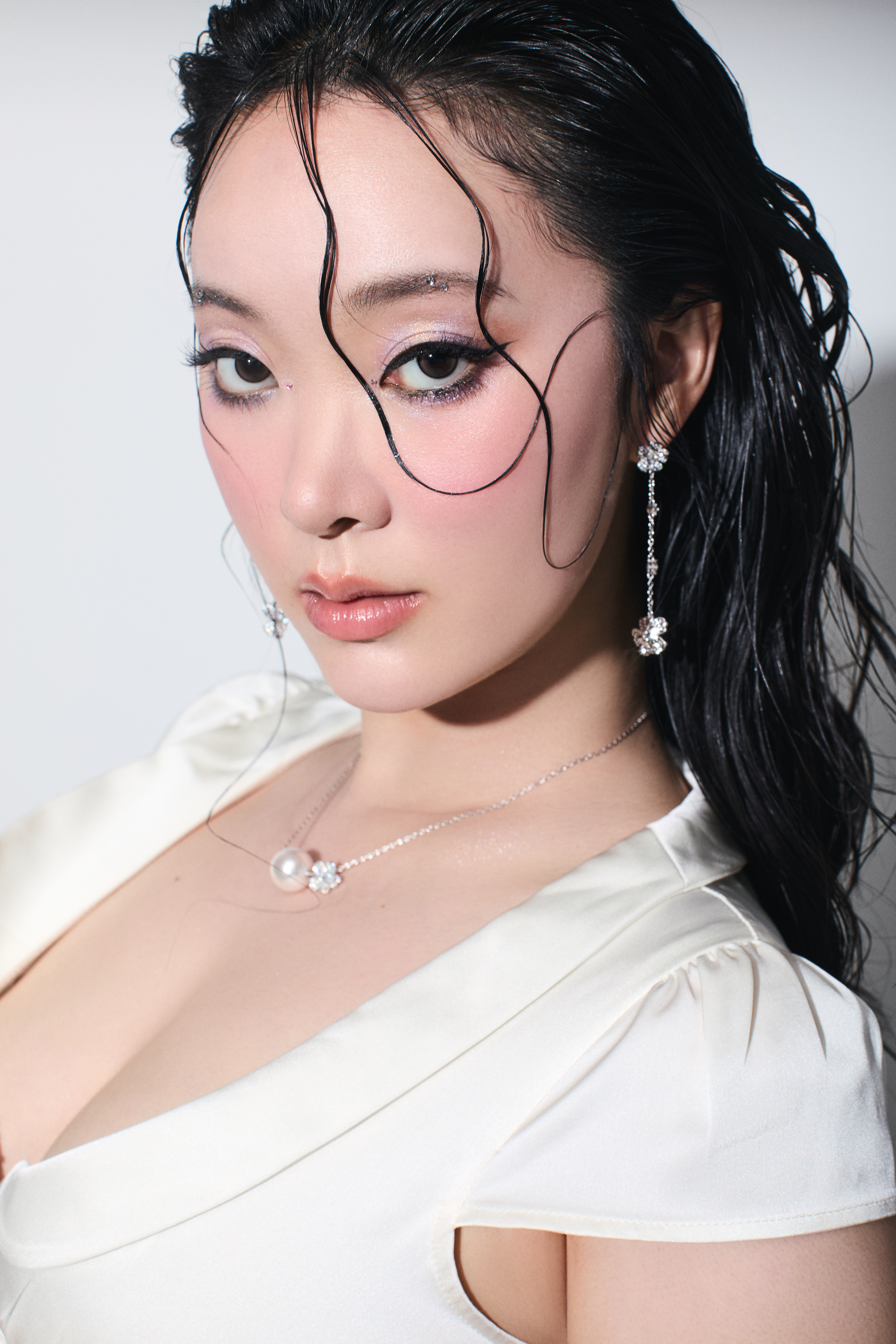
Read in sequence, SAAY’s answers sound like a long exhale. She has the credits, the choreography, and the cinematic albums that the industry measures, and she spends most of her time questioning the measuring. The word she keeps returning to is enough: enough before accomplishment, enough without confirmation, enough without a post.
It is a rare thing for an artist with her output to publicly question output, and a generation that has grown up inside the algorithm is the one that most needs to hear it. She does not romanticize disappearing. She describes stepping away as a way of reconnecting, and she suggests that the most important growth happens when nobody is watching. The same ease runs through everything else she says: roots that do not limit a person, a song that belongs to the listener once it leaves her hands, a self that is playful and introspective in the same day without choosing a lane.
If the number of followers is removed, as our tenth question asked, what remains is a simple wish. She would like to be remembered as someone who was genuinely alive. For an industry that trades in visibility, that is the most refreshing thing an artist can say.