Story by Editor-at-Large CAROLINA OGLIARO
Lee Ryan’s “One More Night”: A New Chapter From One of Pop’s Most Unmistakable Voices
There are voices you don’t forget. Lee Ryan’s is one of them. Ethereal and raw, textured with experience and instinct, his tone captured a generation when Blue emerged as the polished yet heartfelt answer to early 2000s pop. With over 15 million records sold, chart-topping singles, BRIT nominations, and even a Eurovision chapter, Ryan became a fixture in the collective pop memory, a voice not just of boyband euphoria, but of emotional sincerity.
And then, silence. At least, in the solo sense.
Now, nearly two decades after his 2005 solo debut Army of Lovers, a cinematic, soul-bearing project that hinted at artistic ambitions beyond formula, Lee Ryan steps forward again, not as a pop idol chasing numbers, but as a man who’s found peace in the act of creation itself. His new single, One More Night, a smooth, R&B-laced anthem glimmering with summer light and subtle melancholy, is the track that repositions Ryan not just as a returning artist, but as a storyteller finally choosing to tell a tale his own way, with no commercial pressure, no genre shackles, and no need to explain his evolution.
In an age of instant fame and disposable tracks, One More Night stands apart as a work grounded in real life, real love, and the liberating audacity to simply be. In this exclusive interview, Ryan speaks candidly about legacy, transformation, creative freedom, and the subtle power of releasing something into the world, not to chart, but to connect.
What follows isn’t just a conversation with a pop artist, but it’s the quiet manifesto of a man who has learned that success is not always loud.
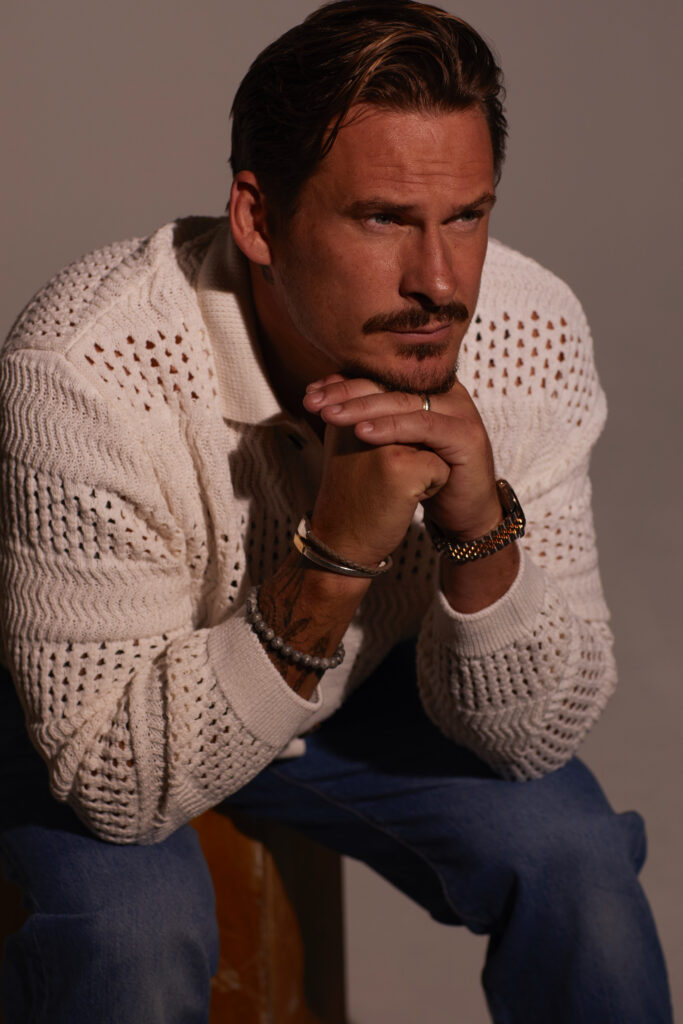
Photo Max Dodson 
Photo NAZ
Lee, “One More Night” is your first solo release in almost two decades. What was the moment — or the feeling — that told you this was the right time to return to yourself, musically?
I’ve always worked on music, and I’ve got a collection of songs that are just basically sitting on my computer, that have never been heard from a long time of working on music, but never actually releasing it. And I just felt like I would like to release some music without any kind of conditions or expectations for where that music will go in this new world of music that we now live in. You know, two decades ago, was a very different time in music to now, and I think me and the boys included in Blue, are still getting used to that.
This track was nearly pitched to other artists or included in Blue’s repertoire. What changed in your heart or your instinct that made you say: “No, this one is mine”?
Yeah. I did pitch this to the band, and then I took it back, and then I pitched it again, and they took it, and then that went back and forth a few times, and then the boys are going to be releasing some music later on in the year. And I felt like this song is a summer track. It’s not a song for, you know, in the winter or anything. So I just felt like it needed to come out. And it definitely screamed summer to me.
The song evolved from a ballad à la Sam Smith to a sun-drenched, summery anthem. How do you navigate that transformation — from intimacy to uplift — without losing the emotional core?
The original song that I wrote it from was called One More Night, and it was more of a ballad, in the vein of a Sam Smith kind of ballad, a really lovely song. But we transposed it into something different. And I actually love the original song, but it was nice to take inspiration from that song, which then kind of made way for this new version. So, yeah, it’s more uplifting, it’s more fun, but it’s still got heart to it. It’s still got the original sentiment that the other song had.
There’s a beautiful ambiguity in the lyrics: personal yet open. Why did you choose not to reveal the song’s original inspiration, and what do you hope listeners project onto it instead?
I try to always write songs that are touching and have a lot of feeling. I didn’t want to talk about what I actually wrote the original song about, and what it was actually about, because I think I would like to leave it open to interpretation, to the listener, and so people can take their own vibe from it.
After 25 years in music, you’ve said you’re no longer chasing chart positions. What does success look and feel like to you now?
20-25 years in the industry, it’s changed so much. And I’m not expecting to get billions of streams on this music. It would be nice, of course, but I don’t know if my audience will do that. You know, it’s a different market, and success for me is just releasing music that I love, and hopefully it connects with people, and people love and like the music that I make. That’s success for me. As long as I can connect with it and it comes from a truthful place, then I’ll be proud of it.
Blue’s legacy is massive — 15 million records, BRIT nominations, and Eurovision. Does the weight of that history ever shape, or even shadow, your solo choices today?
Yeah, Blue’s legacy is massive, and over the years, it’s been hard to try and get music on my own out there, because Blue always comes kind of first, and I love Blue, and I love writing for Blue. I love making music, but I don’t really think about being in anyone’s shadow. I’m just doing me, you know.
You’ve always had a voice that’s unmistakably yours — raw, soulful, a little nostalgic. How would you describe your sound in “One More Night”? What has shifted?
I think the sound in “One More Night”, I tried to make it more R&B, so it’s a lot softer. It’s a little bit more punchy in places. It’s definitely not the way that I would sing a ballad, because I wanted it to sound more dance. So that’s why.
Tell us about the moment someone heard the track and said, “You have to release this.” Who was that person, and what did their reaction mean to you?
It was my wife. She said, “You need to release this song.” She’s always been a huge supporter, really pushing me to put my music out there. When things were going back and forth with Blue, she just said, “Why don’t you do it yourself?” And she was right. Sometimes you have to get a push to think about what to do with things.
Your debut solo album in 2005 gave us “Army of Lovers” — full of vulnerability and cinematic energy. In what ways is “One More Night” a continuation of that emotional DNA, and in what ways is it a departure?
Music evolves. People evolve. My story evolves. I love writing music, and that first solo album was like bittersweet for me. There was parts of it I loved and parts of it I didn’t love. And it was of a time when I think I was quite vulnerable in my life. Actually, as an artist, probably a bit lost, not knowing what I wanted to do and couldn’t see the wood through the trees. Wasn’t so much, I think, the album, but the people that surrounded me at that point in time, and the memories I have now of it looking back – it was a bit bittersweet.
You write extensively for yourself and others. When you sit down to write, how do you decide whether a song is “yours” or someone else’s story to tell?
When I sit down to write, I just see what comes out. You know, sometimes it is hit and miss. I don’t think any writer gets it right every single time. I think, sometimes you go, “Oh, that’s not good,” and then sometimes you’re like, “Oh no, that’s amazing,” and then sometimes you’re like, “That’s good,” and then you go, “Oh, man, that’s actually really shit.” It’s hard to be on point every single time, I think. And that’s the process. That’s just the way it is.
You’ve spoken before about not wanting to be boxed into one genre. Where do you see your sound heading next — are we talking full pop freedom, soul-rooted introspection, or something entirely unexpected?
I mean, it’s hard to just write one type of music when I’ve got so many influences.
Summer 2025 is the backdrop you imagined for this release — car rides, parks, poolside vibes. What’s on your own summer playlist alongside “One More Night”?
My own playlist is like country music. I love soul, soul-country music. That’s what I like.
There’s a sense of letting go in this release — of pressure, of perfectionism. Was that difficult for you, or has it become essential to your creative survival?
I think just releasing music is—is a liberation for me, releasing solo music and being able to release music that I love without any kind of blockages, is liberation for me.
What have you learned about yourself as an artist — and as a man — during this return to solo music?
Life is the one word that I could use to answer that question – just life. This is full of intricate ups and downs, and I think that reflects on one as an artist, and then you portray those reflections into your own interpretations, basically.
And finally, if you could speak directly to someone listening to “One More Night” alone in their room, what would you want them to feel by the final note?
I think that for me, “One More Night” for the energy of the song I just want people to enjoy this summer as much as they can in this world of turmoil. And music is meant to lift people out of their own sense of reality, whether it be good or bad, and I hope that “One More Night” is a song that brings great memories and love, and joy into people’s world this summer.
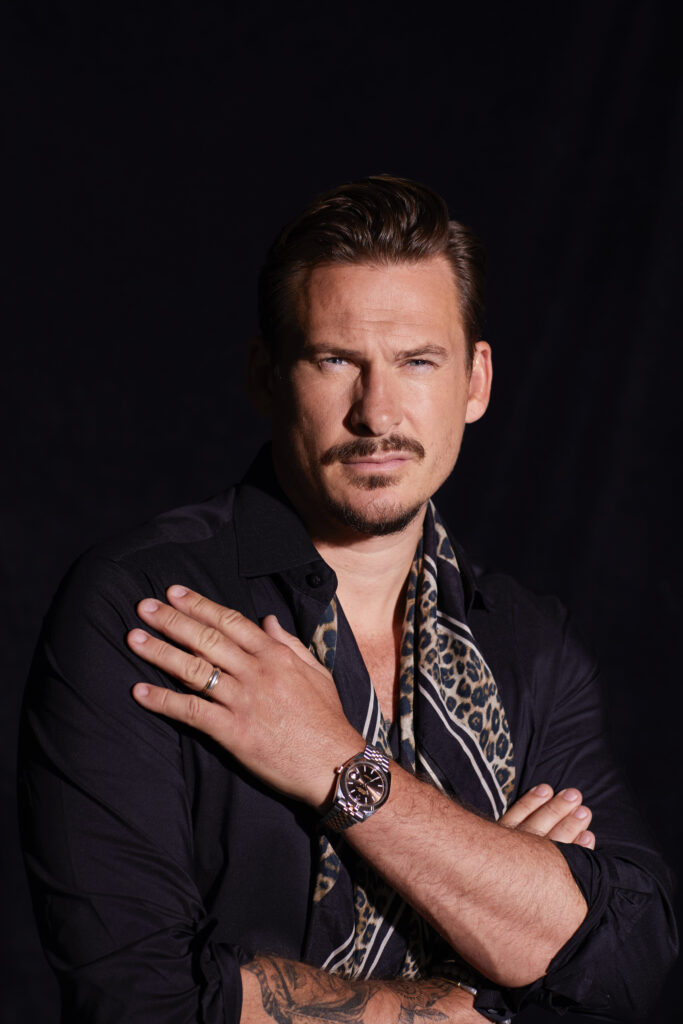
Lee Ryan’s “One More Night” doesn’t signal a comeback, but it marks a quiet renaissance. In a cultural landscape often defined by velocity, noise, and novelty, his return feels almost ceremonial: a measured offering from an artist who no longer performs for the spotlight, but releases music as an act of clarity, of creative sovereignty.
There is a certain rarefied grace in Ryan’s presence, not manufactured, but earned. The boyband prodigy who once ruled the charts has matured into a craftsman of emotion, someone who understands that the most enduring art doesn’t shout to be heard. It moves like memory. It arrives softly and stays.
*One More Night* is exactly that kind of work. With its glimmer of R&B finesse, breezy cadence, and lyrical openness, it captures the nuanced pulse of summer but also something deeper: the intimate tempo of lived experience. The voice we remember, unmistakably his, textured with warmth, nostalgia, and quiet defiance, now returns not as a symbol of past glories but as a vessel of present truth.
And this truth doesn’t need explanation. It unfolds through tone, through restraint, through an unspoken understanding between artist and listener. In *One More Night*, Ryan isn’t chasing cultural currency but he’s composing atmosphere. He’s crafting a feeling. The kind you can’t fake. The kind that finds you when the world slows down, on the highway at dusk, at the edge of a dance floor, alone in your room with nothing but music and breath.
What he offers now is not a product, but a moment. Not a reintroduction, but a reminder that certain voices, when they return, don’t resume where they left off. They open a new chapter entirely. Like all enduring icons, Lee Ryan doesn’t follow the noise, but he sets the tone. This isn’t nostalgia dressed as relevance, but it’s relevance, dressed impeccably in timeless cool.