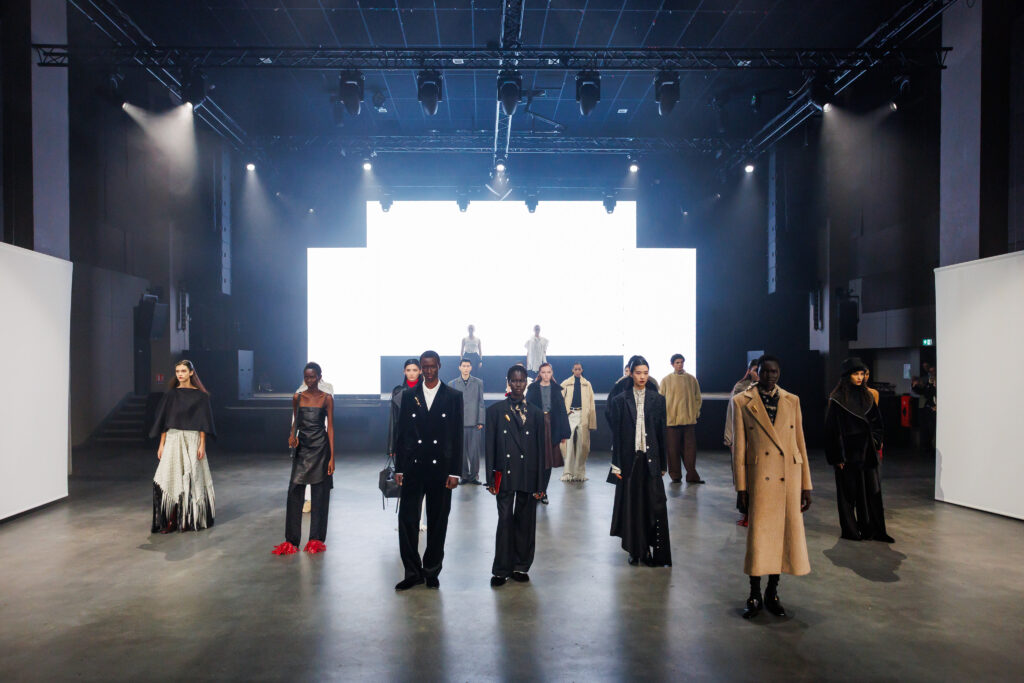
Story by Editor-in-Chief Carolina Ogliaro
In the subterranean concrete expanse of YOYO at the Palais de Tokyo, a space usually reserved for the high-decibel energy of youth culture, the South Korean brand EENK staged a performance that was, in many ways, an exercise in intellectual defiance.
The collection, titled “D for Duplicity,” marks the fourth chapter in designer Hyemee Lee’s ambitious “Letter Project”, an alphabetical odyssey that aims to build a global fashion house one letter at a time. But if you were expecting a moral fable about deception, you were in the wrong room. For Ms. Lee, duplicity isn’t a vice, but it’s a sartorial strategy.
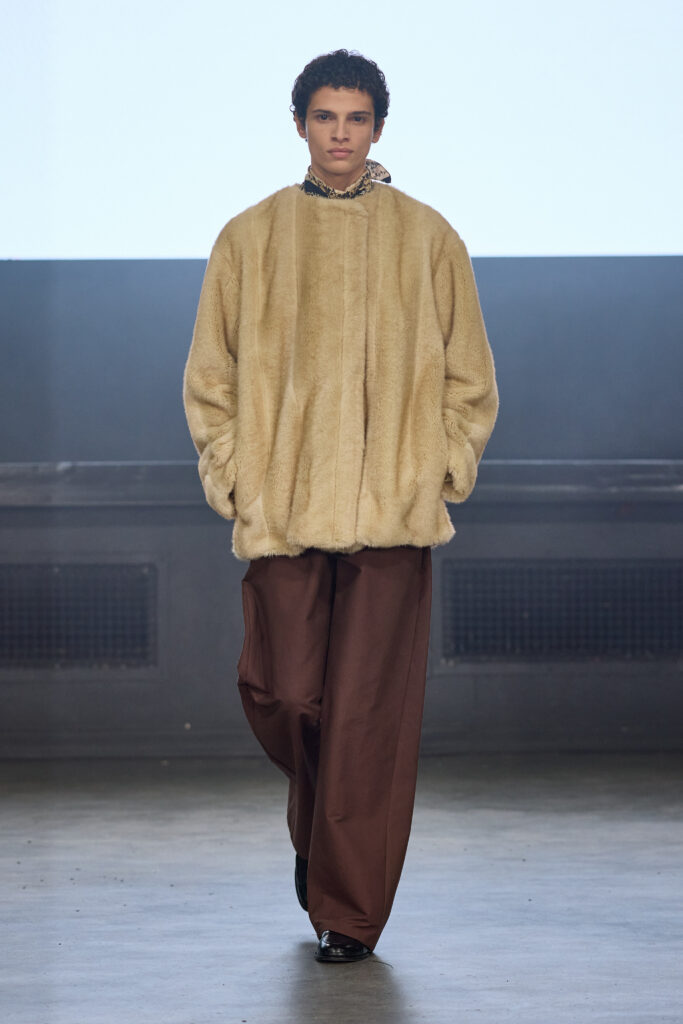
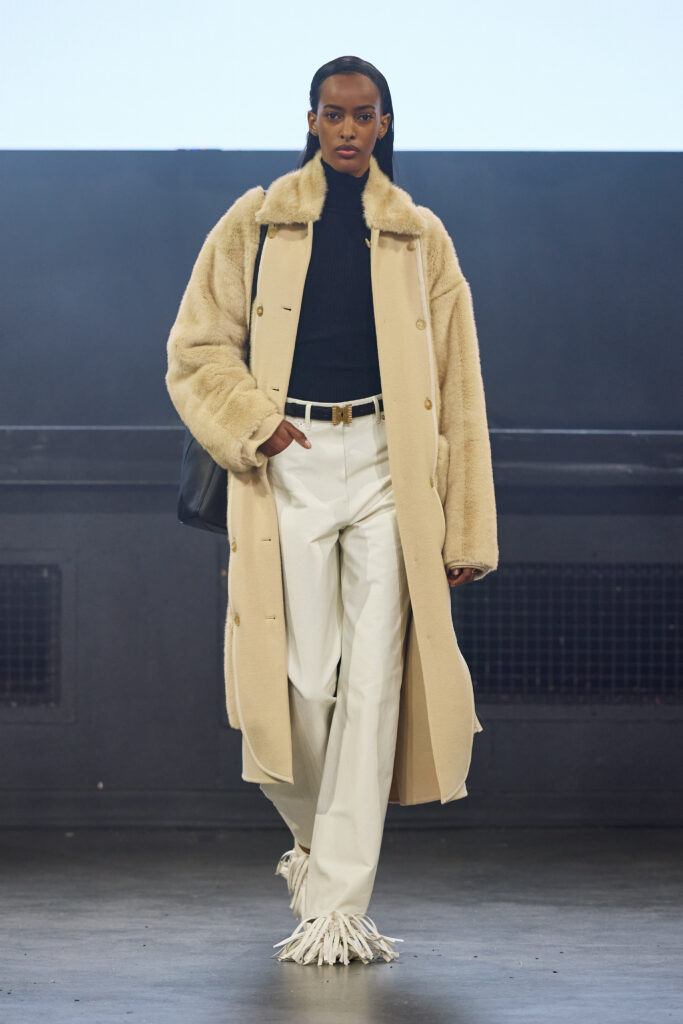
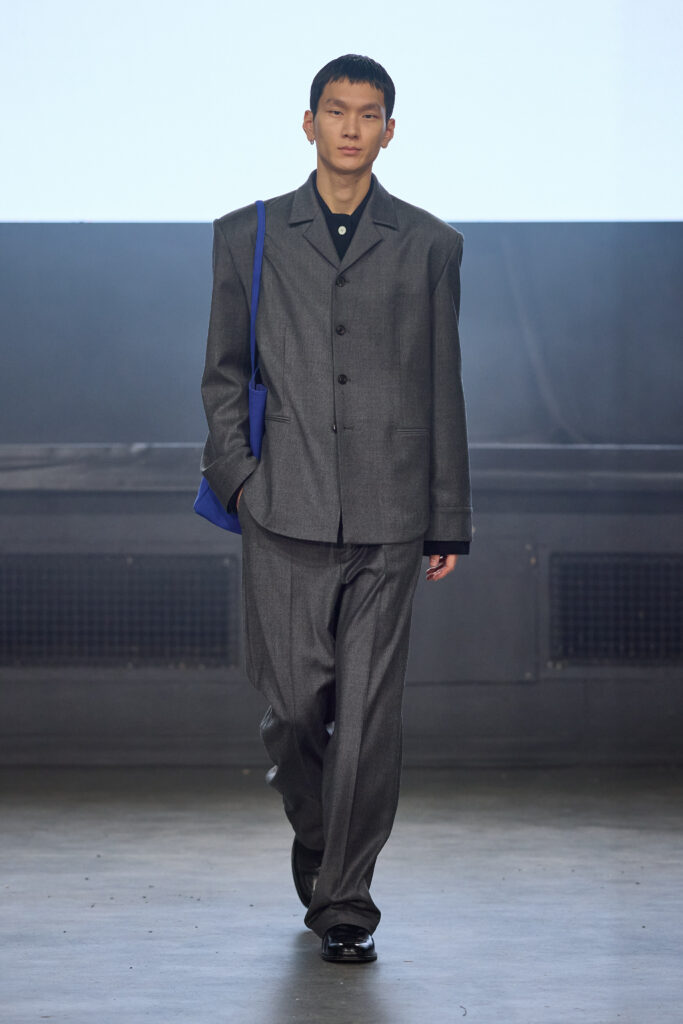
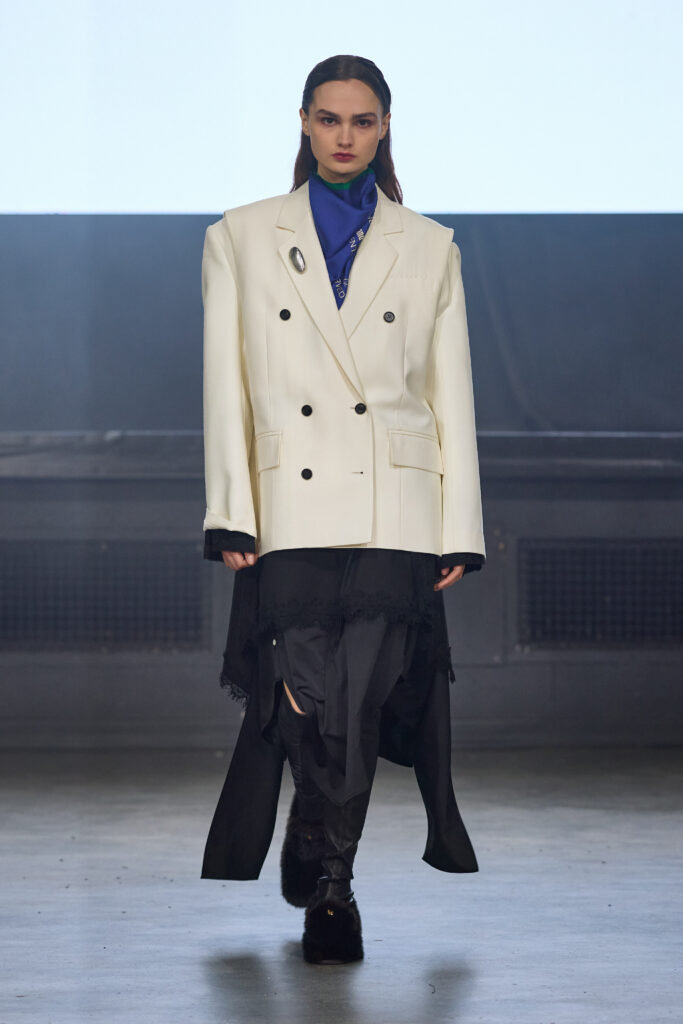
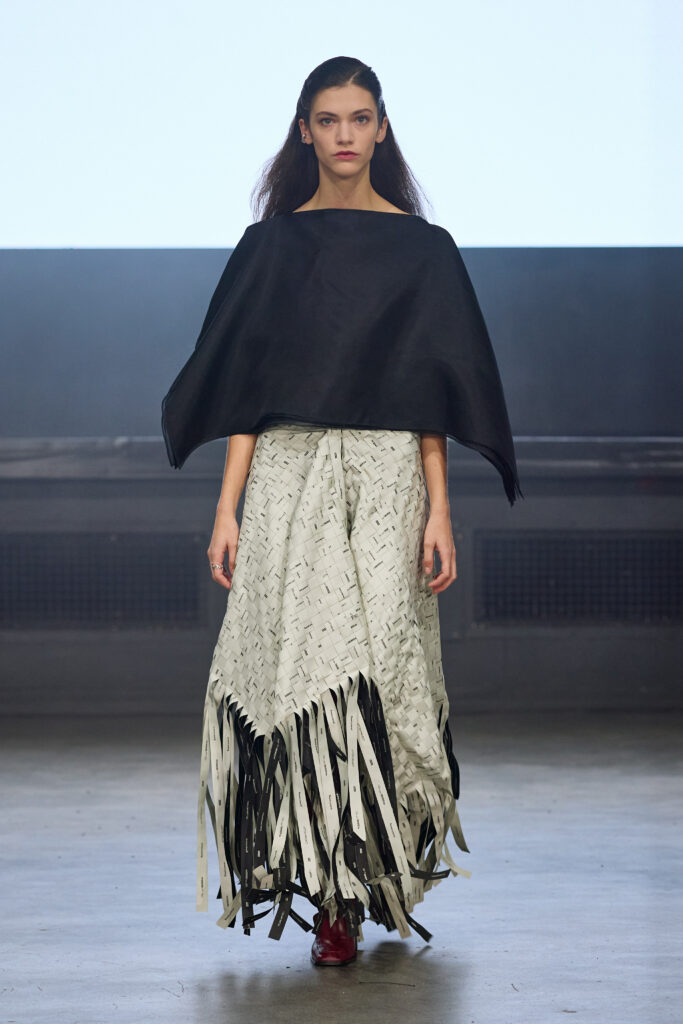
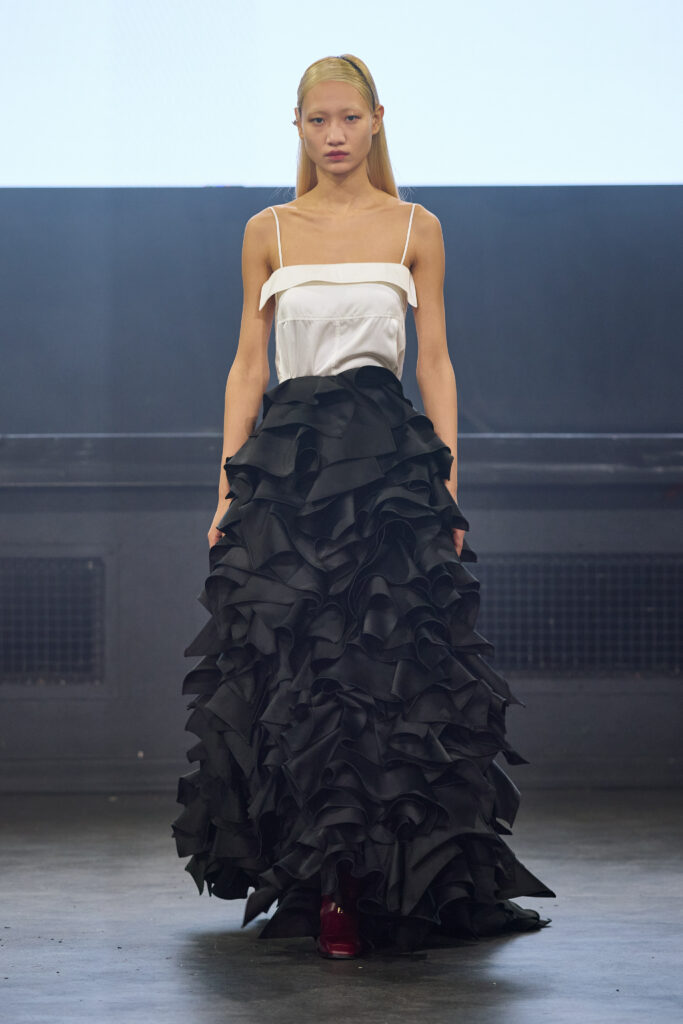
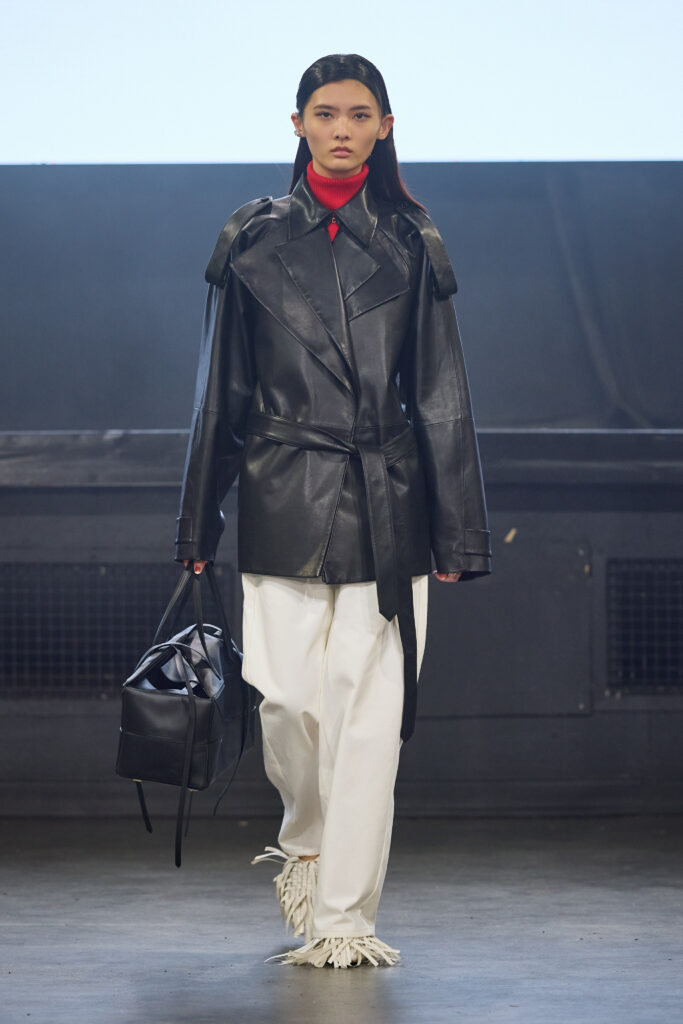
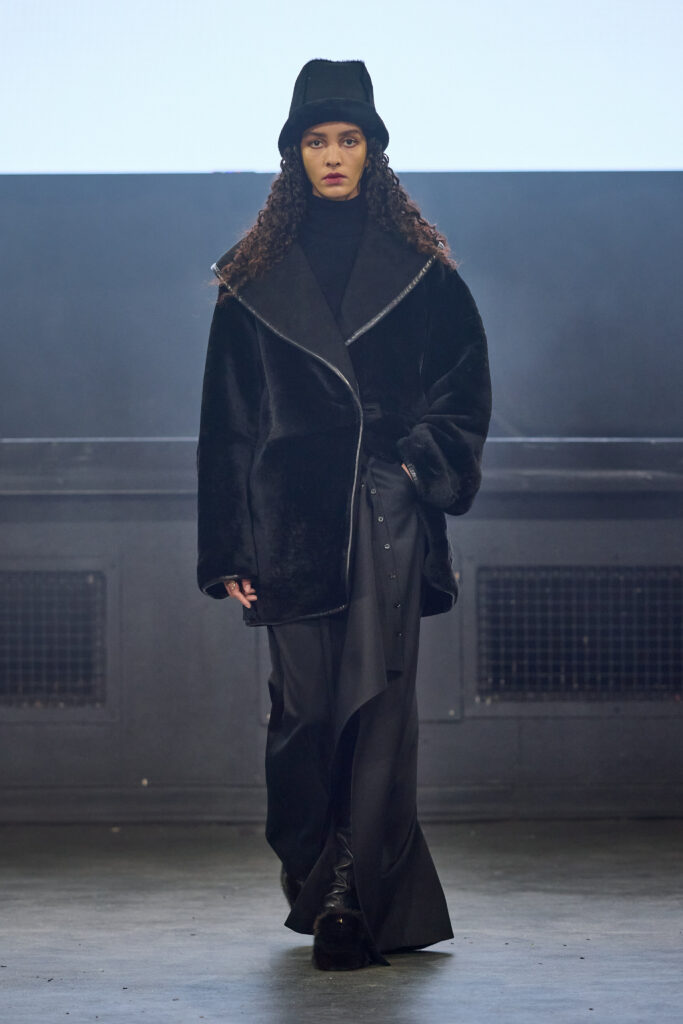
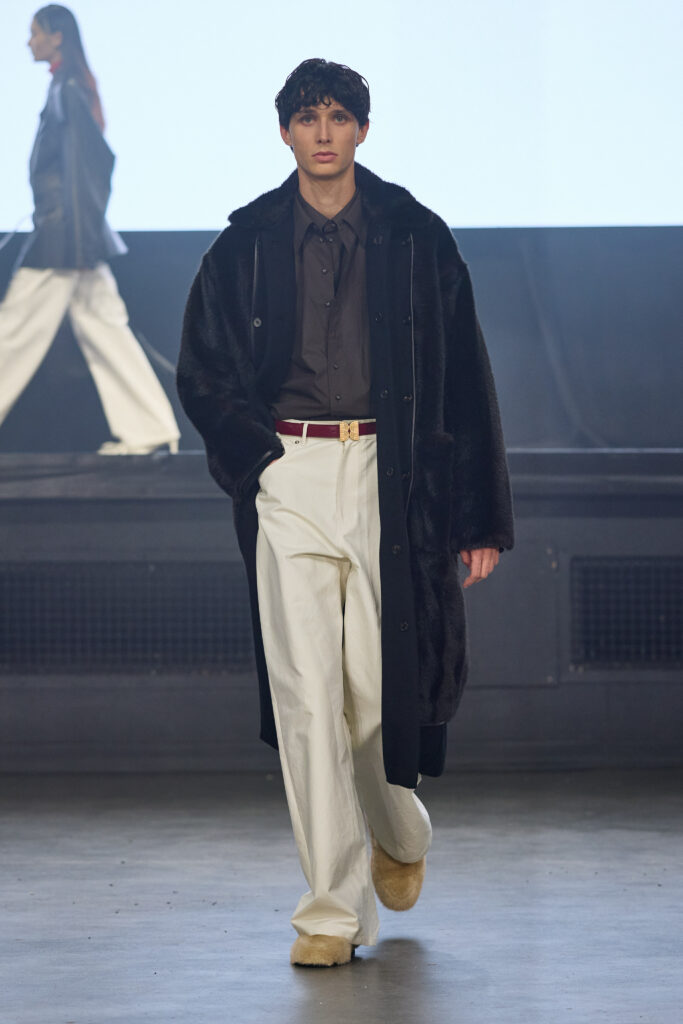
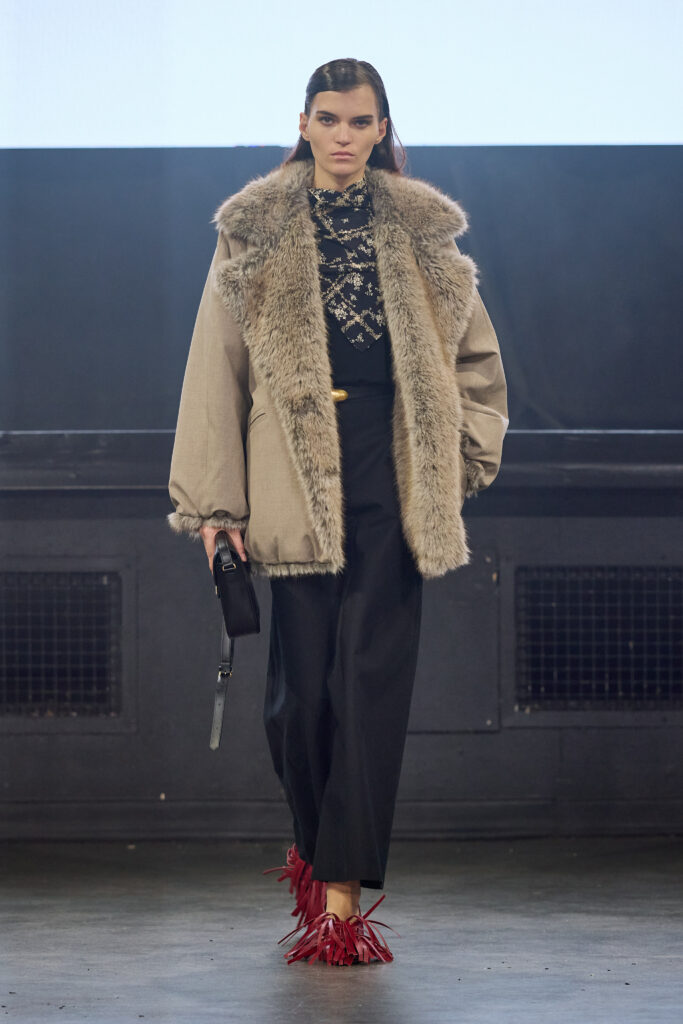
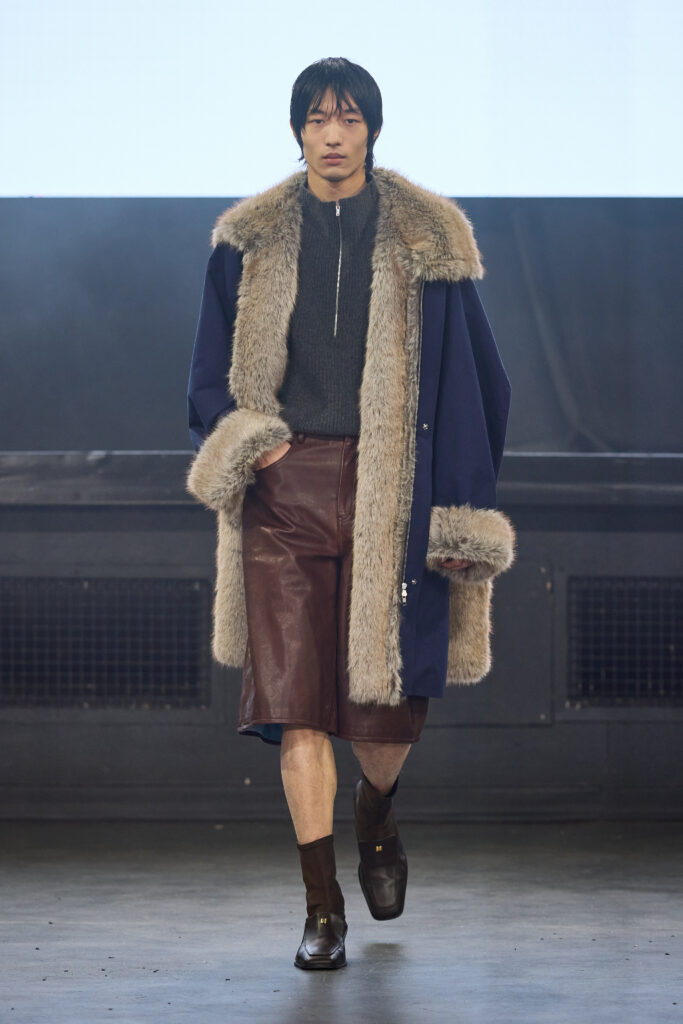
If the world demands us to choose a side (masculine or feminine, interior or exterior, restrained or expansive), EENK’s Fall/Winter 2026/27 collection suggests that the most interesting place to be is exactly in the middle. Or, more accurately, to be both at once. The clothes themselves were a masterclass in what Ms. Lee calls “sartorial truth.” There were reversible jackets that flipped to reveal entirely different other selves, and coats that shifted their very architecture through a clever deployment of buttons. These weren’t simple “two-for-one” garments but were physical manifestations of the plural identities we all navigate daily.
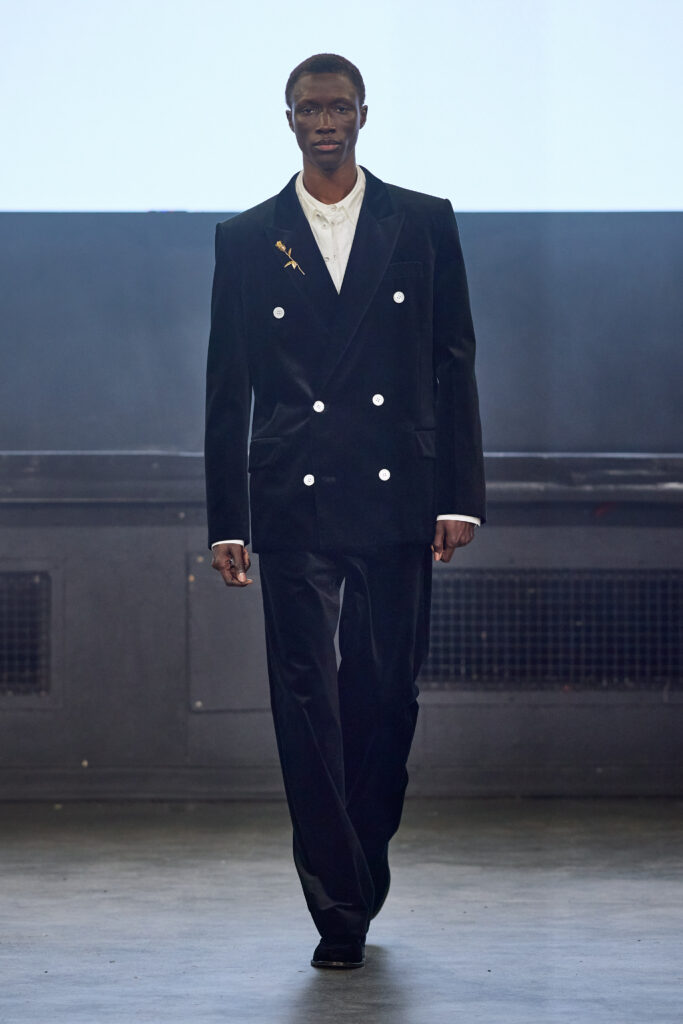
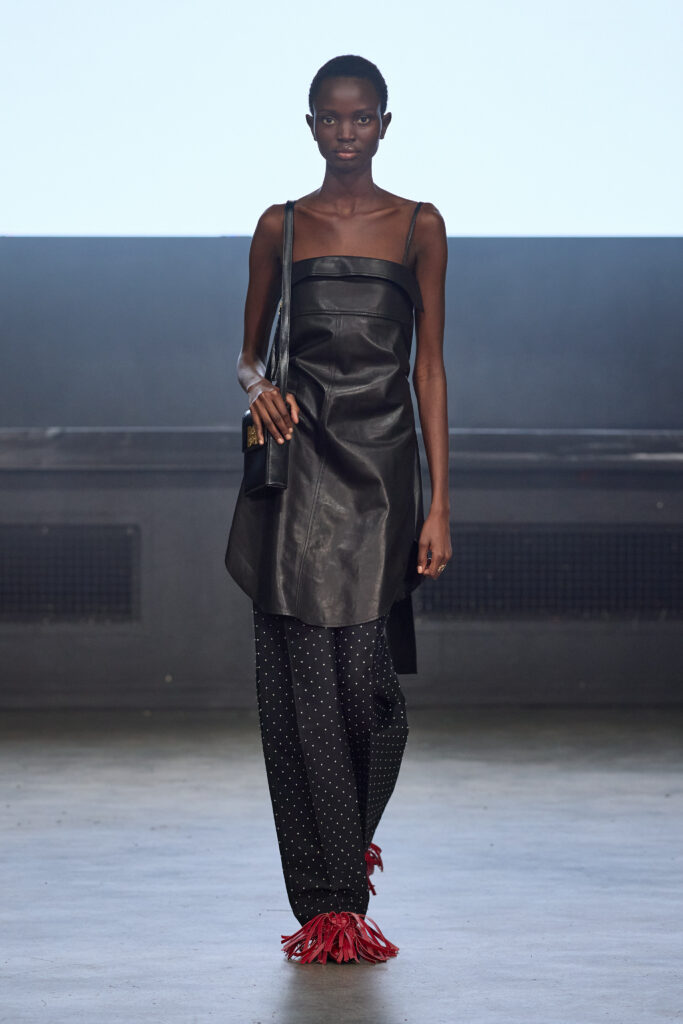
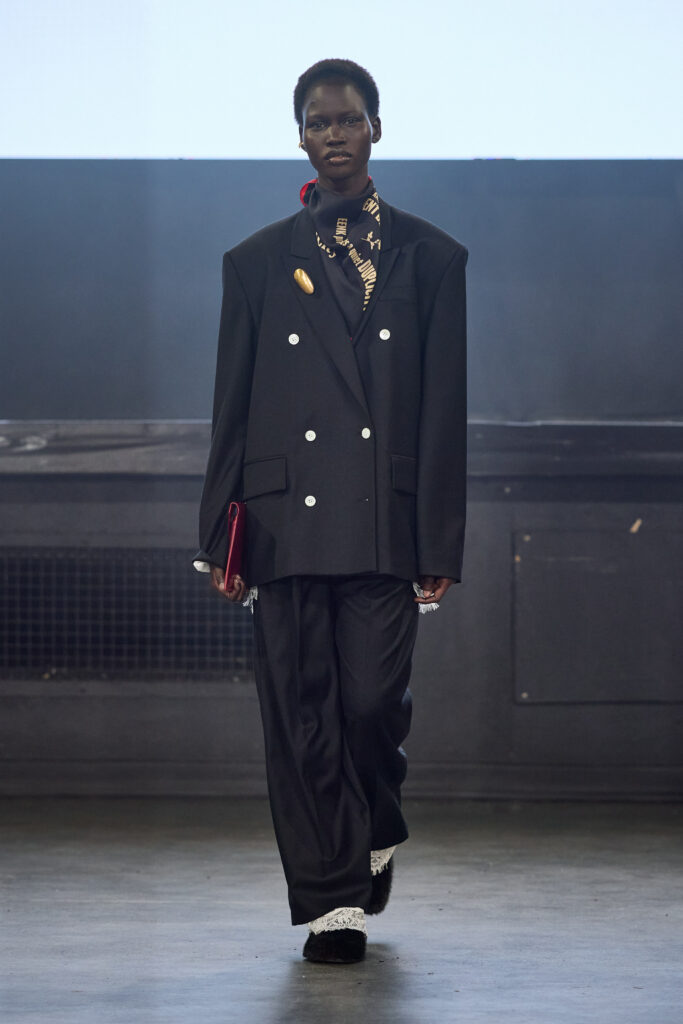
The EENK Lexicon Sartorial Translation:
Duplicity : The coexistence of two identities in a single form.
The Silhouette : Disciplined lines meeting rich, fluid volumes; structural duality.
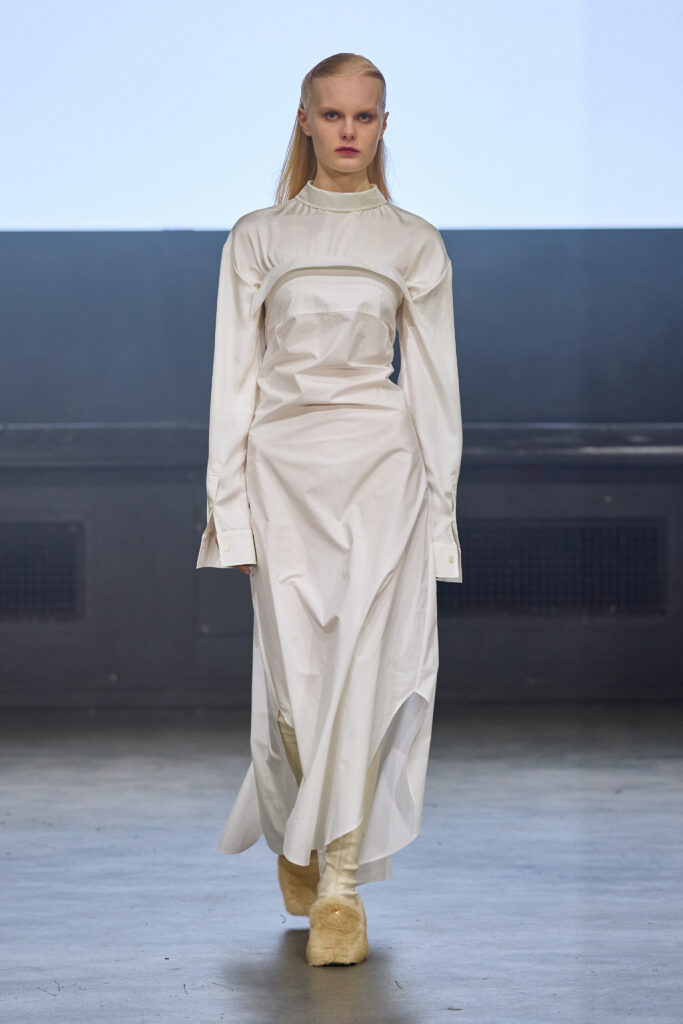
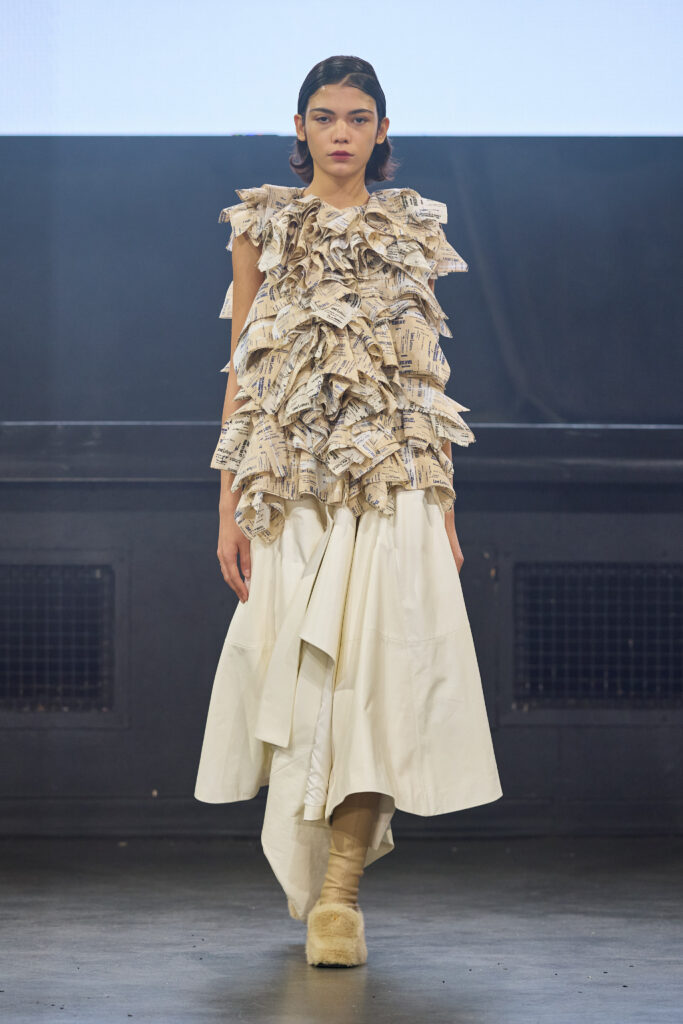
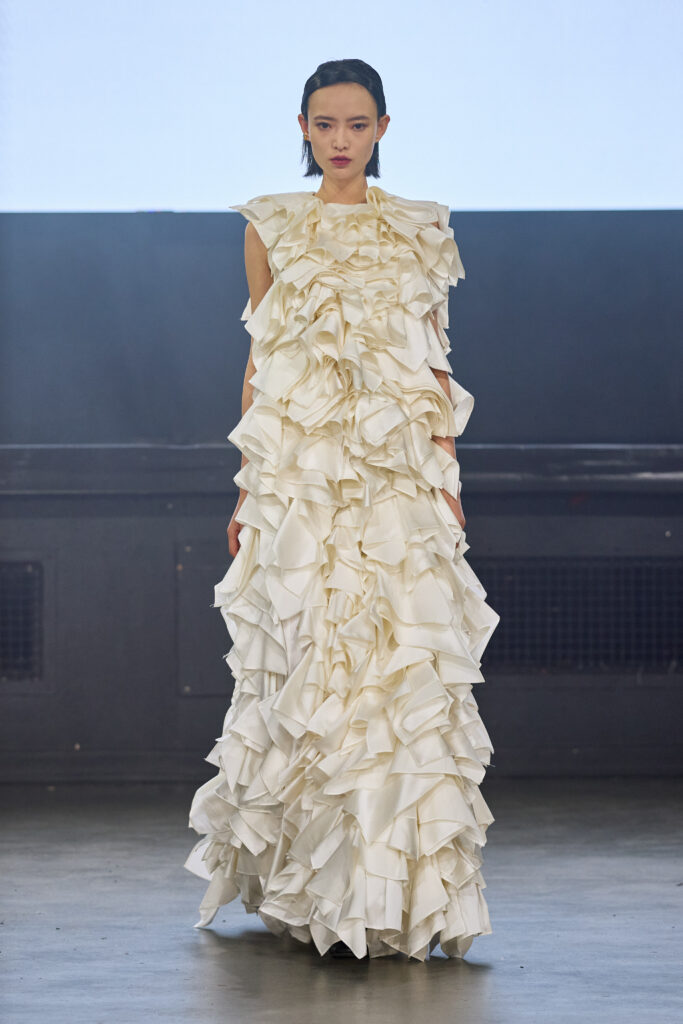
The Rose Motif : Reinterpreted through layering, moving from floral to sculptural.
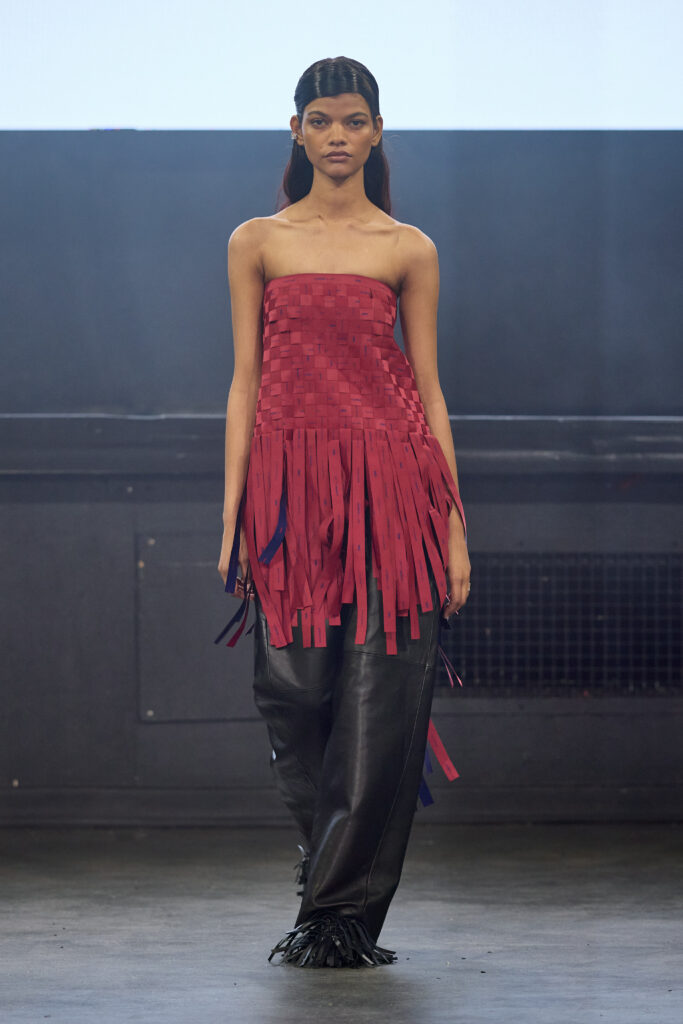
The Palette . Neutral black, beige, and ivory, punctuated by vivid red and mint.
The presentation was anchored by a haunting choreography of two dancers, their movements reflecting the tension and balance inherent in a single identity. Accompanied by a soundscape from Studio Ingmar, which blended the electronic textures of the city with the melting snow of the French Alps, the show felt like a psychological inquiry.
Ms. Lee, whose father owned a printing business in Seoul, has always been fascinated by the idea of “making as a form of inscription.” Her brand name itself, EENK (a play on “ink”), is a nod to this heritage. In her hands, a garment is a carrier of meaning, a chapter in an unfolding narrative. “Duplicity is not a moral failing but rather a sartorial truth: two identities occupy a single form, with neither canceling the other out,” the show notes explained.
This philosophy was most evident in the way Ms. Lee handled volume. A single silhouette was often capable of holding two structures simultaneously, a feat of engineering that allowed for both discipline and expansion. The rose motif, a classic symbol of femininity, was stripped of its sentimentality and reinterpreted as a sculptural presence, layered and structured into something almost architectural.
For a brand that has grown from a solo project in Seoul to a team of 40 with a presence in prestigious boutiques like Printemps and Antonia, the ambition is clear: to establish the first truly global Korean fashion house.
In the high-stakes theater of Paris Fashion Week, Ms. Lee is doing something far more sophisticated. She is writing. And with “D for Duplicity,” she has penned a chapter that teaches that the most powerful thing we can wear is our own complexity. In the European-esque calculus of power dressing, EENK is offering a new way to read the person wearing it. And in a season defined by a search for substance, that is a very powerful message indeed.