John Zannis, founder of ZANNIS, on how a fragrance becomes part of someone else’s story.
The founder of ZANNIS traded the lab coat for a creative director’s title and says the best fragrances finish their sentences long after you’ve left the room.
Fragrance has a credibility problem. Everyone claims a story, a heritage, a “journey.” Few can say what happens after the bottle is closed, when a scent leaves the shelf and enters someone’s actual life. John Zannis built his brand around that second part.
On paper, his résumé doesn’t read like a perfumer’s. He is a Stanford-trained human biologist and surgeon. His art background shapes his approach to composition, and he is clear that he thinks of himself as a founder and creative director, not a perfumer. That distinction matters. It gives him permission to ask questions the industry’s traditional ladder tends to skip: What does a fragrance do to memory? What does it leave behind? What does it say about the person wearing it before they’ve said a word?
Those questions have a name: Olfactory Neurodesign. Materials issued under the SIX7 banner and credited to Zannis introduced the framework in late 2025, built on molecular neuroscience rather than tradition or intuition. In conversation, he describes it more simply. It is a design philosophy rooted in curiosity about perception and memory, and he is explicit that it is not a claim to program anyone’s emotions. The person wearing the fragrance remains the final author of what it means.
That openness makes ZANNIS worth a closer look. Greek perfumery is having a moment, and editors have been compiling must-know Greek perfume brands with enthusiasm. The obvious route is the postcard: blue water, lemons, a long summer lunch. Zannis declined it. His Greek heritage, he says, gives him values rather than scenery: honor, hospitality and praxis, the practice of putting beliefs into action. The brand’s signature fragrance draws its name from axios, the Greek word for “worthy.” It is a rare thing for a perfume house to name itself after a standard it expects to be held to.
We spoke about unlearning, about science and magic, about whether timelessness is a conviction or a luxury, and about the stranger who might one day catch a trace of ZANNIS on a crowded street and think of someone they used to know.
What did you have to unlearn to become a perfumer? I’d describe myself as a founder and creative director rather than a perfumer. The biggest adjustment was letting go of the idea that precision produces one correct answer. With scent, two people can experience the same composition differently, and both responses matter.
What does Olfactory Neurodesign actually change? It means starting with a question beyond “Does this smell good?” What kind of presence do we want this fragrance to express? How should it unfold, and what impression might remain after someone leaves?
My background in human biology makes me curious about perception and memory, while my art background shapes how I approach composition. Olfactory Neurodesign brings those interests together. It’s a design philosophy, not a claim that we can program someone’s emotions.
And you don’t need a lab to judge the result. You wear it, live with it, and notice what it evokes for you. People bring their own memories to a fragrance. That unpredictability is part of what makes it interesting.
Does explaining the science take away the magic? Knowing something about how scent connects with memory makes it more fascinating to me. But nobody needs a neuroscience lesson to enjoy a beautiful fragrance. Science informs my curiosity; the fragrance still has to move you on its own.
Is timelessness a conviction or a luxury of independence? It’s a conviction, and independence gives me room to pursue it. I want someone to discover ZANNIS years from now and feel it belongs in their life. That means making choices for lasting character, even when something more fashionable might get attention faster.
What Mediterranean cliché did you refuse? The obvious shortcut is blue water, lemons, and a summer holiday. Those things are beautiful, but my Greek heritage gives me more than a visual backdrop. It gives me values: honor, hospitality, and praxis, putting your beliefs into practice through what you actually do.
For ZANNIS, that means taking pride in the work, being thoughtful about the experience we offer, and making sure the product earns the story we tell. There’s also axios, meaning “worthy,” which gave our signature fragrance its name. To me, that’s both an aspiration and a responsibility: create something worthy of someone’s attention and trust.
Where does ZANNIS sit in the conversation with fashion? Fashion understands that desire comes from an entire world: the object, the image, the attitude. I want ZANNIS to have that visual coherence. Presentation is important to me, but the fragrance has to deliver on what the image suggests.
What would you cut from your manifesto? Anything that explains too much before someone has smelled the fragrance. My background and philosophy give the brand context, but they shouldn’t become homework. I’d keep the ambition to create something beautiful and memorable, and let the work carry more of the conversation.
What do you hope a stranger remembers? The person wearing it. Maybe someone they loved, someone who fascinated them, or someone they met only once but never quite forgot.
What interests me about fragrance is that it can become part of how we remember someone without our consciously choosing it. You might forget the details of an encounter, then a familiar scent brings back its feeling with surprising clarity.
I’d love ZANNIS to become part of that personal history. Remembering the name on the bottle would be lovely, of course. But having the fragrance bring someone back to you, even briefly, is the deeper ambition.
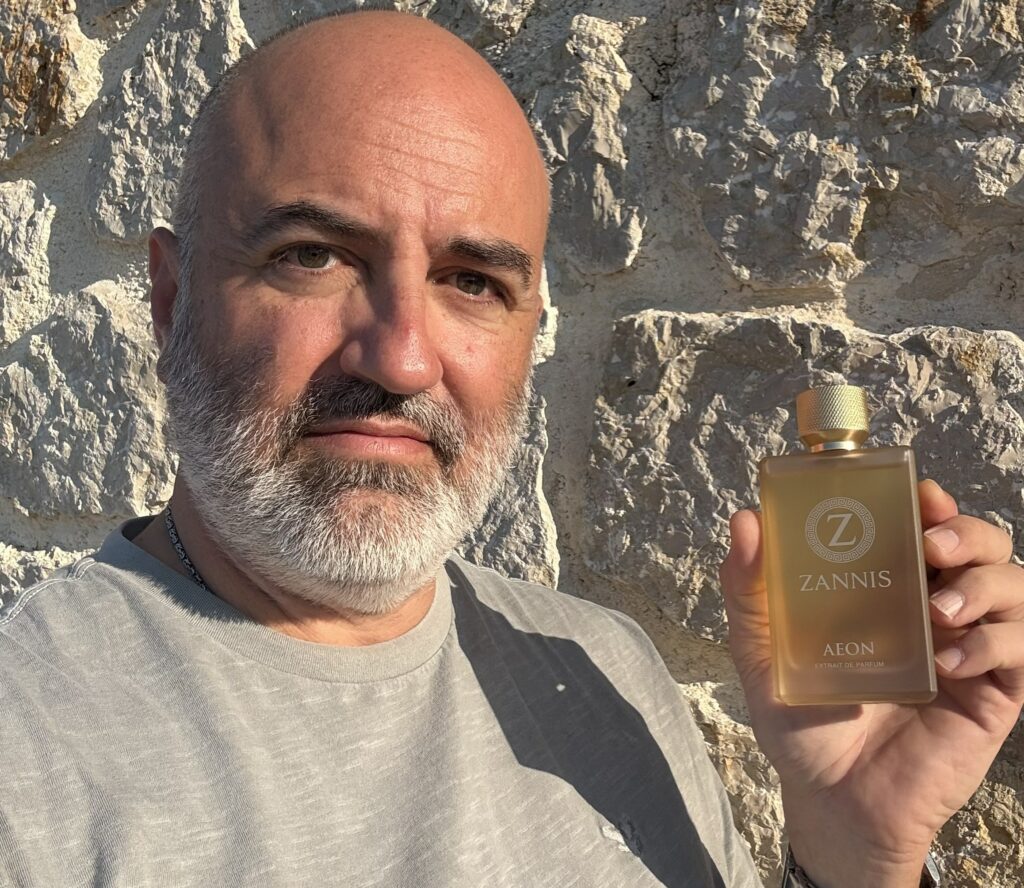
Zannis ends where most brand founders begin, with a person. The founder who studied the biology of perception and trained in art keeps returning to something unmeasurable: a face, a feeling, an evening that never really ended. He is happy to let the science sit in the background, and he wants the fragrance to do the talking.
Asked what he would cut from his own manifesto, he chose the explanations. For a generation raised on captions, context, and the receipts for everything, that moderation reads as confidence. ZANNIS is not asking to be decoded. It is asking to be worn, lived in, and eventually remembered, and the standard it set for itself with its name is worthy.
Scent is one of the few things that arrives before the story does and outlasts it. If ZANNIS does what its founder hopes, someone, somewhere, will catch it in passing and think of a person they never forgot.