Wellness has become one of those words that promises everything and delivers very little. In the age of relentless productivity, curated Instagram feeds, and the latest self-care gimmicks, true wellness is harder to find than a perfectly tailored blazer on a sale rack. It is not a trendy retreat, a supplement, or a ritualized morning routine, but it is a sustained practice of attention, presence, and self-awareness. It is about how we inhabit our bodies, how we negotiate our mental and emotional landscapes, and how we show up in the world with intentionality rather than autopilot.
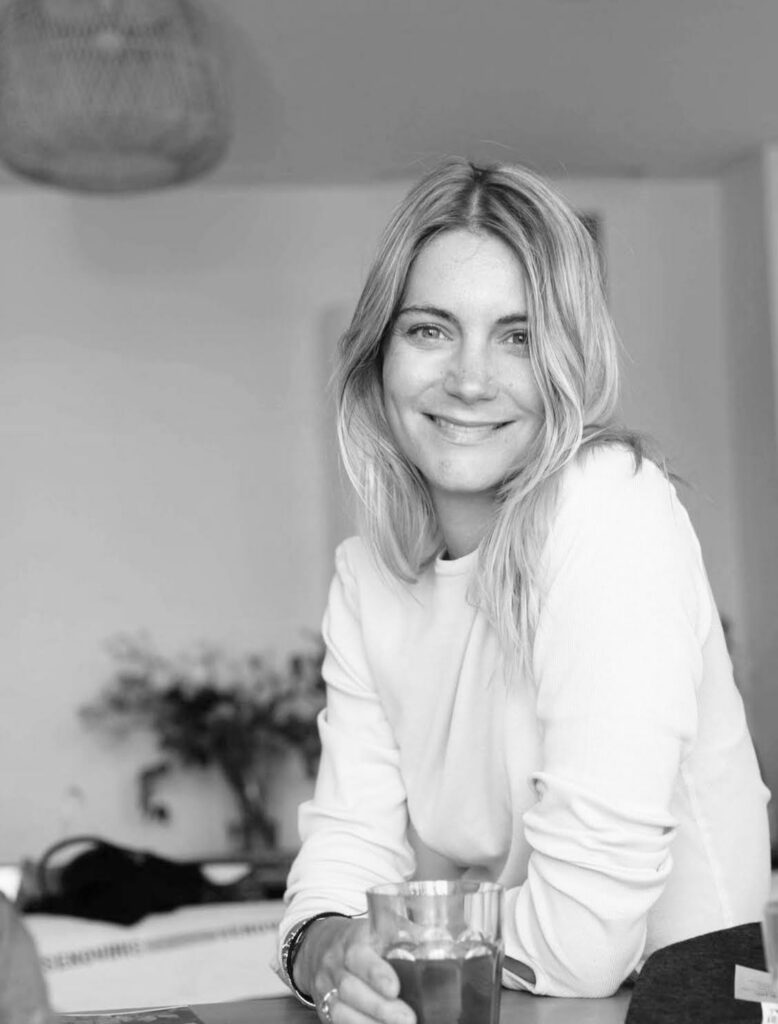
It is in this space between intention and daily life that Abigail Taugwalder operates. Founder of Garden of Abi, she has spent years translating the ancient disciplines of breathwork, meditation, and somatic awareness into tools that can be applied to modern life without requiring retreat from it. Her practice is as much about observing one’s inner rhythms as it is about creating them, a blend of curiosity, discipline, and grounded presence.
Abi’s work is shaped by a life lived across borders and philosophies. Years in Tokyo exposed her to Eastern traditions, from breathwork and meditation to the subtleties of rhythm and ritual. Paris, with its pace, pressures, and cosmopolitan energy, honed her understanding of what modern wellness requires: it must be practical, personal, and deeply attuned to the individual. The result is her signature Abi Method™: a three-stage journey from grounding to growth to embodiment that teaches people to inhabit their bodies and minds with clarity, balance, and intentionality.
Through seasonal wellness guides, somatic exercises, and personalized rituals, Abigail guides clients to reconnect with themselves in a culture that constantly demands outward attention. Her work is not about perfection, nor about achieving an idealized version of self, but it is about fostering a relationship with one’s own body and mind that is conscious, informed, and empowering. In short, she is helping to redefine what wellness can mean in the 21st century.
***
Your journey into wellness began long before Garden of Abi became a name, can you walk us through the moment you realized wellness was not just a practice, but your calling?
My journey into wellness began as a personal necessity rather than a professional ambition. There was a moment in my life when everything looked “fine” from the outside, yet internally I felt disconnected from myself, from my body, my rhythm, my intuition. What began as a search for grounding slowly revealed itself as a calling. I realised that well-being wasn’t about fixing myself, but about remembering how to listen. Garden of Abi was born from that remembering, a space where wellness becomes a way of living rather than a set of practices.
You’ve lived in Japan and Paris, and your teachings often reflect an East-meets-West sensibility. How have these cultural experiences shaped your philosophy of presence and conscious living?
Japan taught me reverence for repetition, subtlety, and presence. Mindfulness isn’t conceptual; it’s embodied through daily gestures. Paris, on the other hand, taught me expression, beauty, and emotional intelligence. My work lives in the dialogue between both: the discipline of the East and the sensibility of the West. Together they create a grounded yet expressive approach to conscious living.
Breathwork, Yin Yoga, meditation, you work with several modalities. How do these practices intersect in facilitating inner balance and self-awareness?
Breathwork, Yin Yoga, and meditation are not separate tools, but they are different doorways into the same state: regulation. Breath calms the nervous system, Yin Yoga creates space in the body for sensation to be felt, and meditation allows awareness to integrate. Together, they help people move from thinking to sensing and from sensing to clarity.
In your experience, what is the role of breath in reconnecting to oneself, and why is it often overlooked in modern wellness culture?
Breath is our most immediate bridge between body and mind, yet it’s often overlooked because it’s too simple. We’re conditioned to believe that transformation must be complex. Breath reminds us that regulation doesn’t require effort but only attention. When people reconnect to their breath, they often reconnect to themselves.
You champion the idea of personal rituals. Can you describe a foundational ritual that you believe can shift how someone experiences their day?
A simple morning arrival ritual: before checking your phone, place one hand on your heart, one on your belly, and take three slow breaths. This small pause reclaims agency over the day. It sets a tone of presence rather than reaction.
Conscious living is more than mindfulness. How would you define it, and what does it look like in everyday life?
Conscious living is the ability to respond rather than react.
It shows up in how we eat, rest, speak, consume, and relate — not as perfection, but as awareness.
It’s the art of living in alignment with our inner rhythm instead of external pressure.
Many women struggle to put themselves first. How do you help clients transform well-intentioned self-care into lasting inner growth?
Many women know what they should do, but struggle to make it sustainable. I focus on ritualisation, turning care into rhythm. When self-care becomes predictable, gentle, and embodied, it stops feeling like another task and starts becoming support.
As a mother, how has your personal wellness practice evolved through motherhood and what lessons has that evolution taught you about presence and balance?
Motherhood taught me humility.
Time becomes precious, attention limited, and the body more vocal.
It led me to practices that are gentle yet effective, rituals that support rather than exhaust. Presence, more than performance, became my compass.
Your journal and teachings touch on cellular health and mental regenerative practices. How important is the bridge between inner psychological work and physical well-being?
They are inseparable. Emotional stress lives in the body, just as physical tension shapes our thoughts.
Regenerative practices work because they address both calming the nervous system and supporting cellular renewal. Healing is systemic.
What does “living consciously” mean on a global scale, beyond the individual, in a world filled with constant movement and distraction?
On a global level, conscious living is about slowing systems that have forgotten how to pause. It invites cultures, industries, and communities to prioritise sustainability — not only of resources, but of human energy.
Your ‘PJ Yoga’ concept invites people to start their day without judgment. Why do you think accessibility and vulnerability are essential to any wellness practice?
Accessibility dismantles intimidation. When people feel allowed to arrive exactly as they are, they soften.
Vulnerability creates trust, and trust is where transformation begins.
How do you help clients confront and move past inner resistance or skepticism toward wellness rituals that feel intangible at first?
I don’t convince, I invite. Experience dissolves skepticism better than explanation. Once someone feels a regulated state in their body, resistance naturally quiets.
How do you balance tradition, such as Yin Yoga’s roots in meditation and Traditional Chinese Medicine, with the needs of modern, fast-paced lifestyles?
Tradition offers wisdom; modern life demands adaptability. I translate ancient practices into contemporary rituals, shorter, softer and integrated into daily life.
What common misconceptions about “wellness” do you find most limiting, and how do you encourage people to redefine them?
That wellness is about optimisation or perfection. True wellness is about regulation, compassion, and sustainability, not performance.
Looking ahead, how do you hope individuals transform their relationship with presence and inner growth, and what role do you see your work playing in that evolution?
I hope people rediscover presence as a form of power. My role is to create spaces and rituals that remind them of their own capacity to self-regulate, reconnect, and live with grounded luminosity.
***
In the end, the conversation with Abigail Taugwalder has taught that wellness is not a commodity to be consumed nor a trend to be followed. It is a discipline, a relationship, and a lens through which we engage with our own lives. Her work demonstrates that balance is neither static nor easily packaged, but it is cultivated, continuously negotiated, and ultimately a reflection of the choices we make every day about attention, presence, and care.
Through her method, her teachings, and her carefully crafted rituals, Abi shows that true wellness requires curiosity as much as commitment. It is about noticing the small rhythms, the breath in a crowded room, the pause before responding to a difficult email, the awareness of tension in a body that moves too quickly and learning to respond with intention rather than habit. Abi’s work insists that slowing down, noticing, and reflecting are not indulgences but essentials.
Abigail Taugwalder’s practice is a bridge between philosophy and lived experience. It honors tradition while embracing the practicalities of modern life. Her clients leave with more than relaxation or temporary clarity; they leave with the tools to navigate complexity, cultivate presence, and inhabit themselves with steadiness and insight. Leaving behind the idea of “having it all,” Abi’s contribution is very profound: wellness is not about accumulation or perfection but about integration, alignment, and conscious engagement with the life we are actually living.