Story by Editor-in-Chief Carolina Ogliaro
Yuima Nakazato continues to move in the opposite direction of speed and noise. His latest couture proposal does not announce itself with music or theatrical flourish. Instead, it asks for silence or, to be more precise, for listening.
The collection is rooted in a journey to Yakushima, a remote island in southern Japan known for its ancient cedar trees, some thousands of years old. Nakazato frames the experience as confrontation: with geological time, with landscapes untouched by human intervention, and with the uncomfortable smallness of the human scale. It is from this encounter, with tree rings, eroded stones, and driftwood smoothed by water, that the collection takes its form.
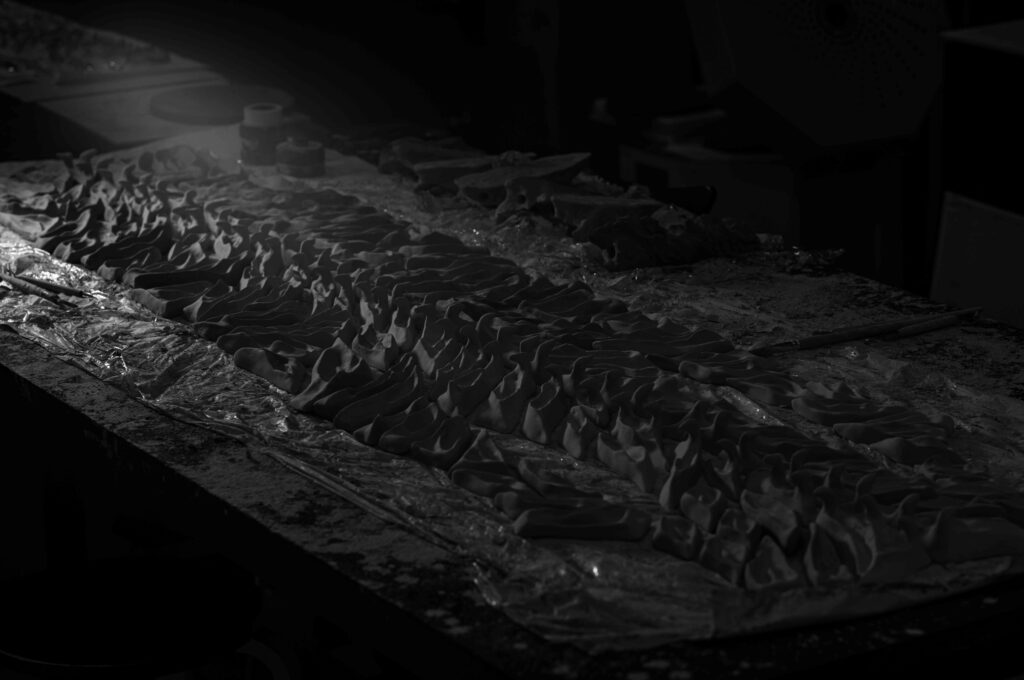
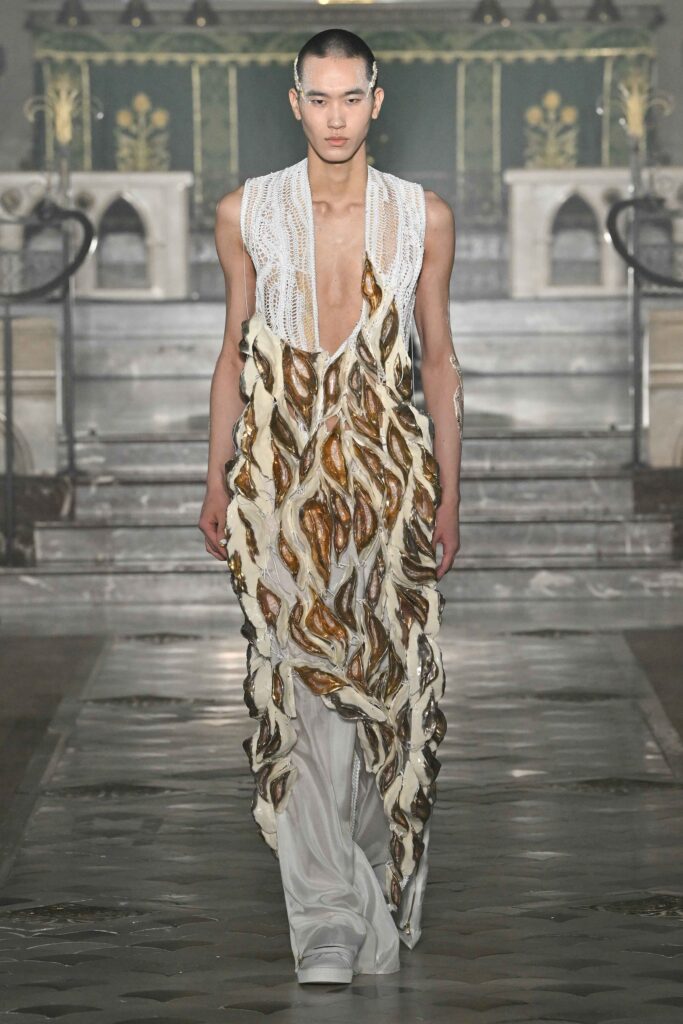
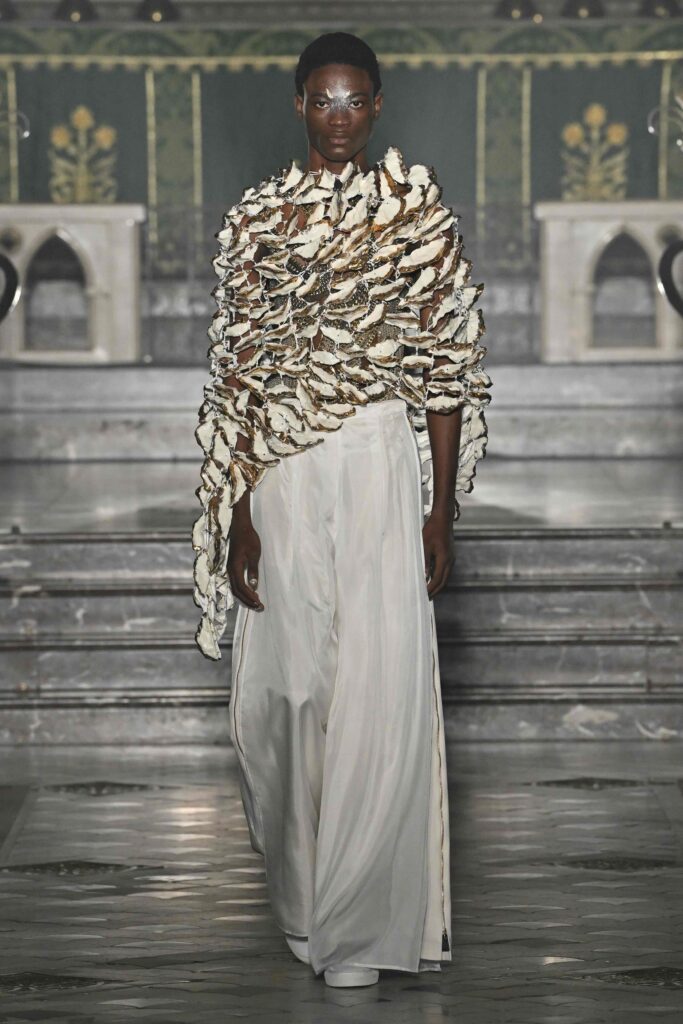
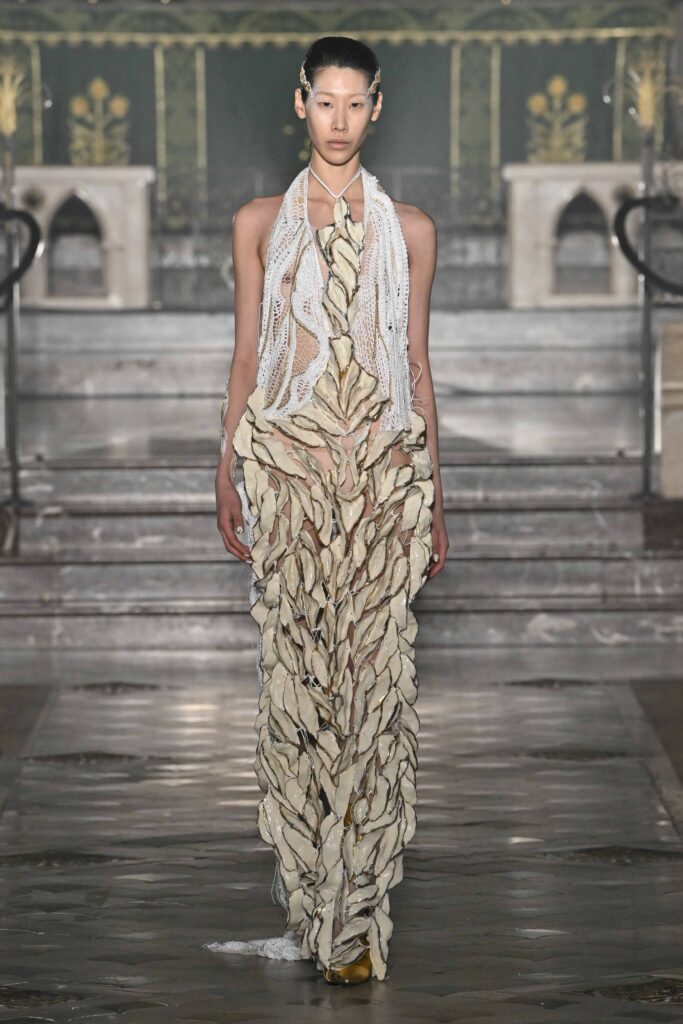
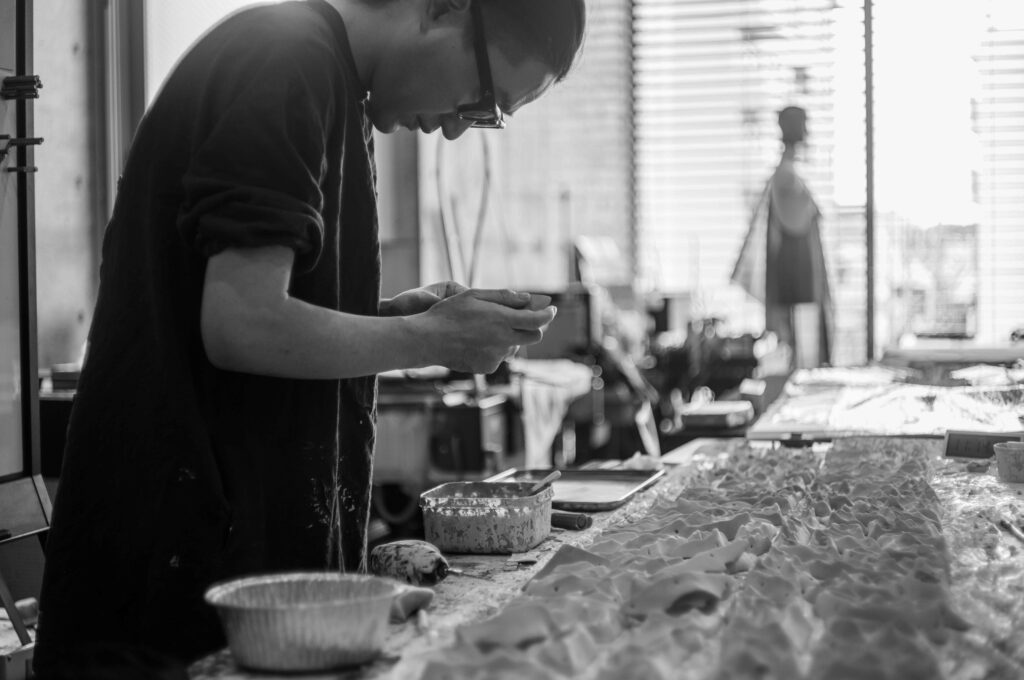
Nature, of course, has long been fashion’s most reliable muse. What distinguishes Nakazato’s approach is immersion. Over a six-month period, the designer spent more than 1,500 hours working directly with clay, producing thousands of ceramic elements by hand. The process was repetitive, almost meditative, allowing form to emerge through physical memory rather than design assertion. The result is clothing that appears shaped by erosion, as if grown rather than constructed.
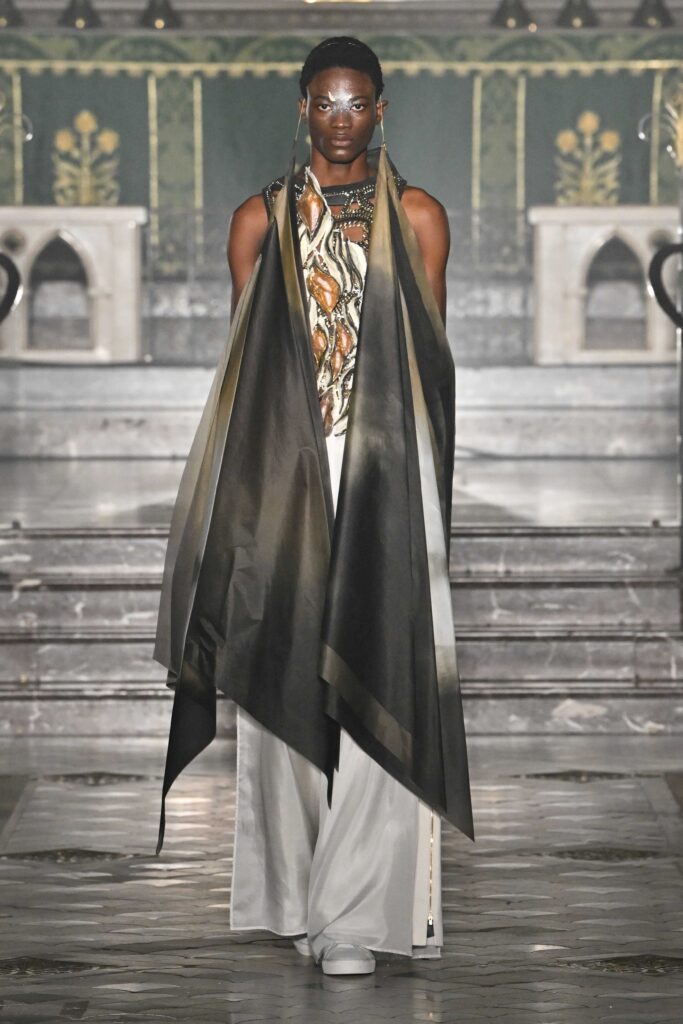

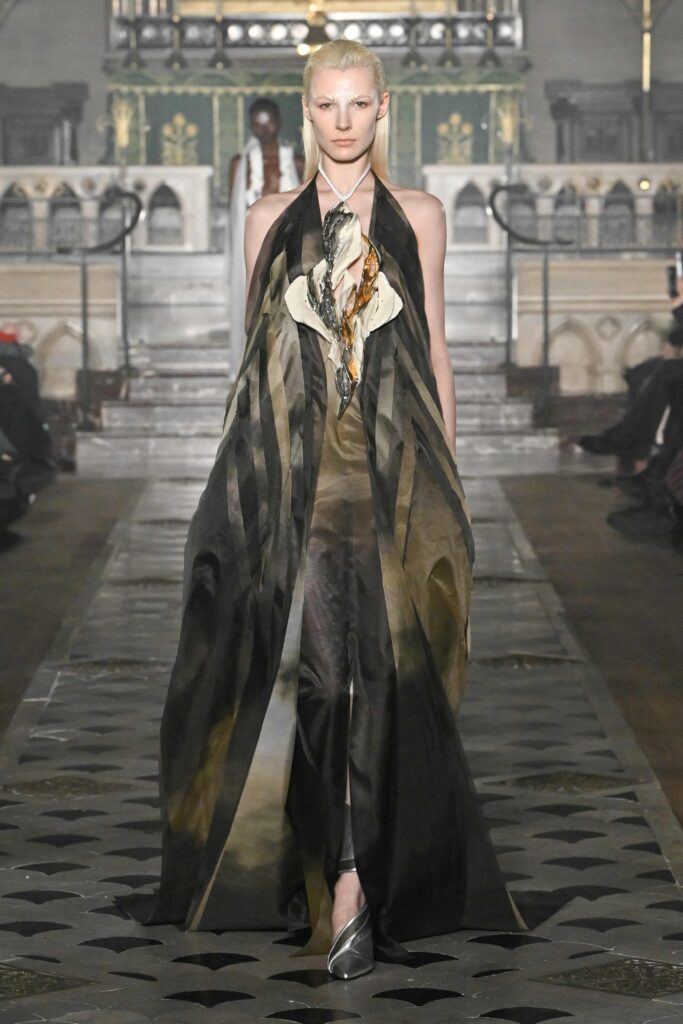
On the runway, sound becomes material. There is no music. Instead, the garments themselves, weighted with ceramic components, produce a faint, unstable resonance as they move. It is a sound closer to geology than to fashion, more echo than rhythm. Nakazato’s decision feels less conceptual than corrective. The show becomes a temporary withdrawal from the constant demand for stimulation.
The clothes mirror this restraint. Silhouettes recall organic stratification: layers that suggest sediment, surfaces that evoke bark, stone, or mineral deposits. The body is present but never dominant. It exists as part of a larger system, an ecosystem rather than a focal point. Fashion here is about belonging.
Technology, when it appears, does so quietly. In collaboration with Epson, Nakazato employs digitally output transparent ink on silk, invisible to the eye yet structurally transformative, allowing raw, unhemmed edges to remain intact without fraying. The gesture is emblematic of his approach: innovation that does not announce itself but alters the garment at a fundamental level.
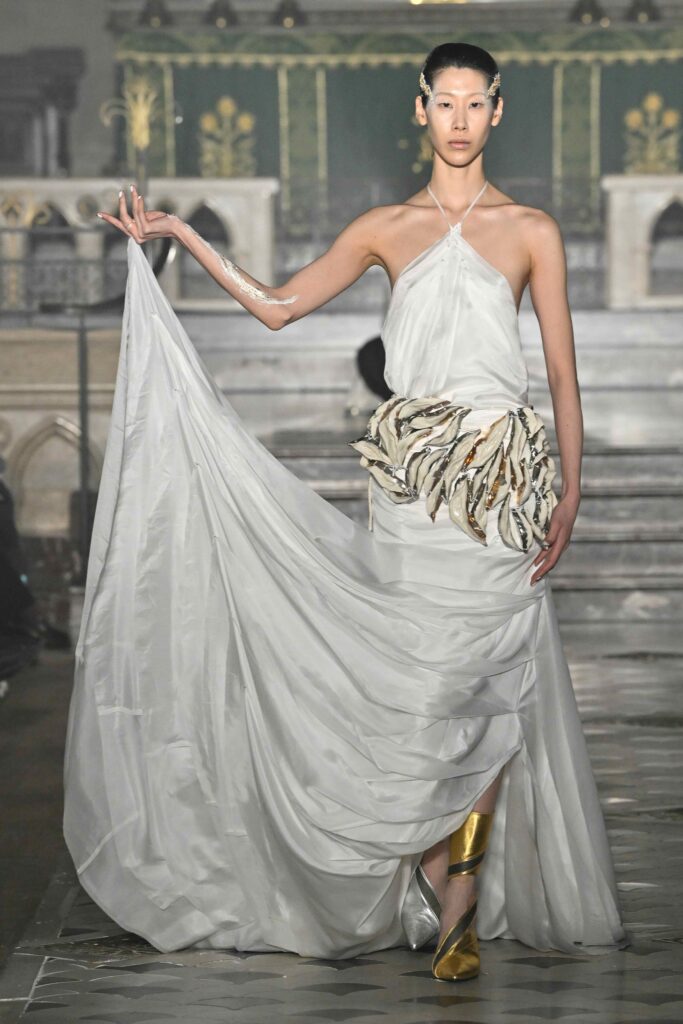

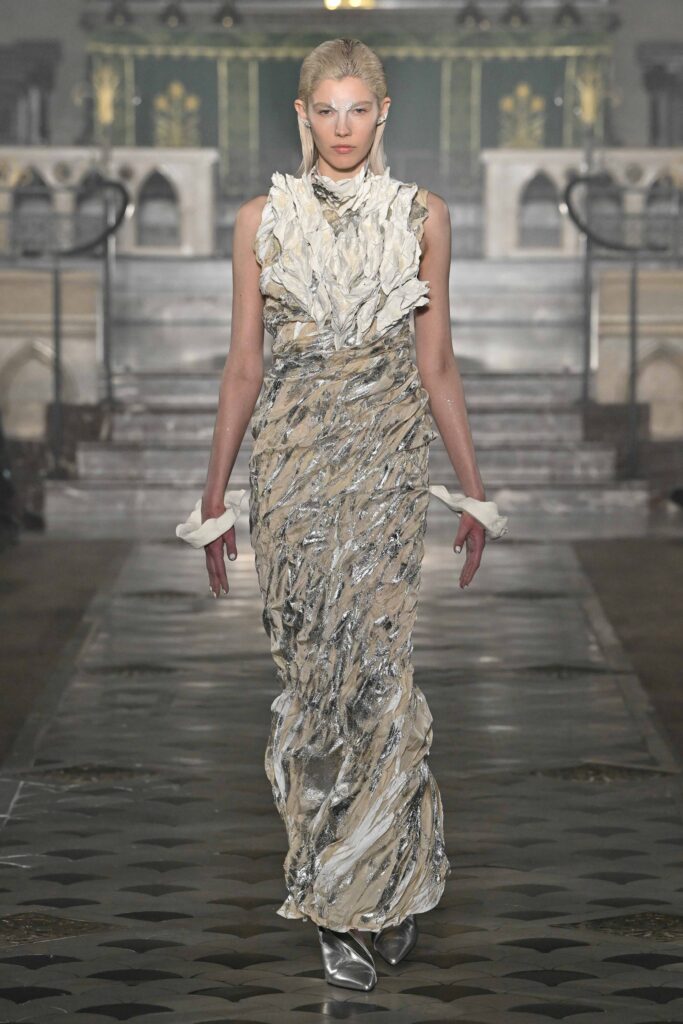
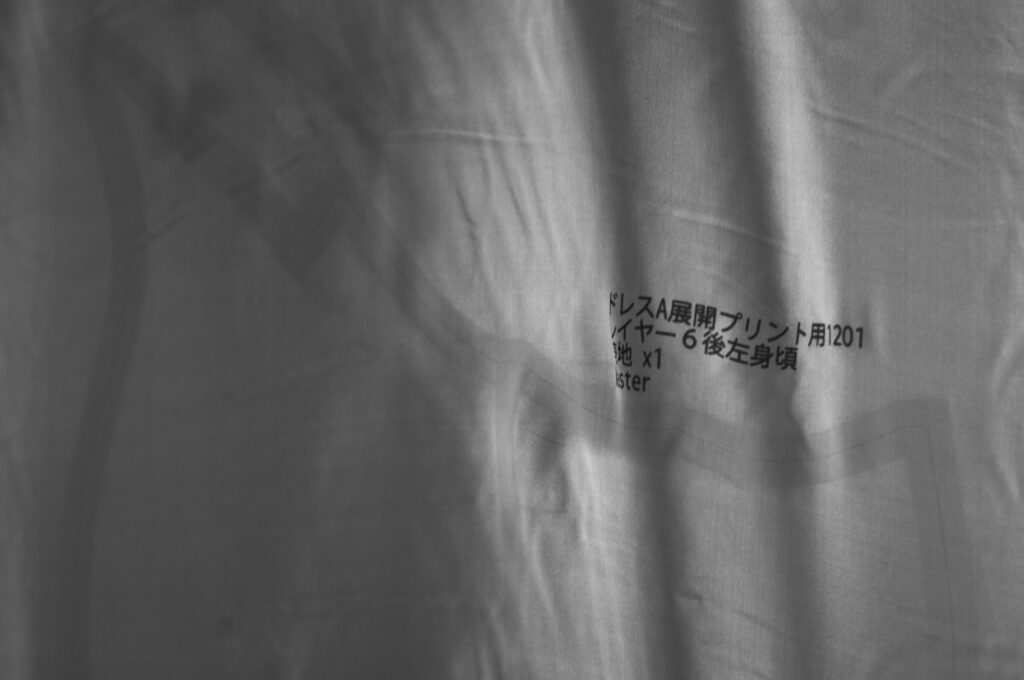
Sustainability, too, is treated as practice rather than proclamation. Using Epson’s Dry Fiber Technology, second-hand garments collected globally are transformed into new material, then finished with traditional Japanese urushi lacquer techniques. The result is neither purely technological nor purely artisanal but a hybrid, one that collapses distinctions between past and future, craft and innovation.
Nakazato’s position within couture has always been singular. The only Japanese member of the official Haute Couture calendar, a graduate of Antwerp, he operates at the margins of a system that often resists deviation. Yet it is accurately this distance that allows his work to function as an inquiry rather than a product.
This collection does not seek to dazzle. It does not promise solutions. Instead, it proposes attention… to time, to material, to sound, to the earth itself. In doing so, Nakazato affirms once again that couture’s most radical potential may not lie in spectacle or fantasy but in the ability to slow us down long enough to notice what we usually ignore.
And in that quiet, something shifts.