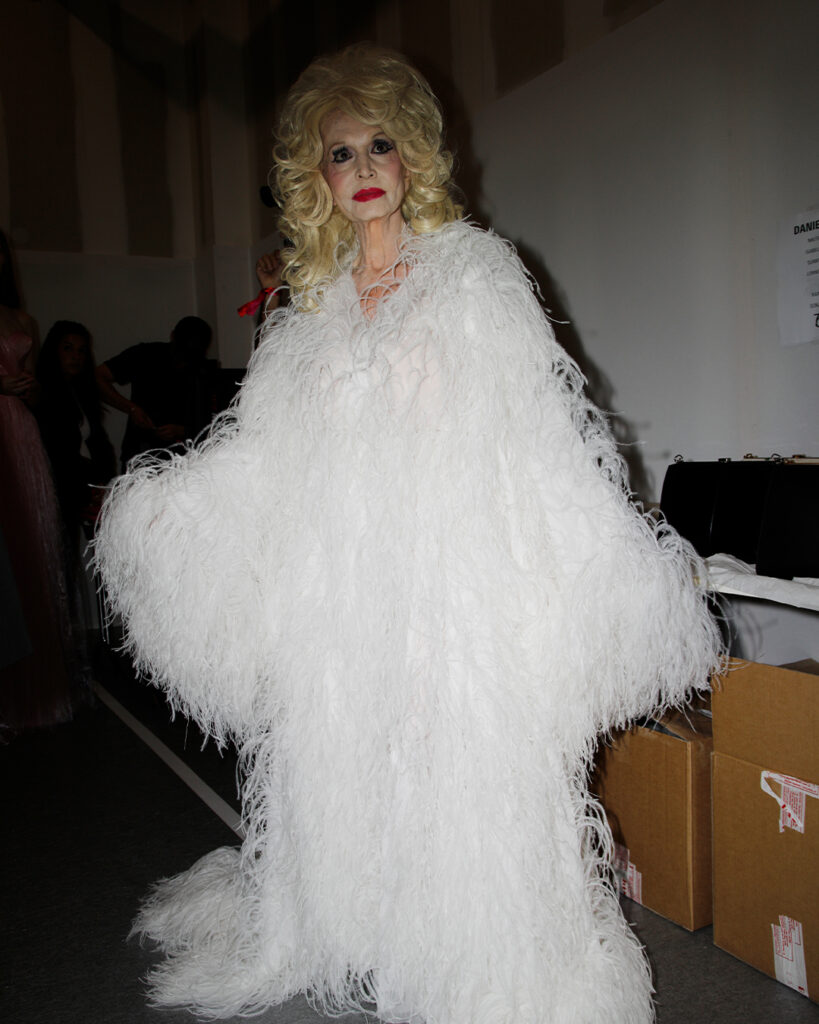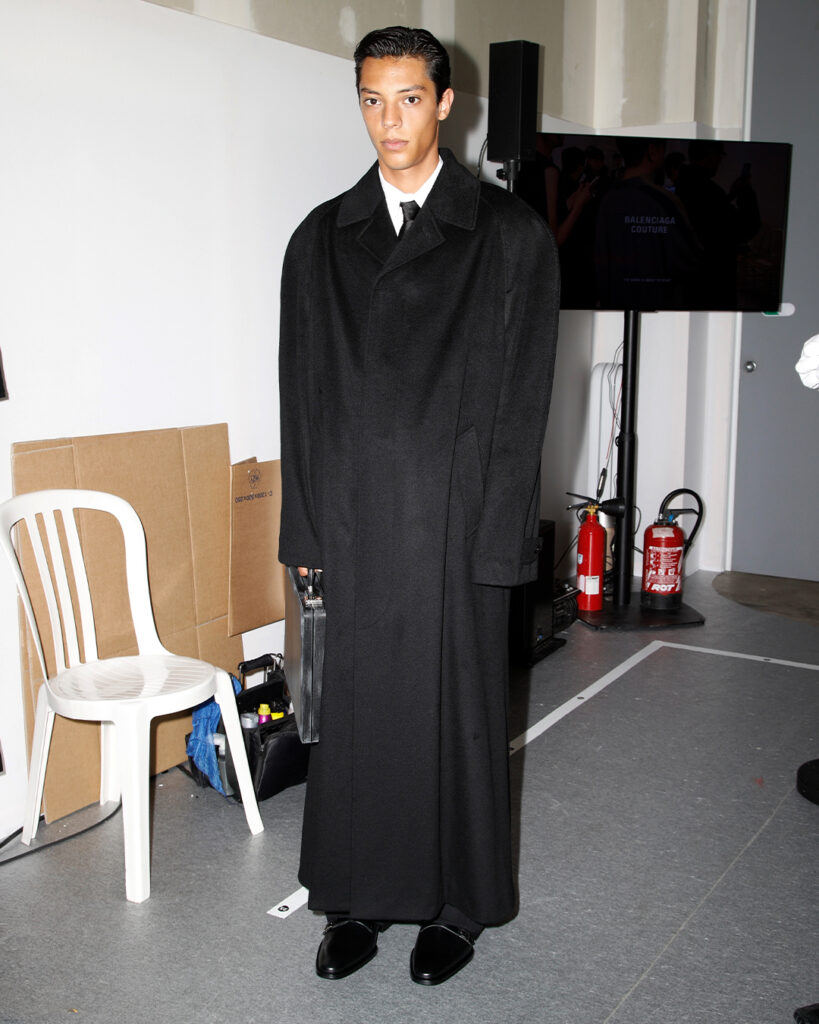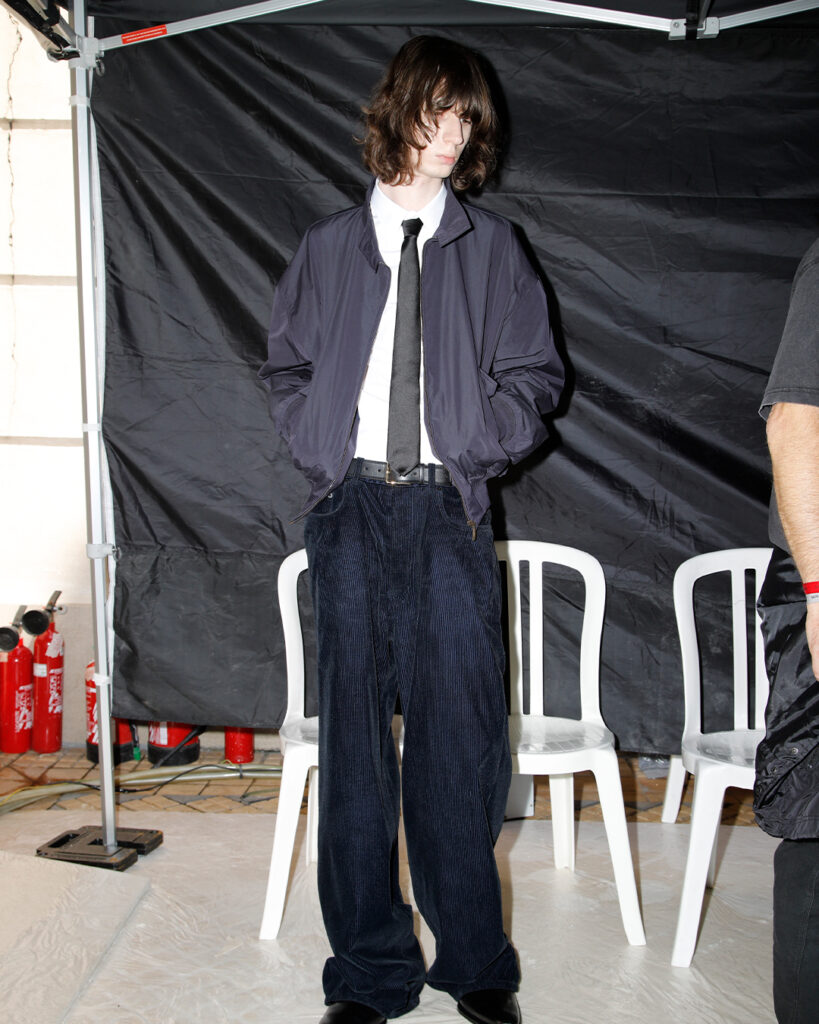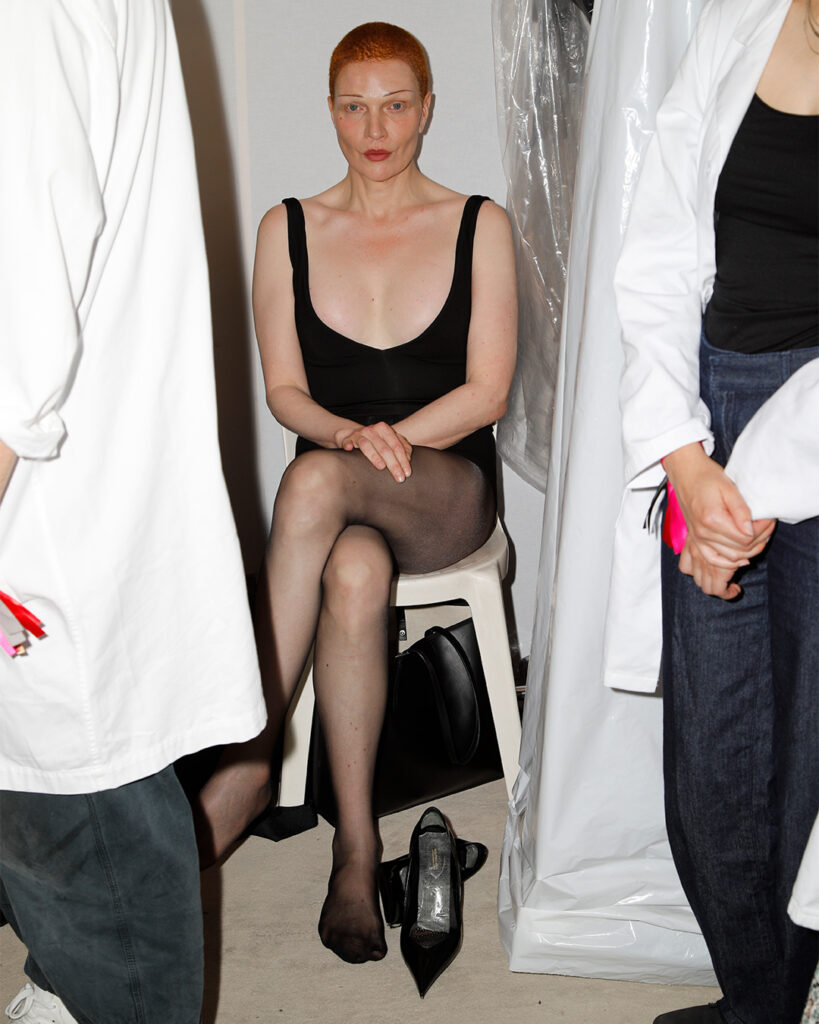
Story by Editor-at-Large CAROLINA OGLIARO
In the hallowed salons of 10 Avenue George V, rooms that once bore witness to the quiet genius of Cristóbal Balenciaga, Demna presented his 54th haute couture collection, as a custodian paying reverence to a sacred lineage. This was a final communion. A masterstroke of restraint and rupture. A departure that felt like a whisper through time, less finale, more epilogue carved in silk and shadow.
There was no music. No theatrics. Just the raw, amplified intimacy of cloth meeting body, the soft breath of ateliers, the unapologetic dignity of silence. In removing the soundtrack, Demna drew couture back to its purest form: the dialogue between garment and soul. In a world saturated with noise, he offered listening.
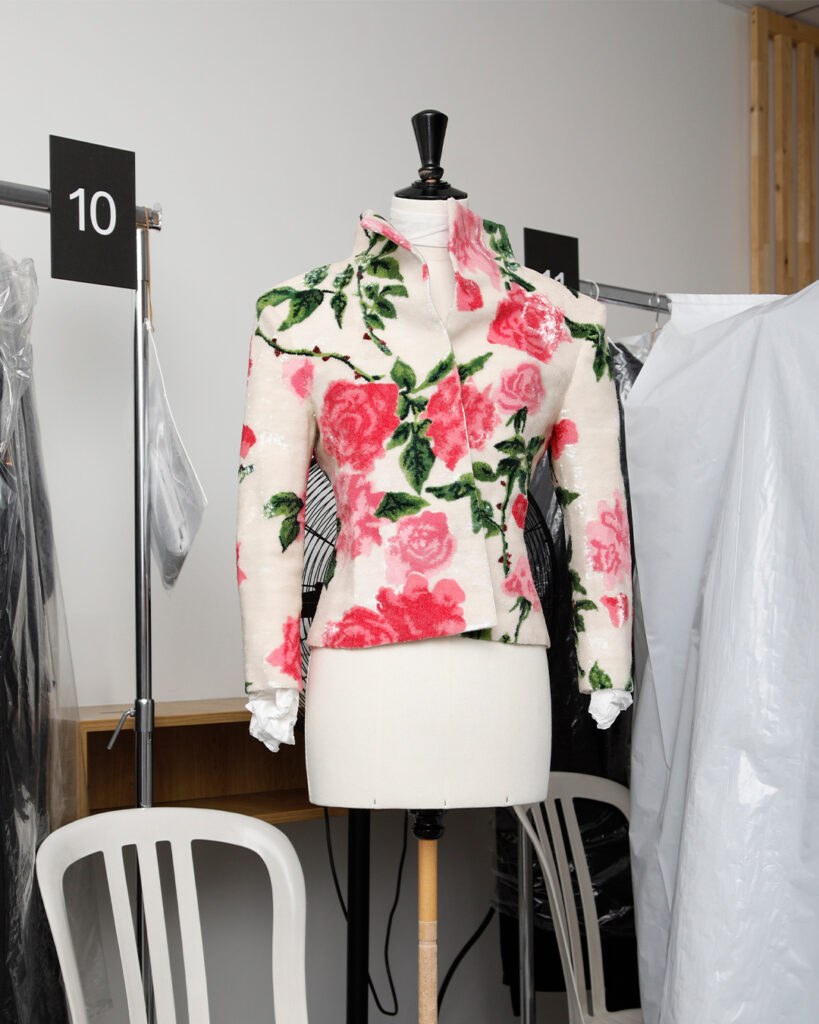
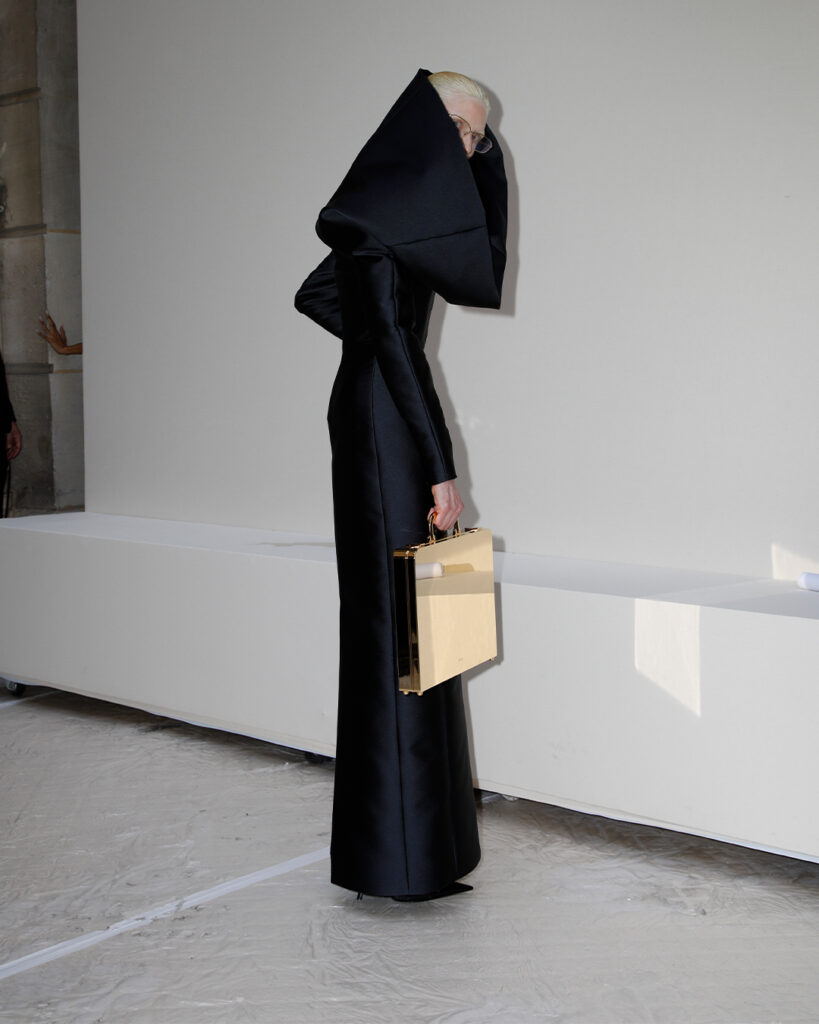
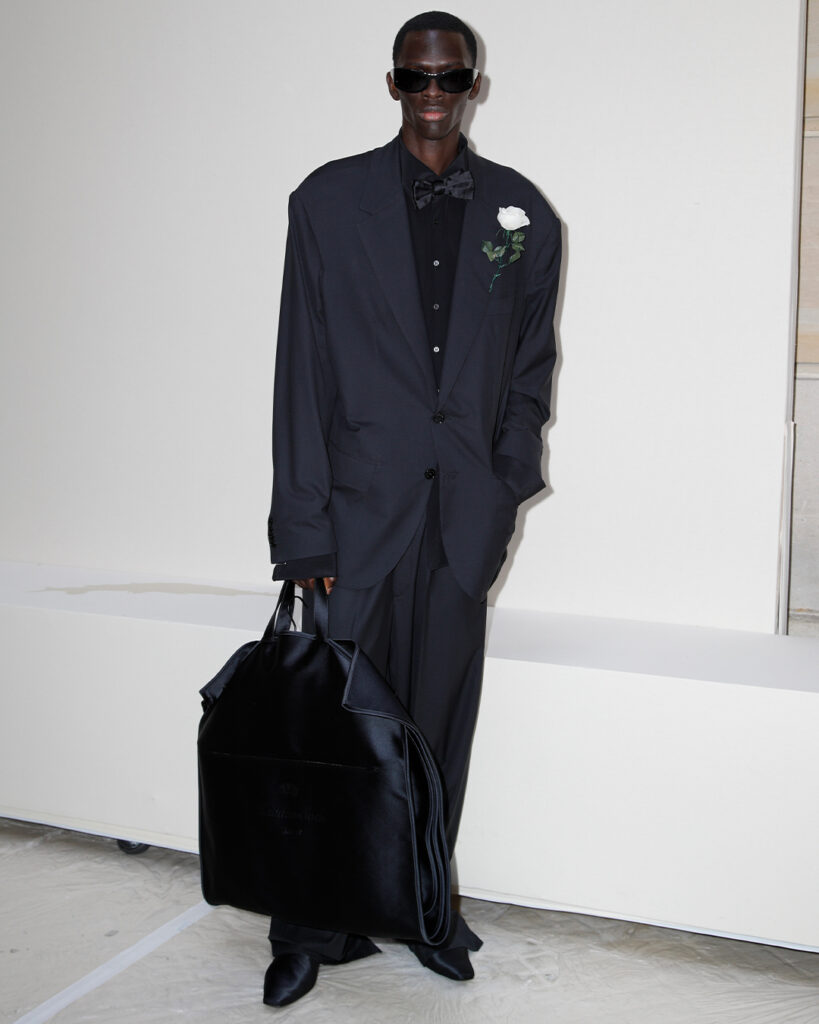
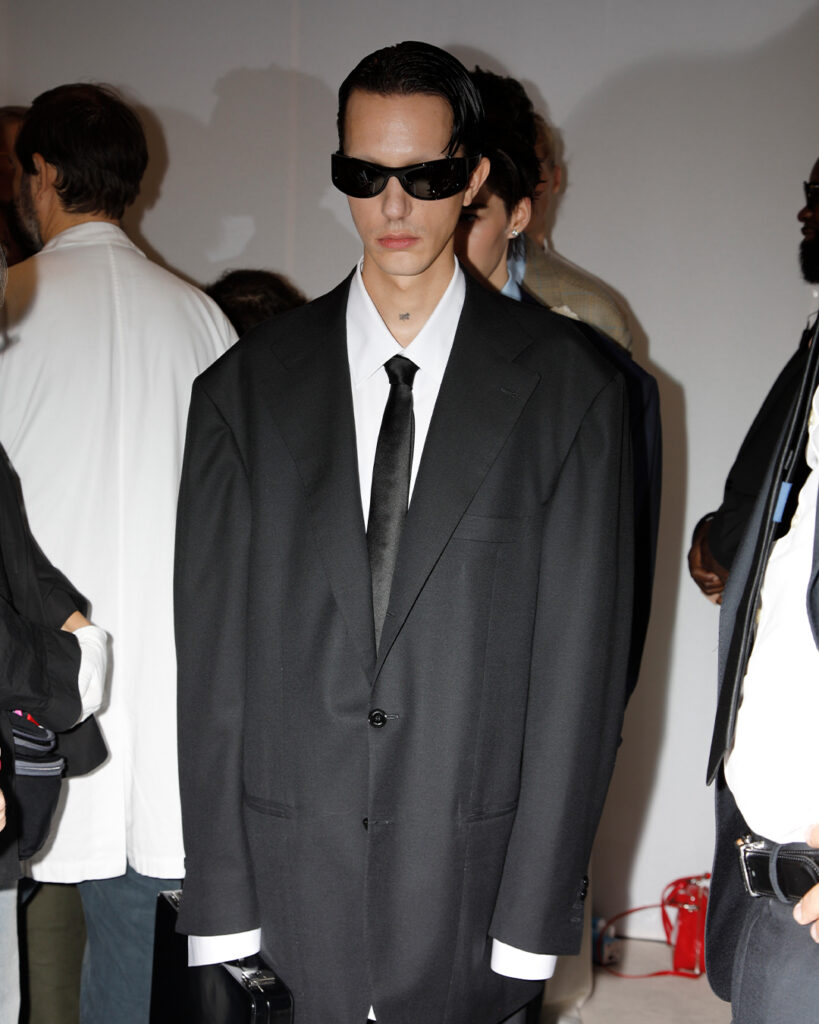
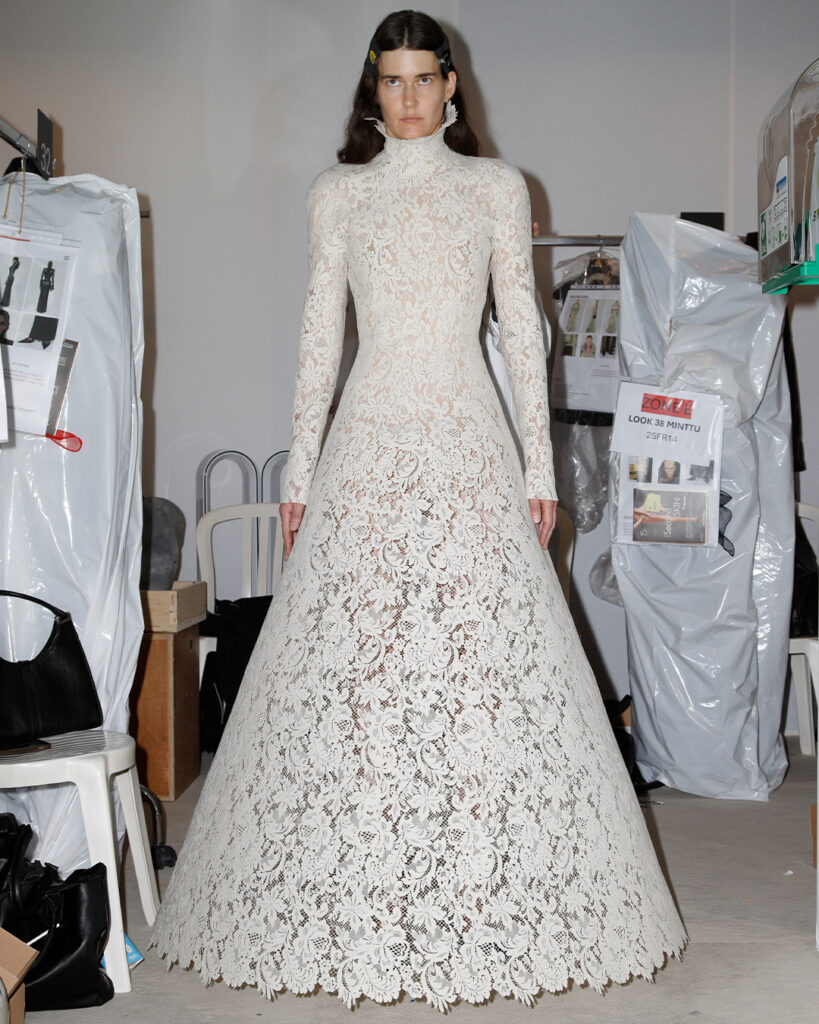
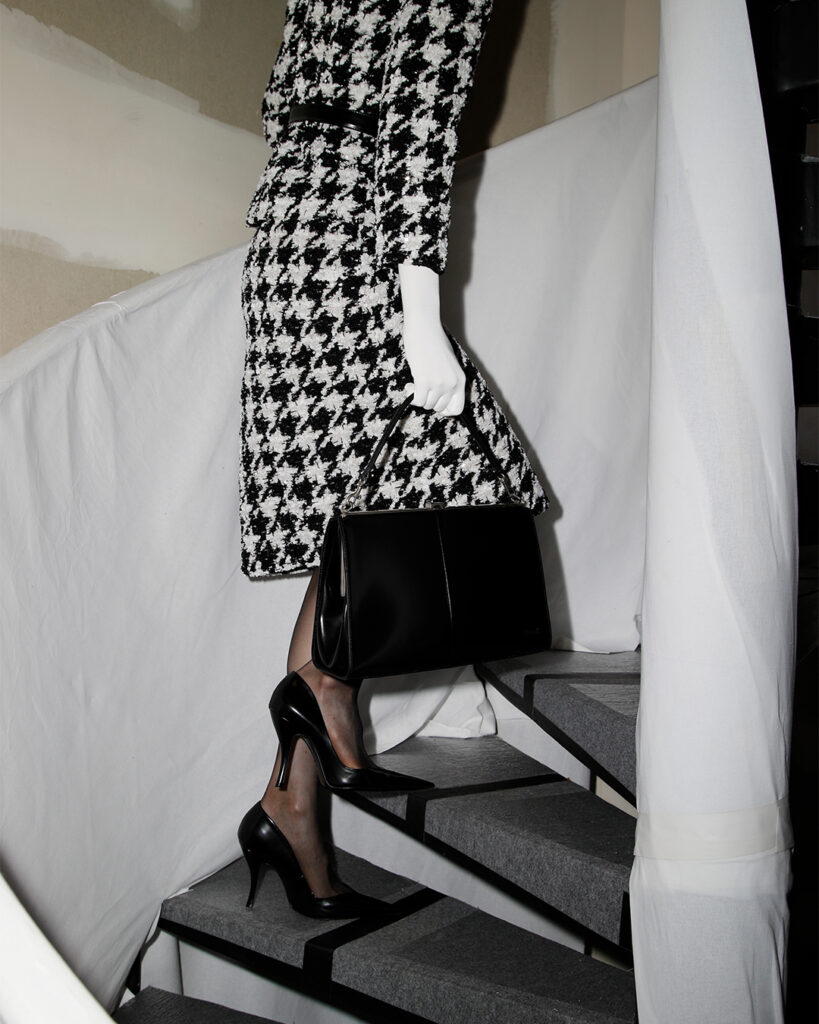
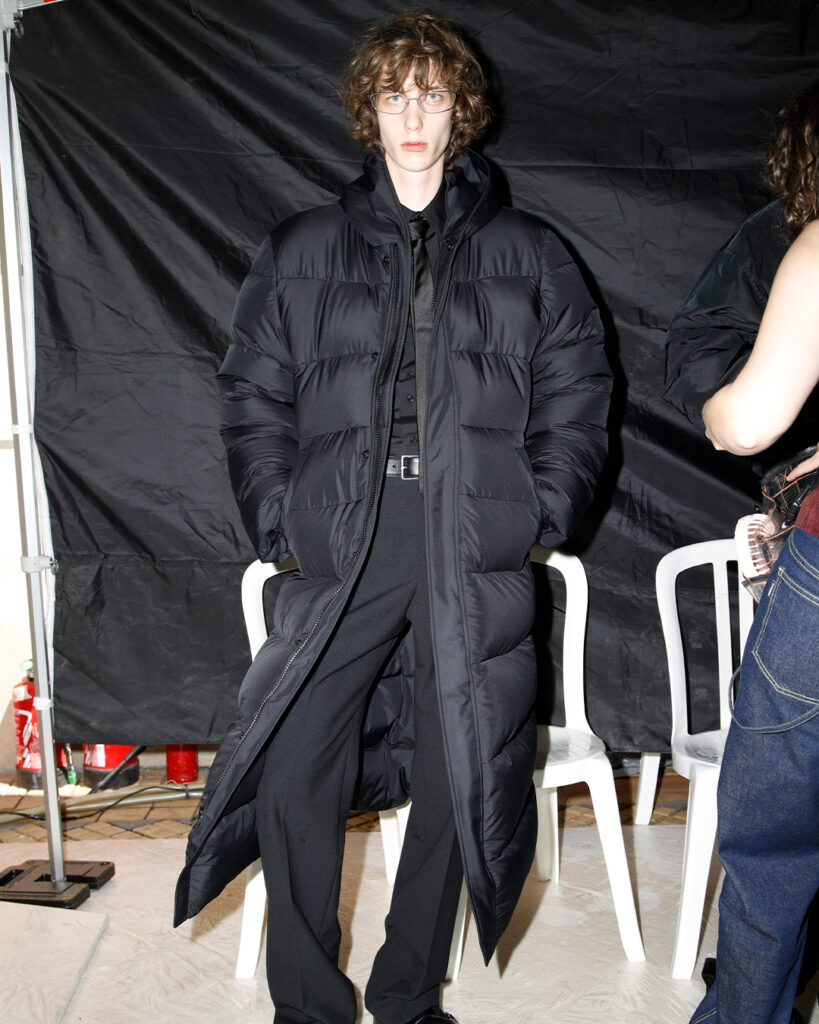
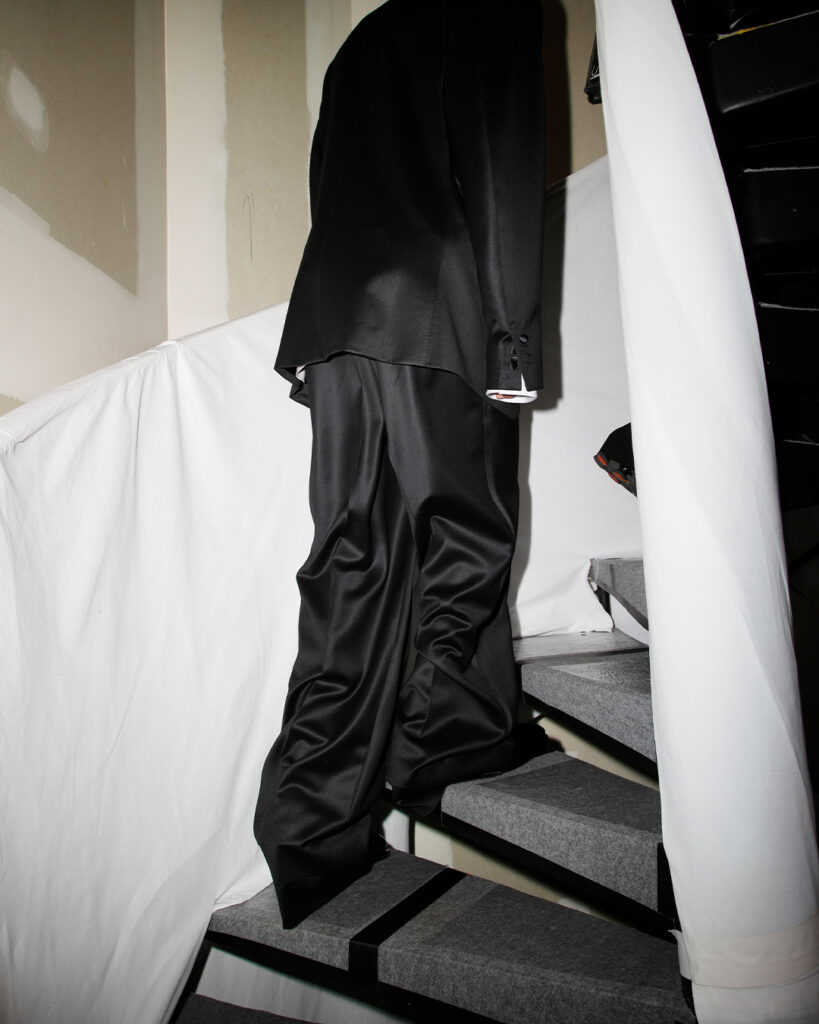
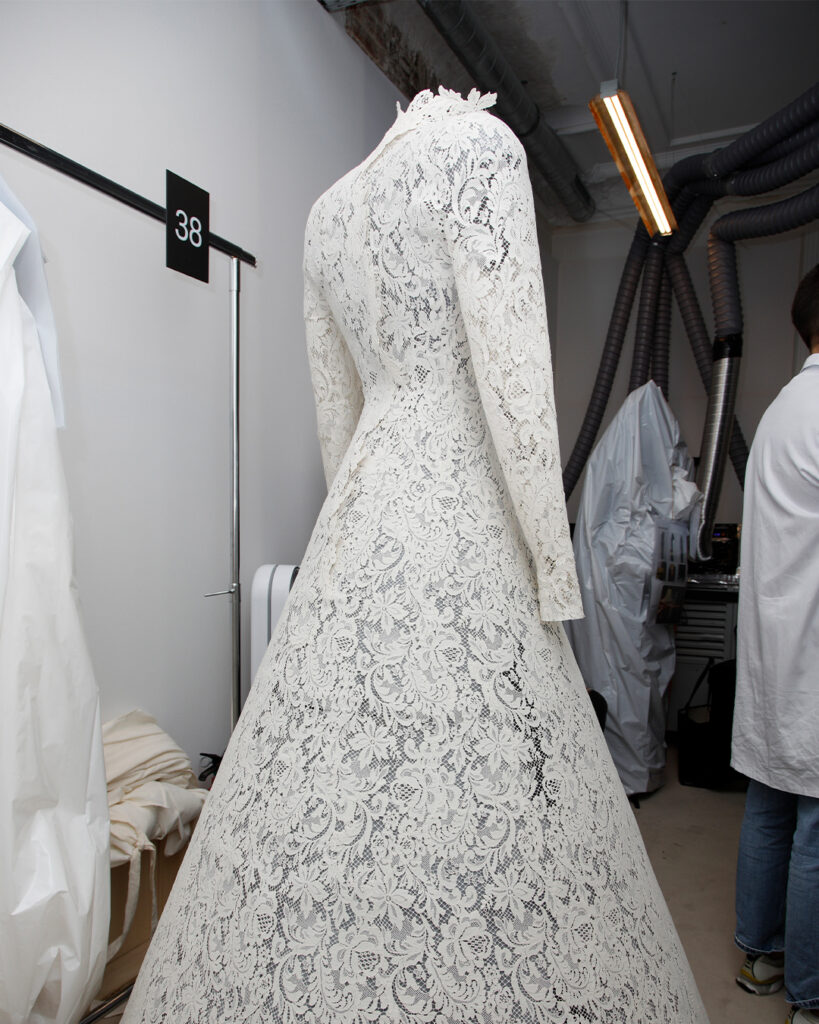
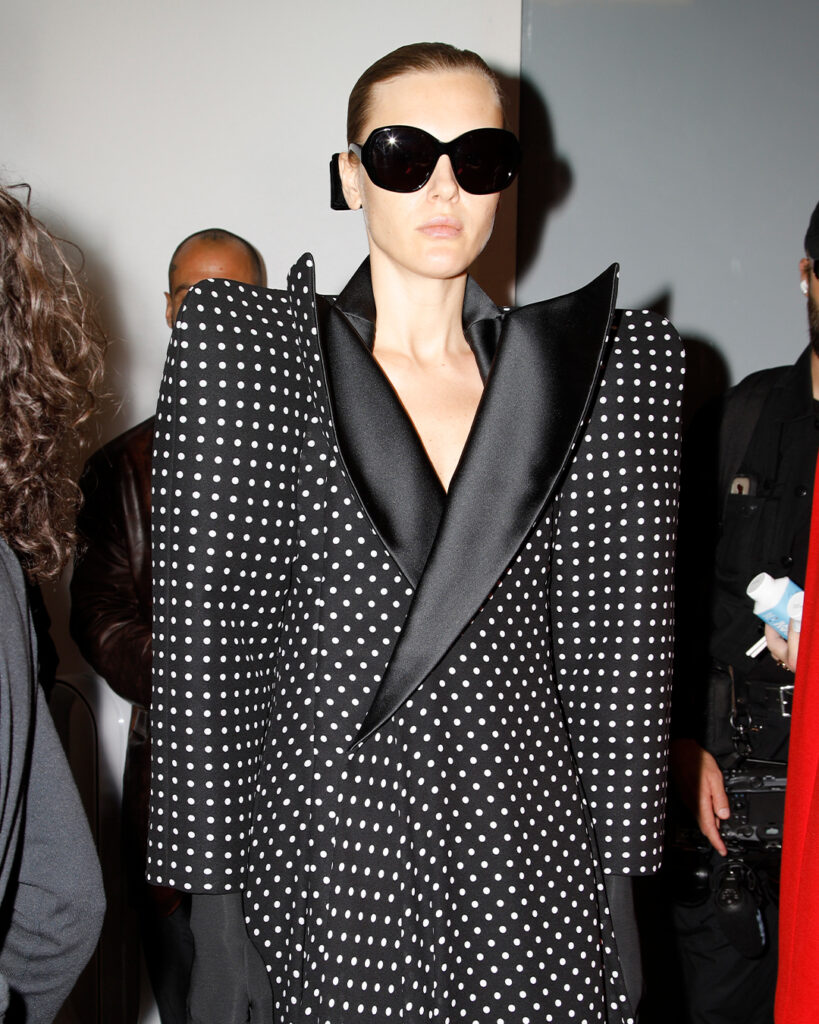
The palette was monastic, an austere symphony of black, ivory, and faint glimmers of metallic eclipse. Yet within this distilled chromatic language lived a world of emotion. Demna’s tailoring has always been a study in tension; here, it reached near-sacred levels of refinement. Volumes were not constructed, but they were conjured. A double-breasted wool coat recalled the ecclesiastical dignity of Balenciaga’s original couture vocabulary, while lace columns and cloaks cut through space with ecclesial severity.
Then, there were apparitions. Isabelle Huppert, luminous and impenetrable in sculpted noir, moved not like a model, but like a living memory. Kim Kardashian, cloaked in vintage mink and silk, drenched in over 250 carats of diamonds, did not disrupt the sanctity of the moment, but rather, embodied its duality. Her presence, deliberate and dissonant, played with the ghost of Elizabeth Taylor and the spectacle of celebrity, both reverent and irreverent, as Demna so often is.
But what perhaps defined this final opus was its fragility. Ceramic masks cracked by design. Trompe-l’œil embroideries that vanished on close inspection. Metal chains crocheted with mohair, aggression softened into something delicate, almost maternal. They were relics. Their purpose was not permanence but reminder: that couture, like life, is most profound in its impermanence.
There is something deeply Balenciagan about this. Cristóbal, too, was a master of absence. A genius of the unspoken. And here, Demna doesn’t imitate him, but he communes with him. The silence between stitches, the gravity of silhouette, the courage to strip away. This is not homage by replication, but by understanding.
And in his understanding, Demna has given us more than garments; he has given us a final manifesto. A love letter to the house that trusted him with its name. A meditation on the emotional weight of couture in a digital age that tries to hollow it out. A challenge to the industry: evolve not through spectacle, but through sincerity.
As he turns toward a new chapter at Gucci, and as Balenciaga awaits the hands of Pierpaolo Piccioli, one thing remains certain: this collection will be remembered not for its noise, but for its stillness. It did not clamor for attention. It stood in a quiet room and held history in its breath.
And we, in turn, held ours.