Photos Courtesy of Companies
Story by Editor-at-Large CAROLINA OGLIARO
Khaite’s Restraint Charged Tension
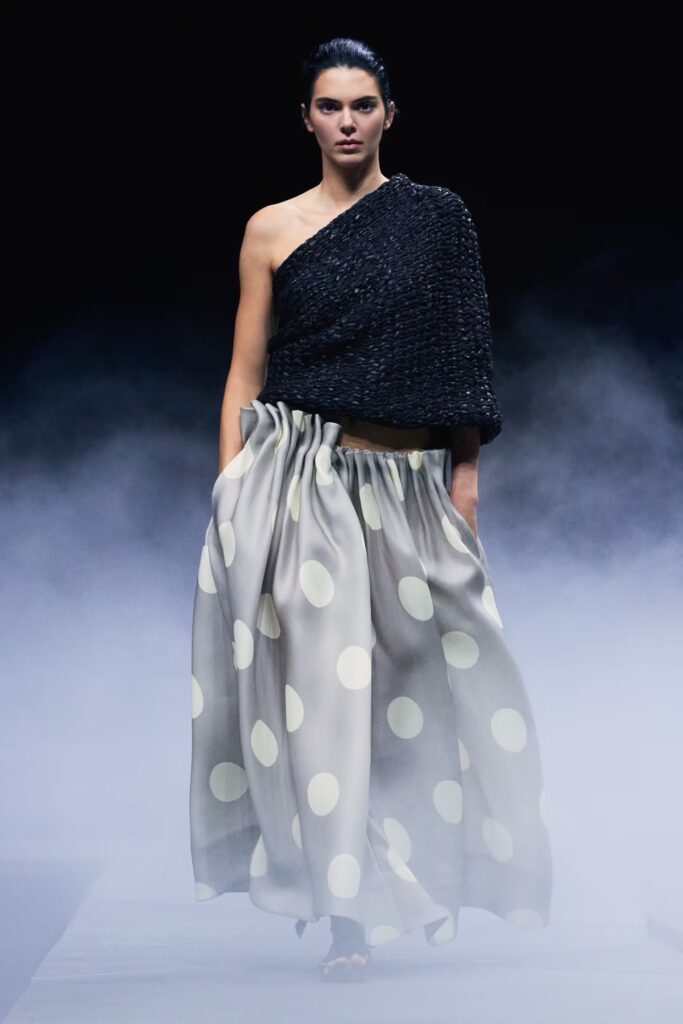
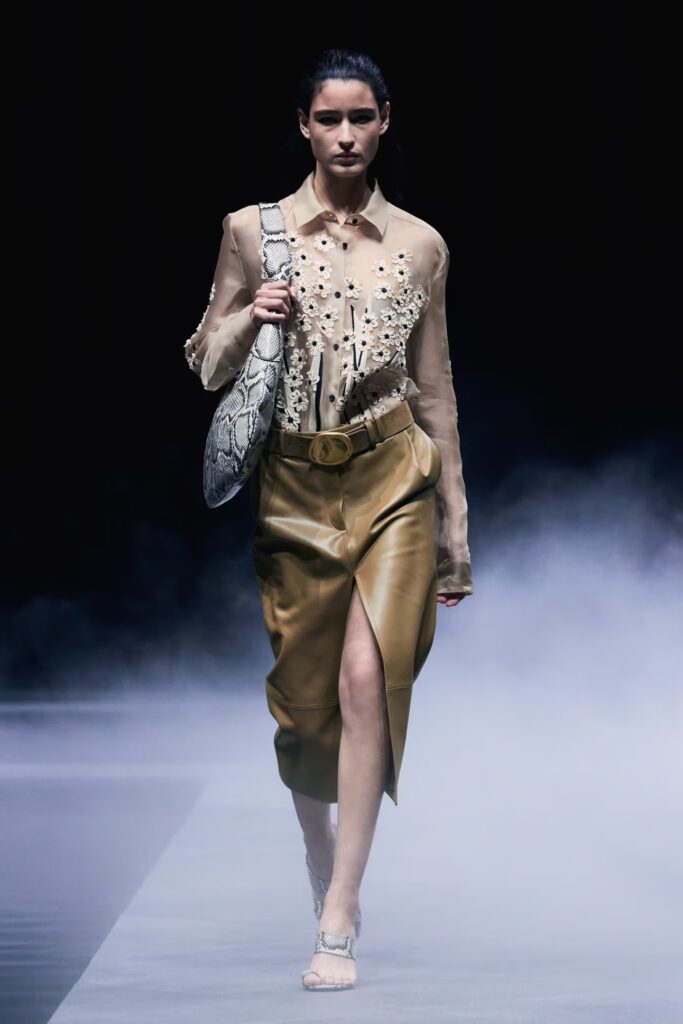
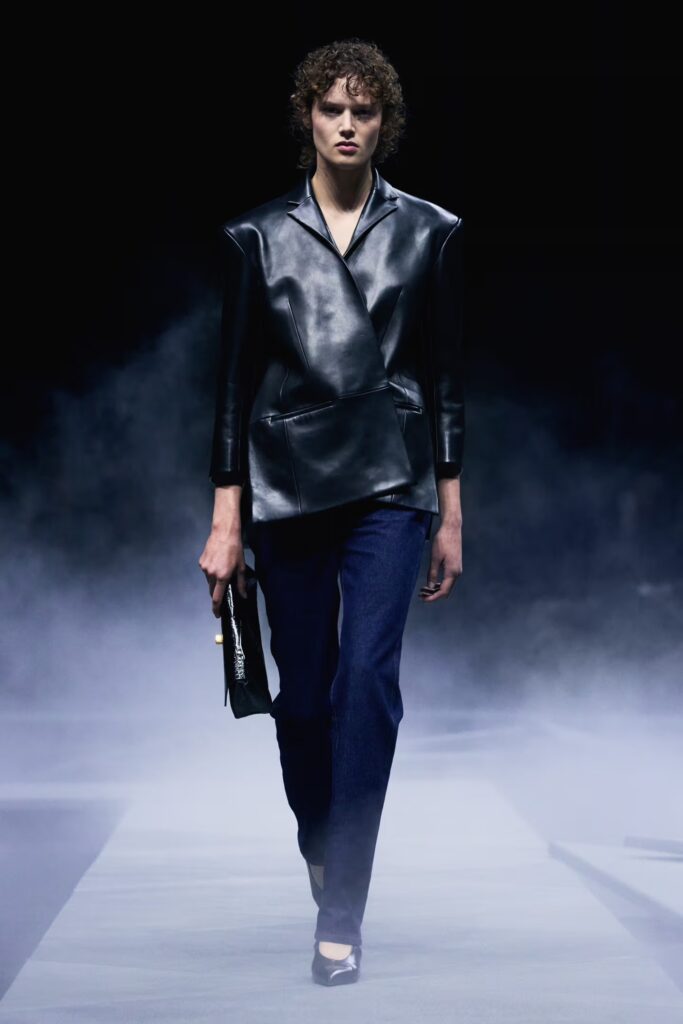
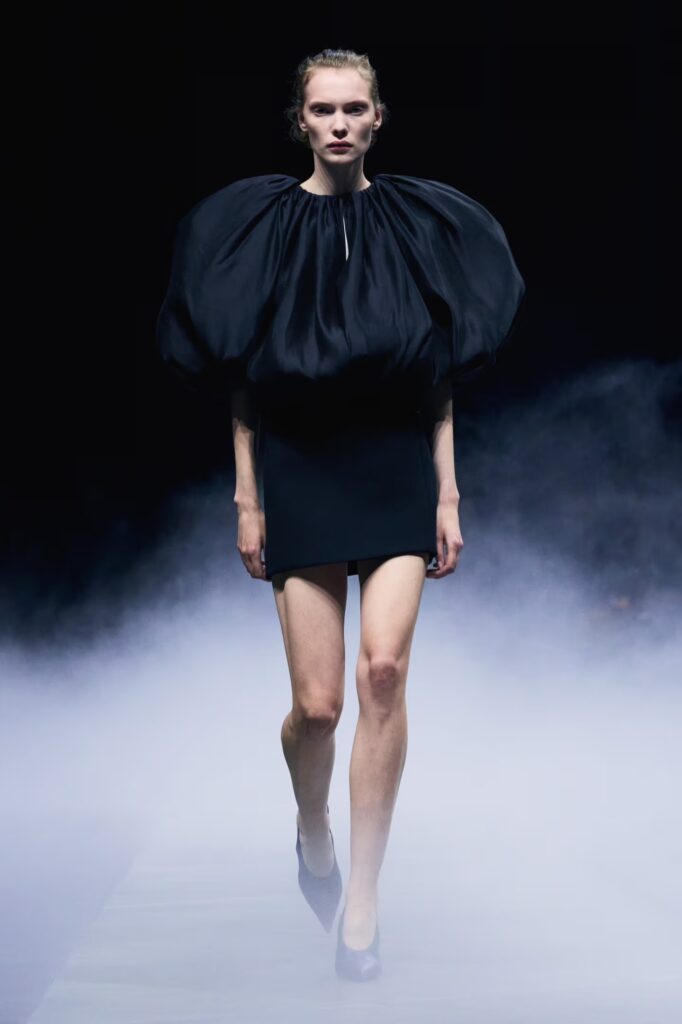
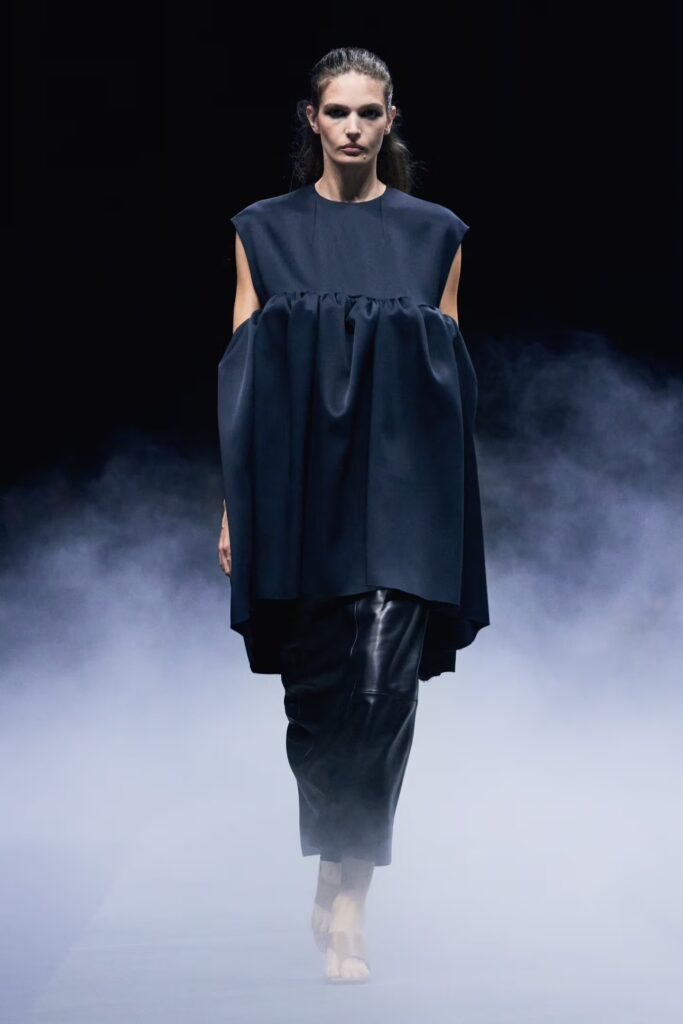
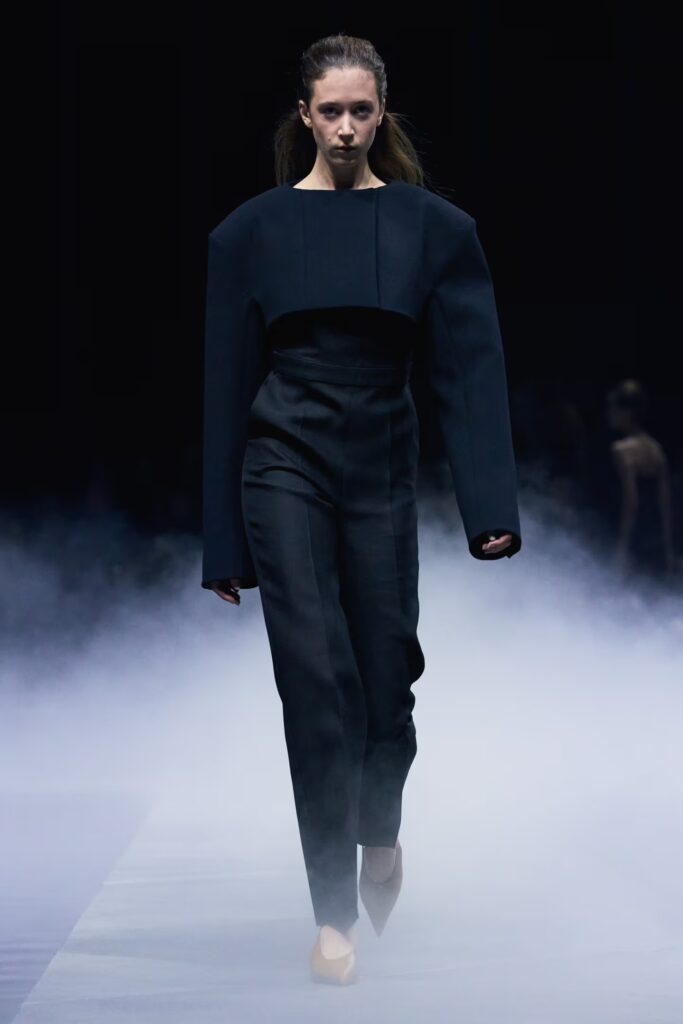
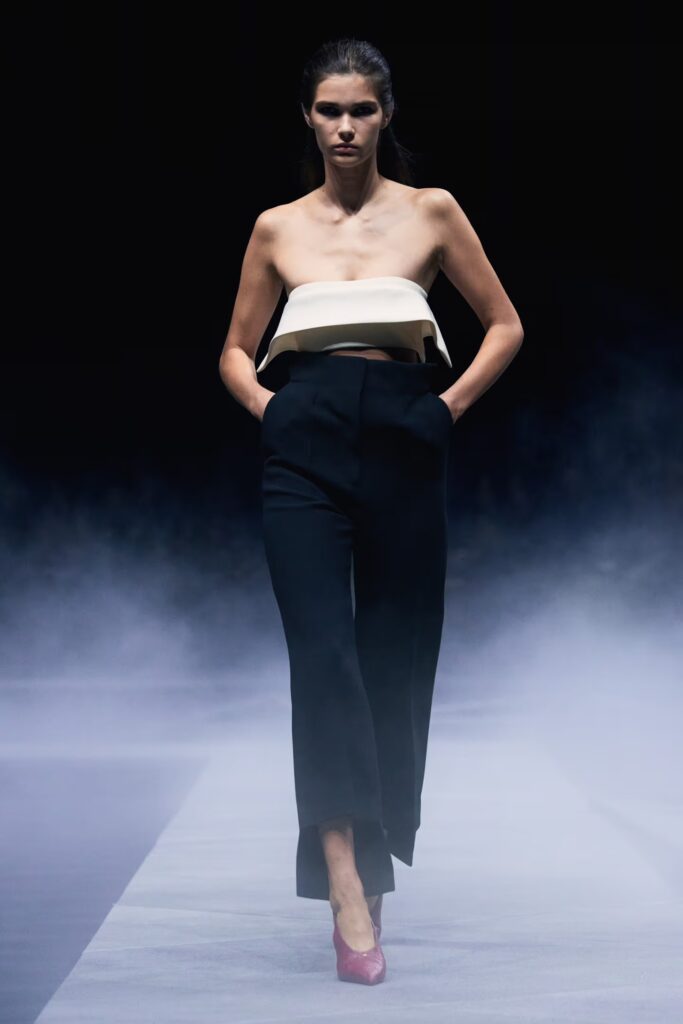
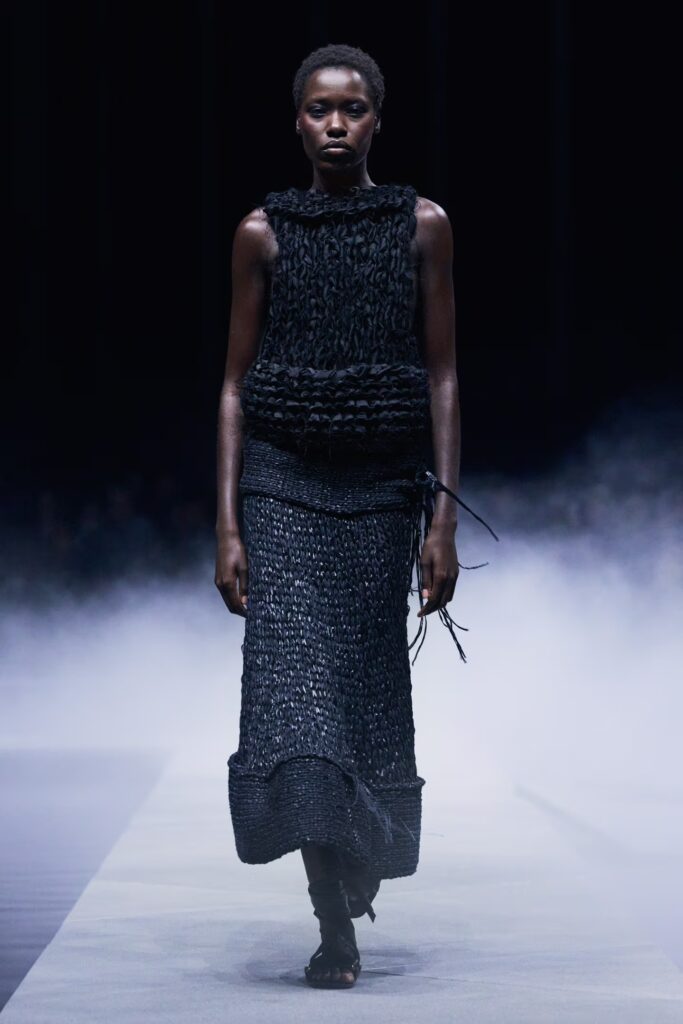
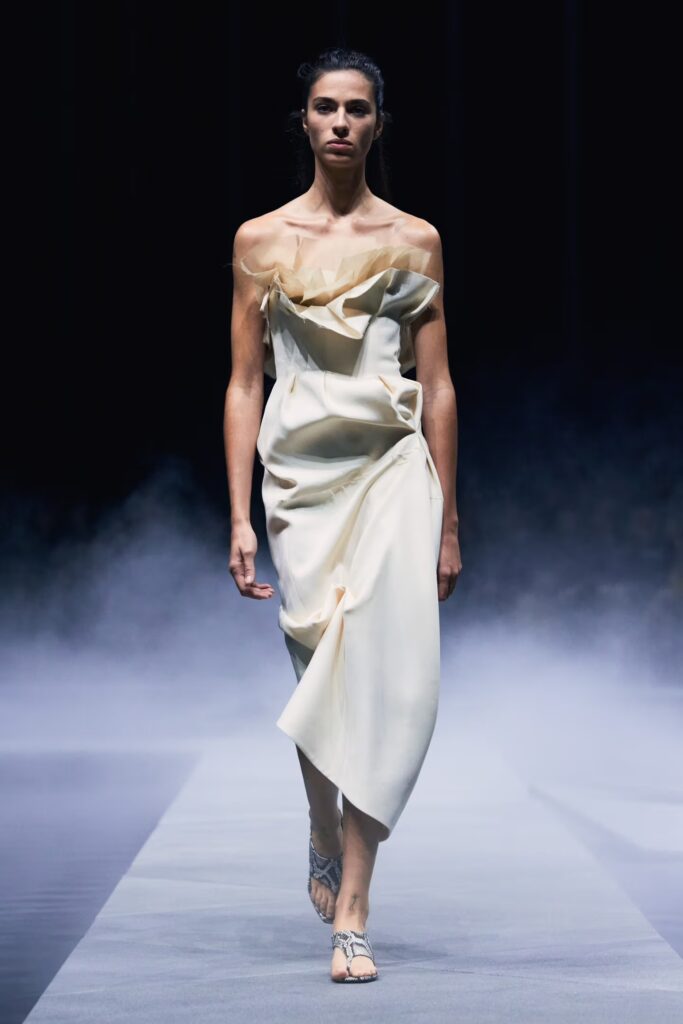
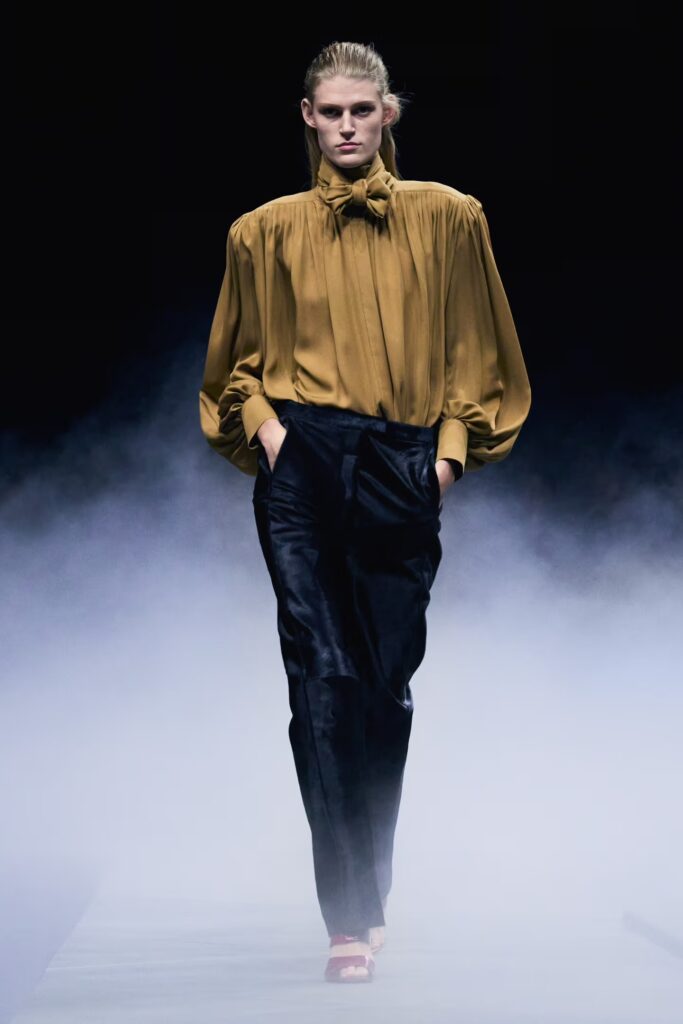
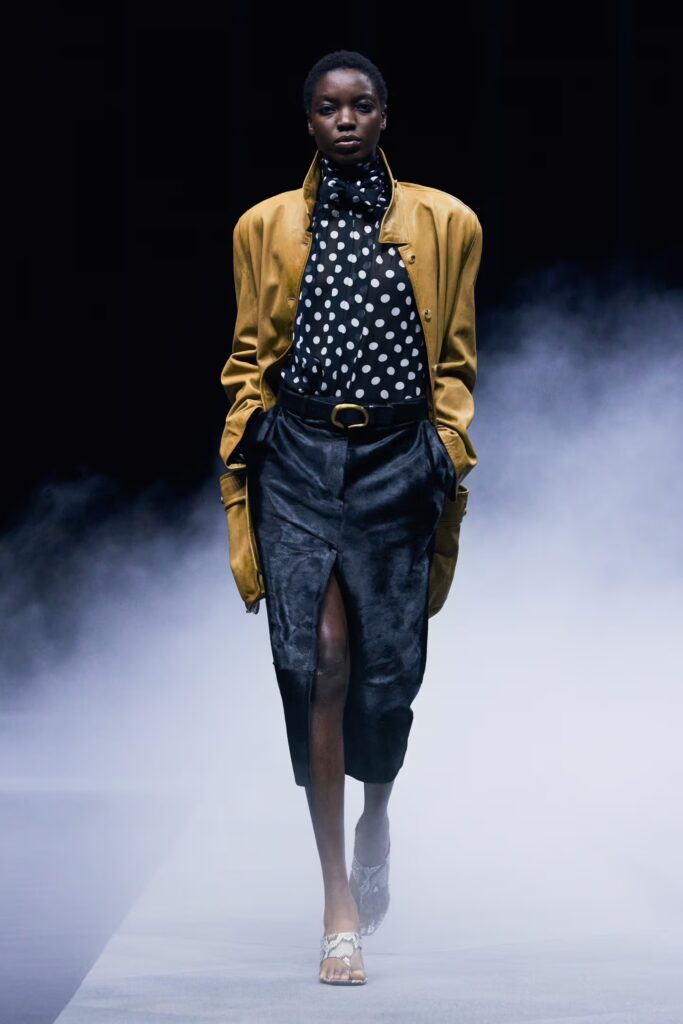
Khaite’s Spring/Summer 2026 unfolded like a study in restraint charged with tension. Catherine Holstein has never been one for spectacle since her power lies in the quiet force of clothes that feel both cerebral and lived-in. This season, she leaned deeper into that duality of tailoring that curved into softness, leathers cut with the severity of armor yet worn with an undone ease, knitwear that ballooned and collapsed as though breathing with the body. The show wasn’t designed to seduce in an obvious way because it asked for patience, for a gaze that lingers long enough to notice the friction between precision and rawness.
What lingered most was the atmosphere, a dim, charged space where silhouettes emerged like shadows, never screaming but commanding attention. Confidence here wasn’t about gloss or immaculate polish, but it was about the refusal to over-explain. Every detail, the unfinished hems, the purposeful asymmetries, the boots and belts heavy with intent, is a reminder for the audience that imperfection can be its own form of elegance.
Three insights that define Khaite SS26:
• Shape as language: Proportions shifted constantly, blazers cut close to the body, then trousers falling oversized, skirts drawn taut only to be paired with ballooning sleeves. Each look carried a dialogue of restraint and release.• Material as mood: Leathers, weighted knits, and dense cottons were treated almost like architecture, holding their own gravity. Yet Holstein allowed moments of delicacy, gauzy fabrics and lighter tones that broke through the noir palette like sunlight.• Confidence as ambiguity: Instead of telling women how to look powerful, Holstein asked them to define it for themselves. The collection celebrated the poise that comes not from certainty but from complexity.
Khaite SS26 was a parade of propositions rather than of trends. The true modern style is less about being seen and more about being understood.
Ralph Lauren — Keeping Code
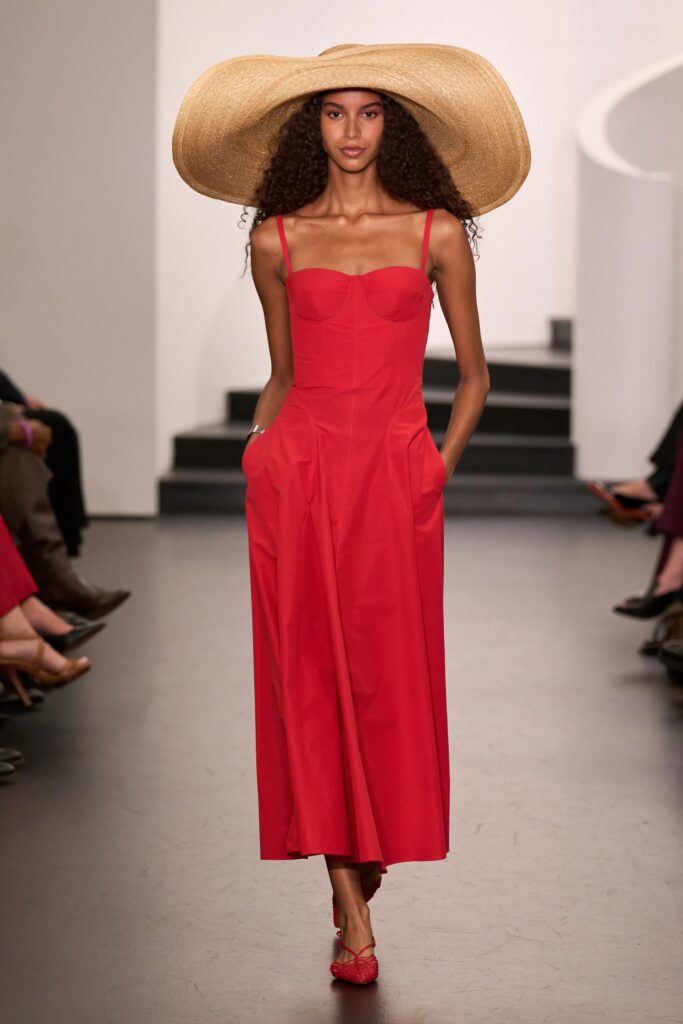
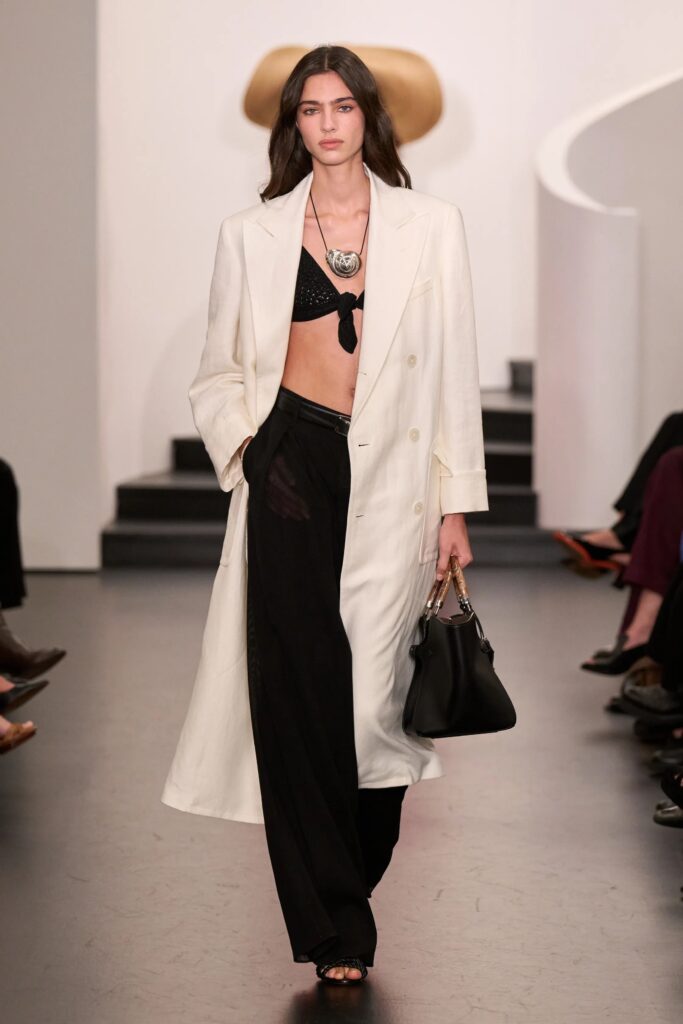
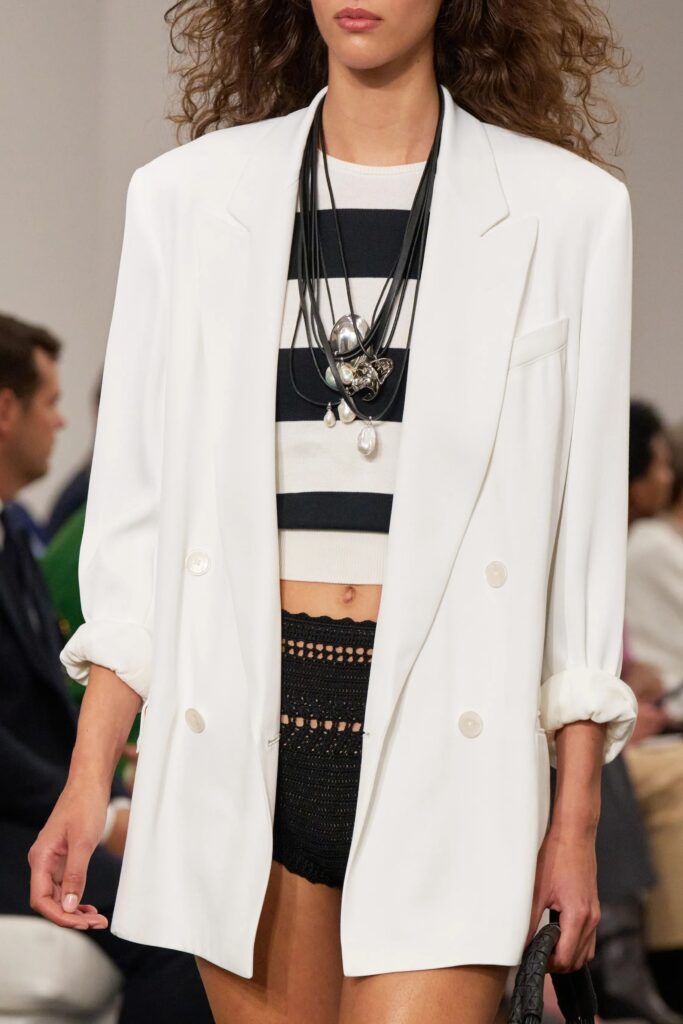
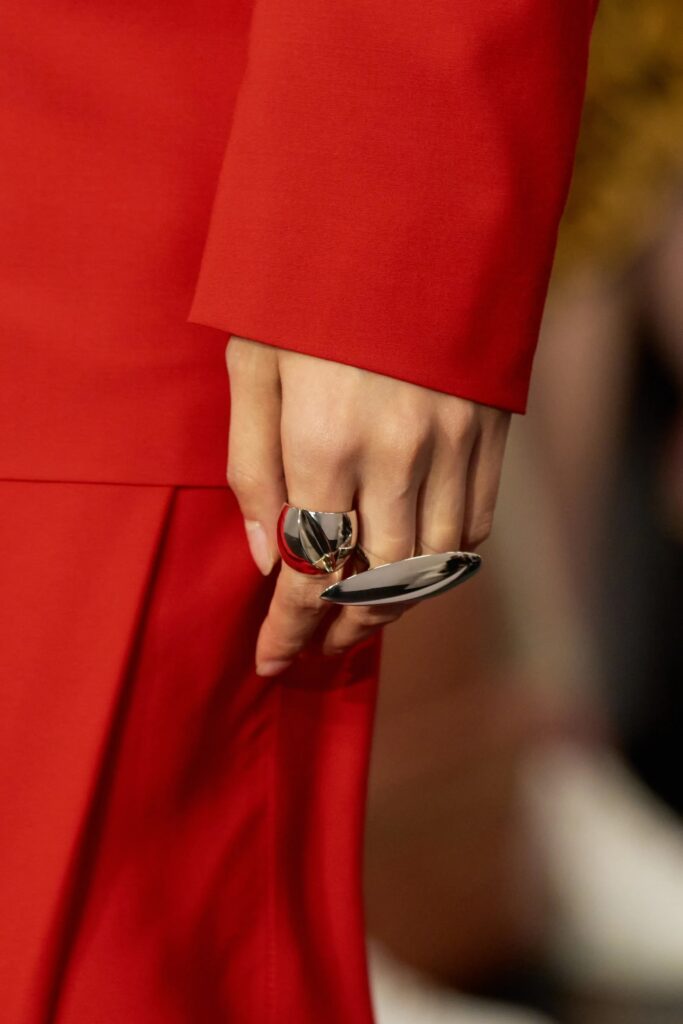
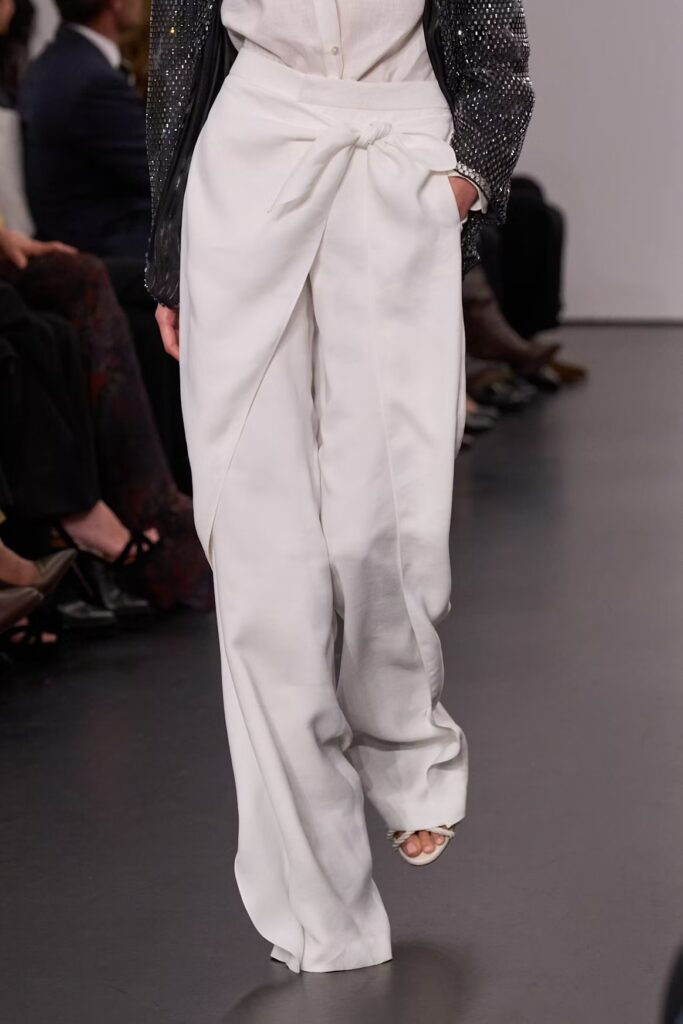
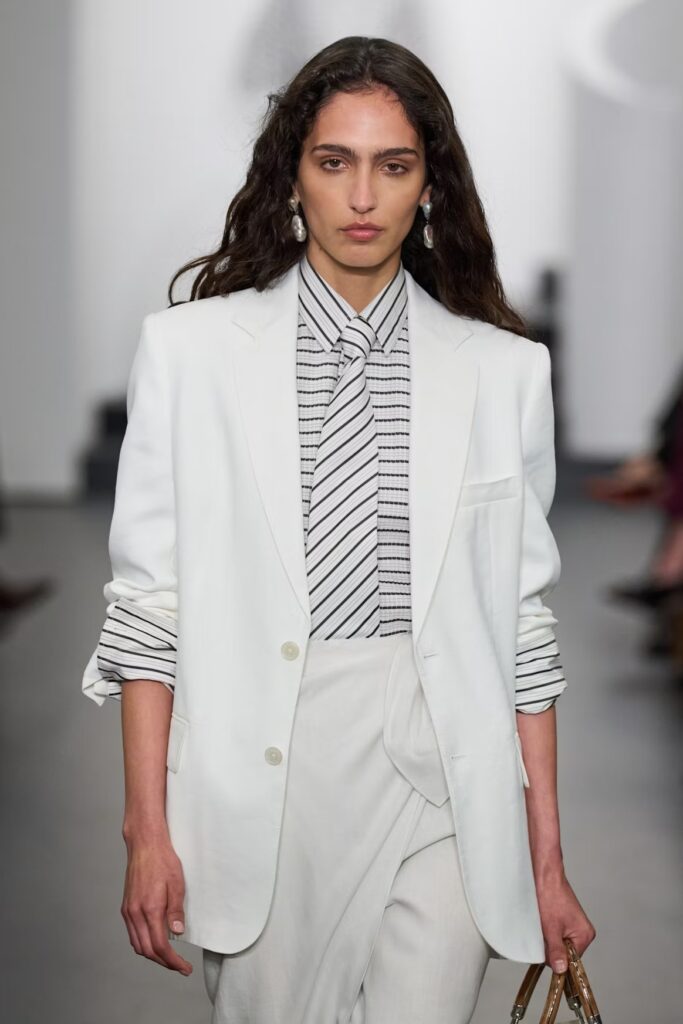
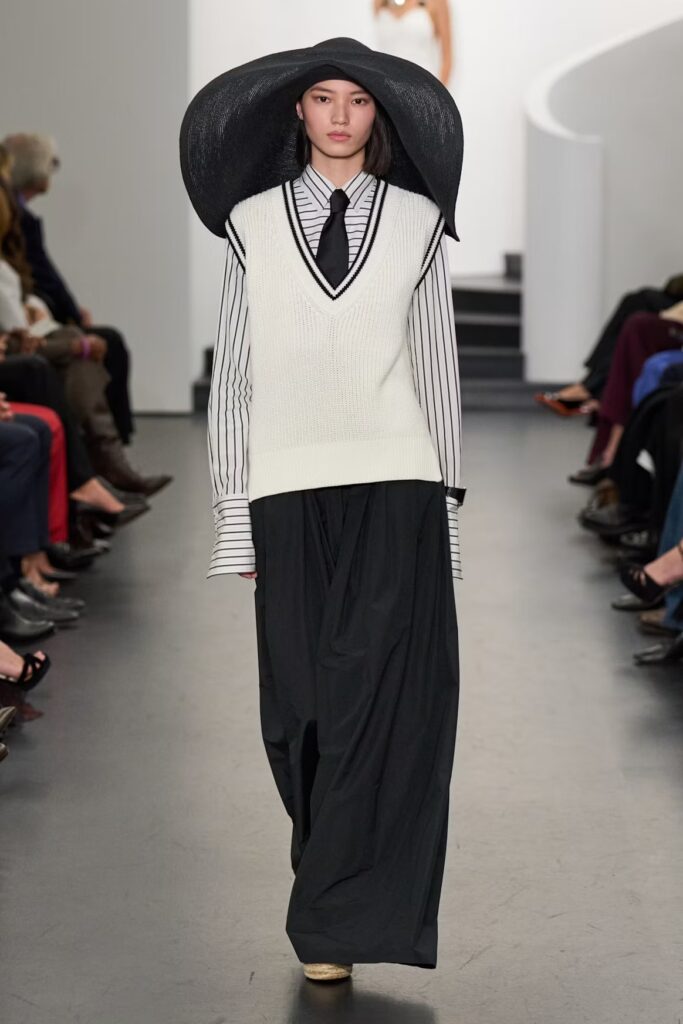
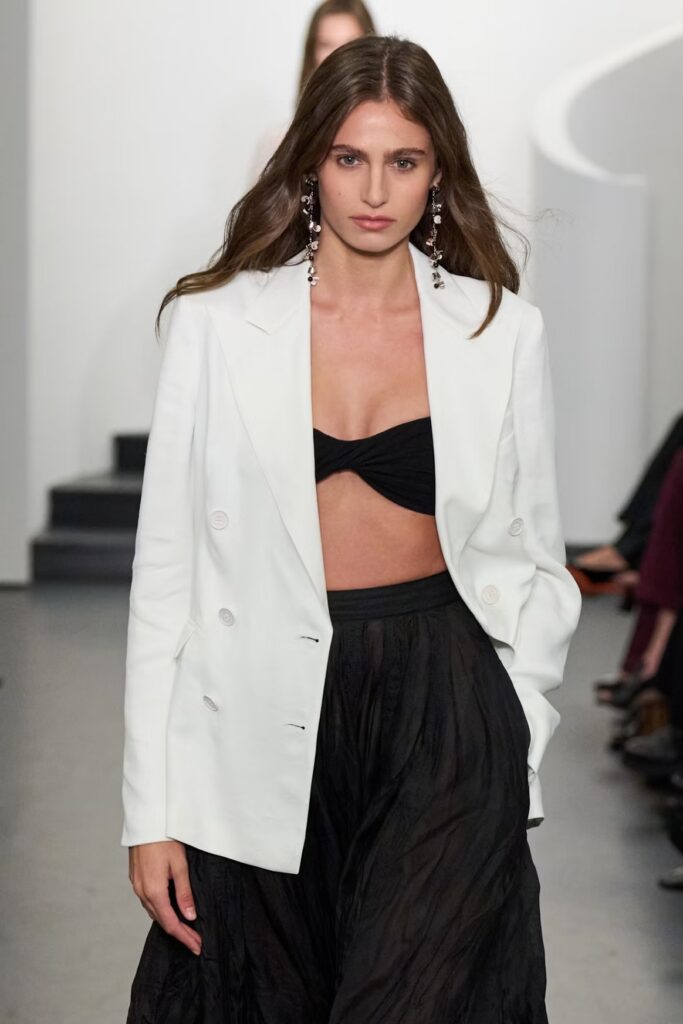
At his Madison Avenue studio, Ralph Lauren delivered a Spring/Summer 2026 collection that was a distillation of his codes. The room was stripped back, almost gallery-like, so that every texture, cut and gesture of fabric could resonate. Ease was the defining note: sheer knits worn like second skin, languid cotton dresses with sun-faded softness, tailoring re-imagined with a loosened hand. The palette, ivory, sand, touches of black and red, had the understated luminosity of light on stone, punctuated by moments of drama through accessories: oversized hats, sculptural belts, bags that recalled an RL archive but with a modern tilt.
This collection was all about intimacy. It wasn’t an attempt to overwhelm but to refine, a reminder of why Ralph Lauren remains central to the American vocabulary of elegance. The clothes moved between day and evening without fracture, whispering of summers spent by the water yet anchored in the pragmatism of city life. Lauren once again demonstrated that restraint, handled with authority, can be the most persuasive form of luxury.
Harris Reed “The Aviary”: Poetry & Structure in Flight
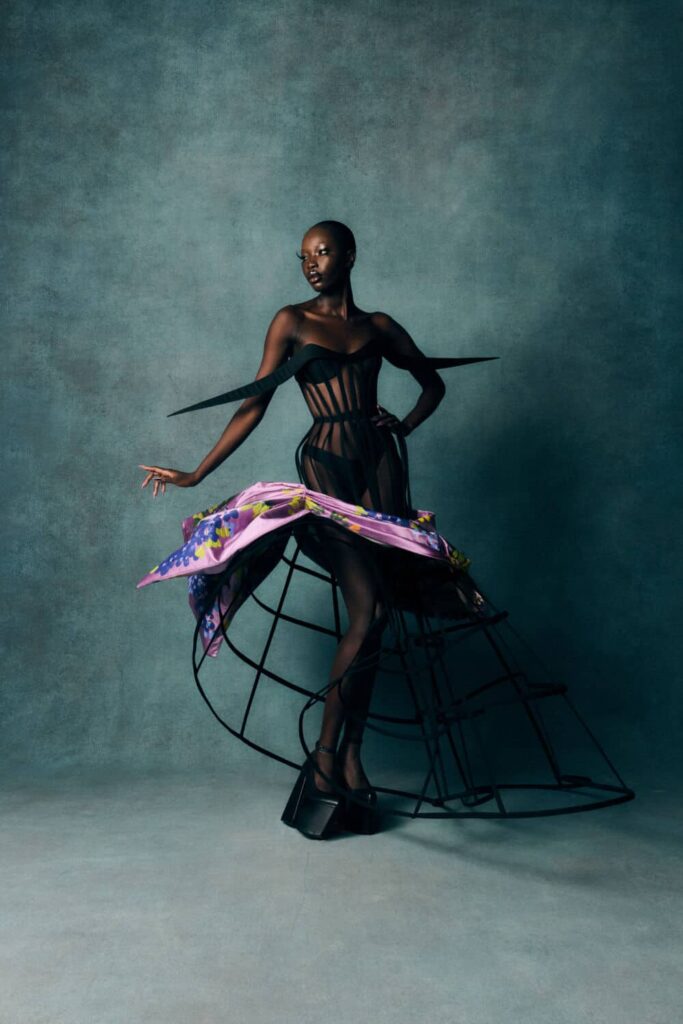
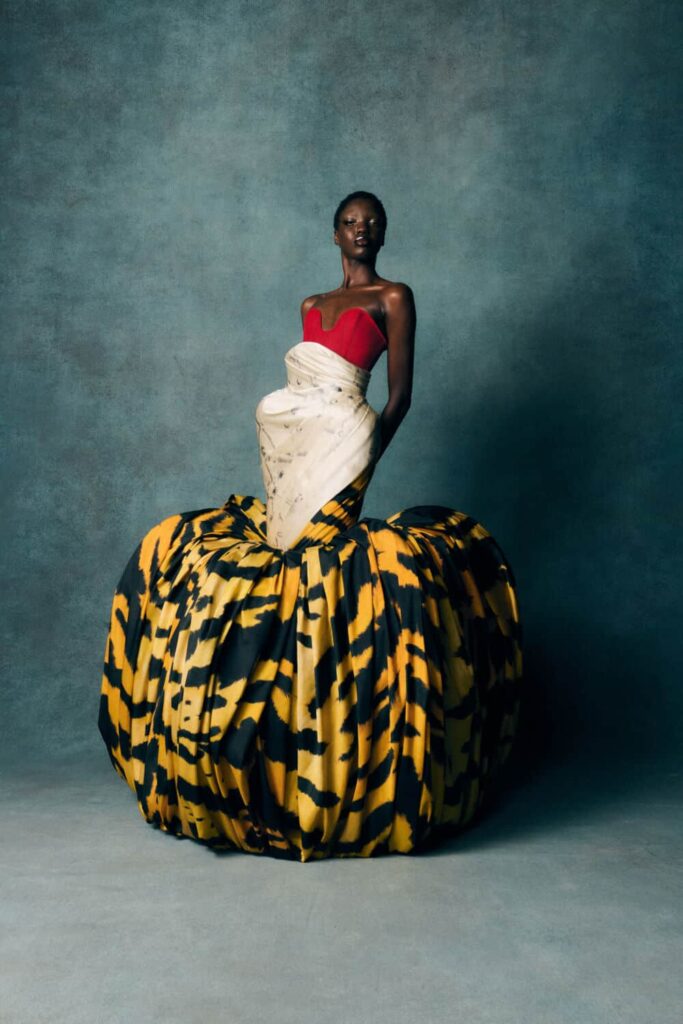
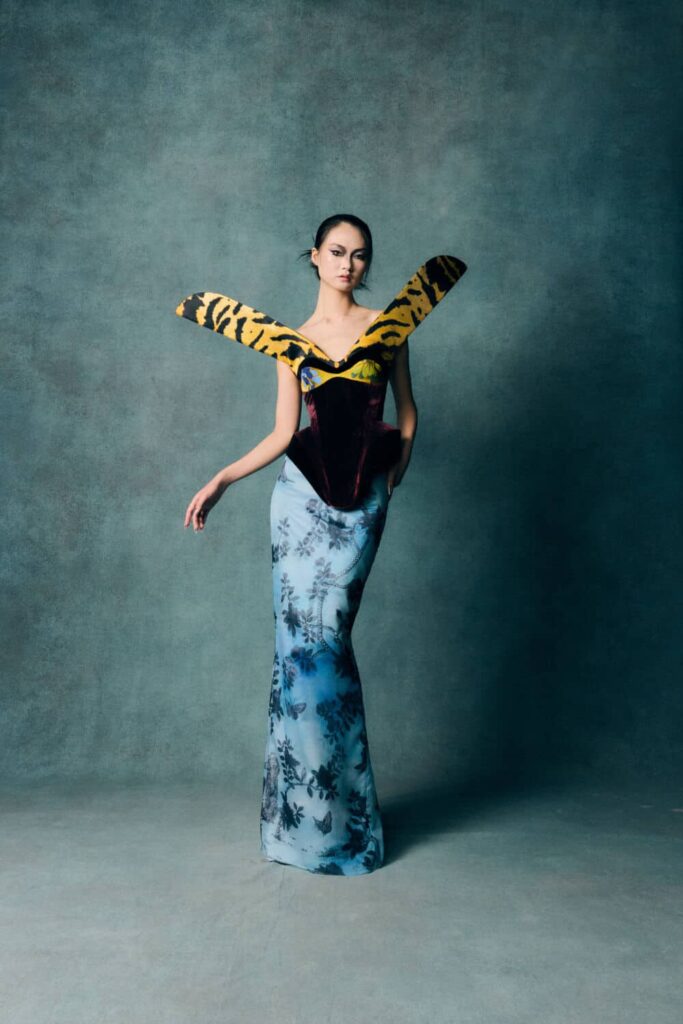
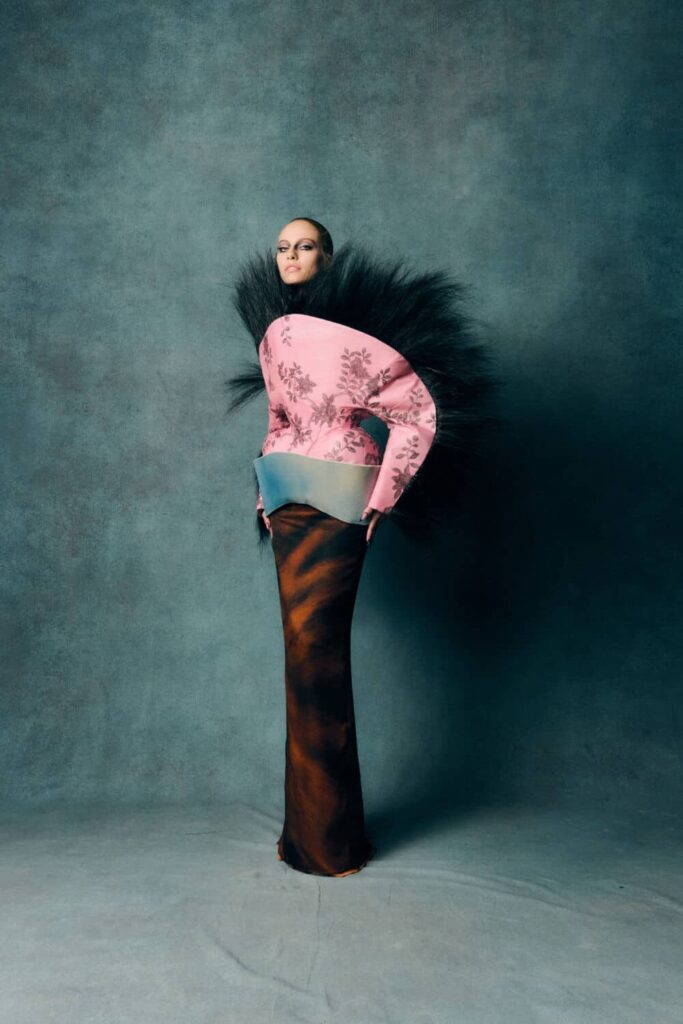
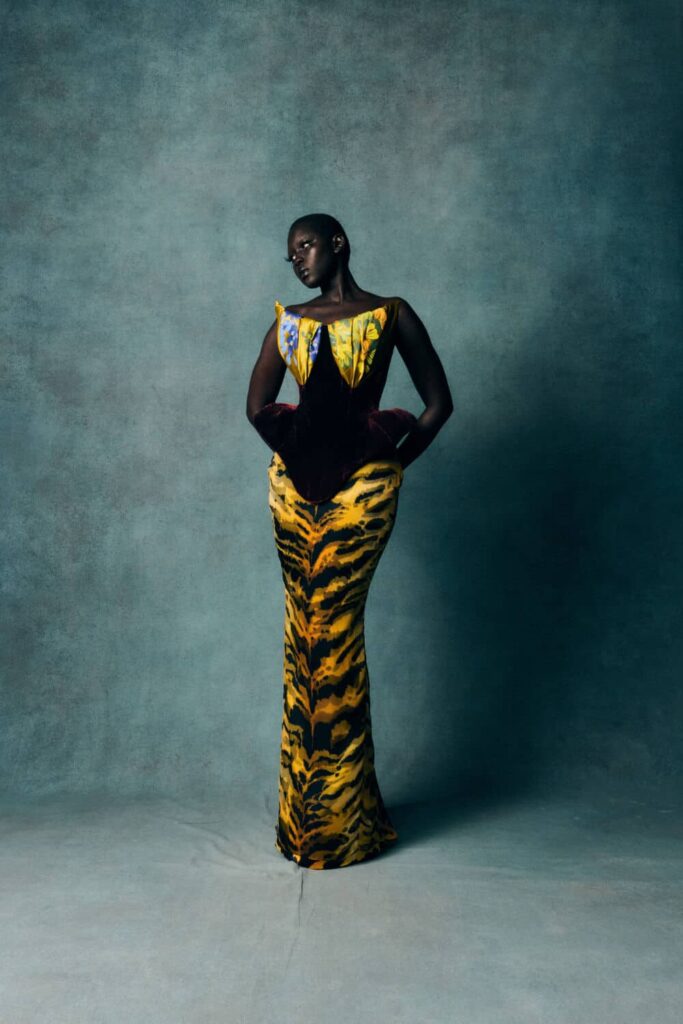
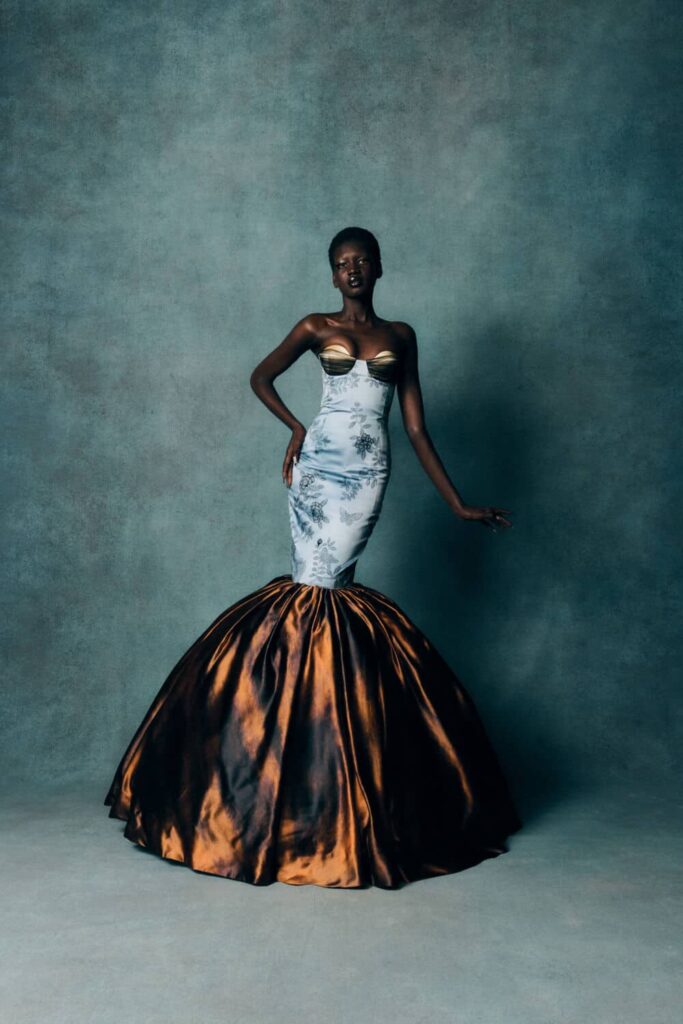
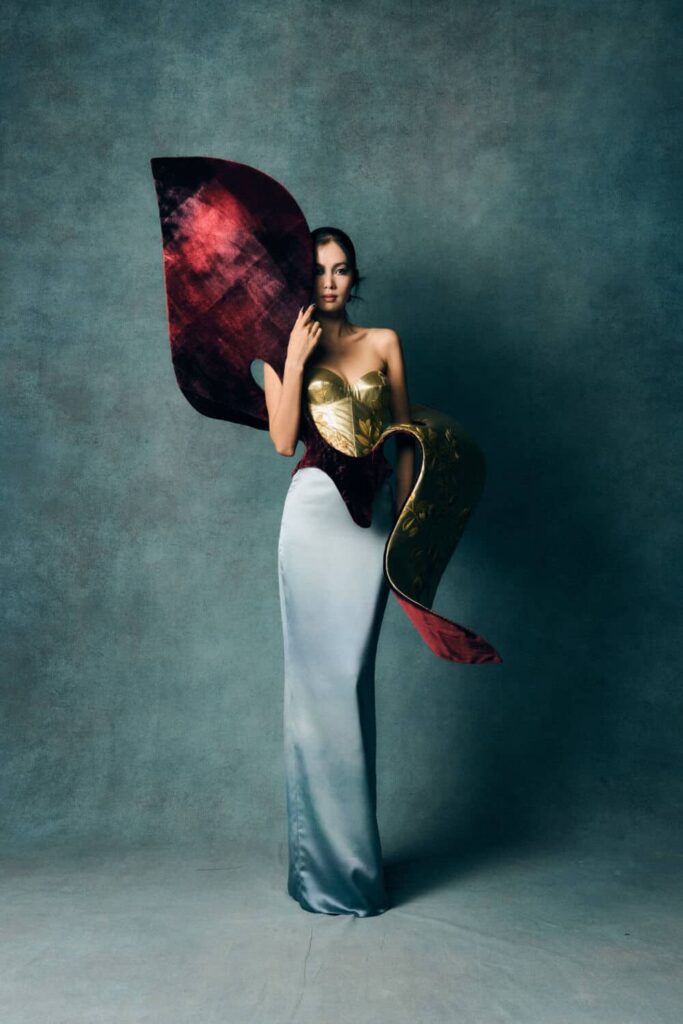
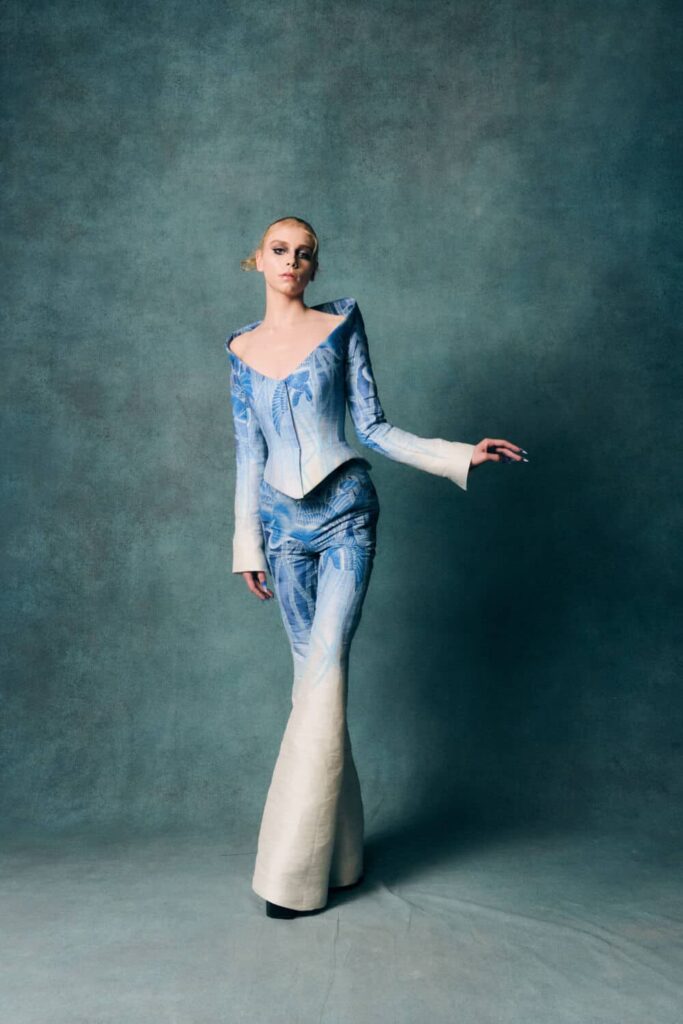
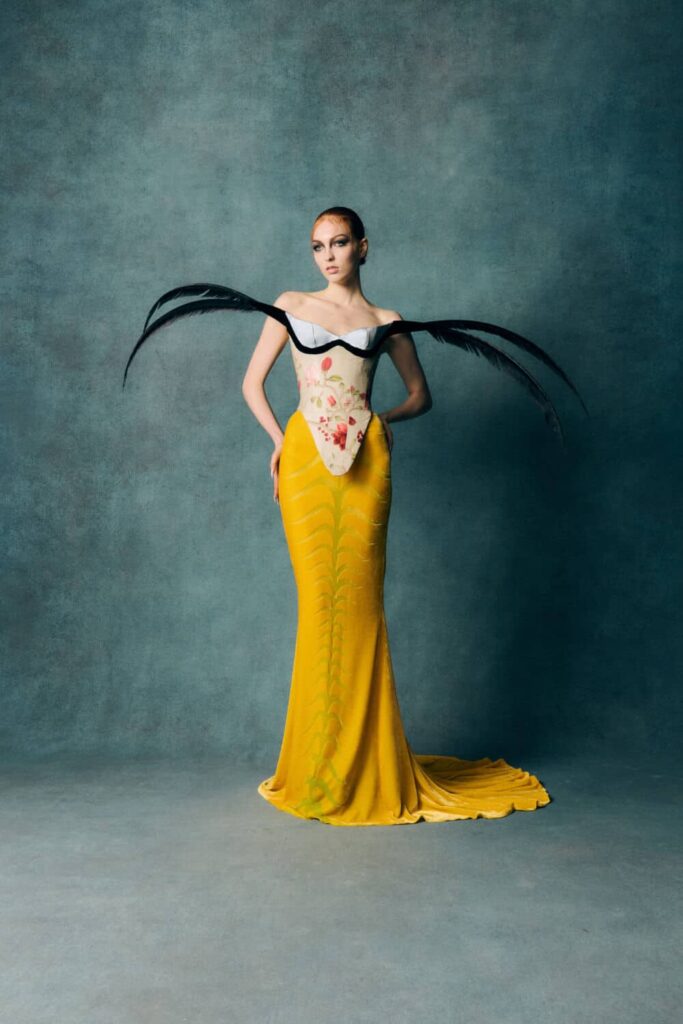
Harris Reed’s spring/summer 2026 collection, The Aviary, landed in London not with polite elegance but with theatrical wings, a presentation that stretched his signature romance into sharper dimensions. Held in a dimly lit, salon-style venue in King’s Cross, the atmosphere felt brooding and expectant, as if one were stepping into a dream-cocktail between fantasy and form. Reed’s work has always flirted with contradiction; this season, those tensions were pregnant with purpose.
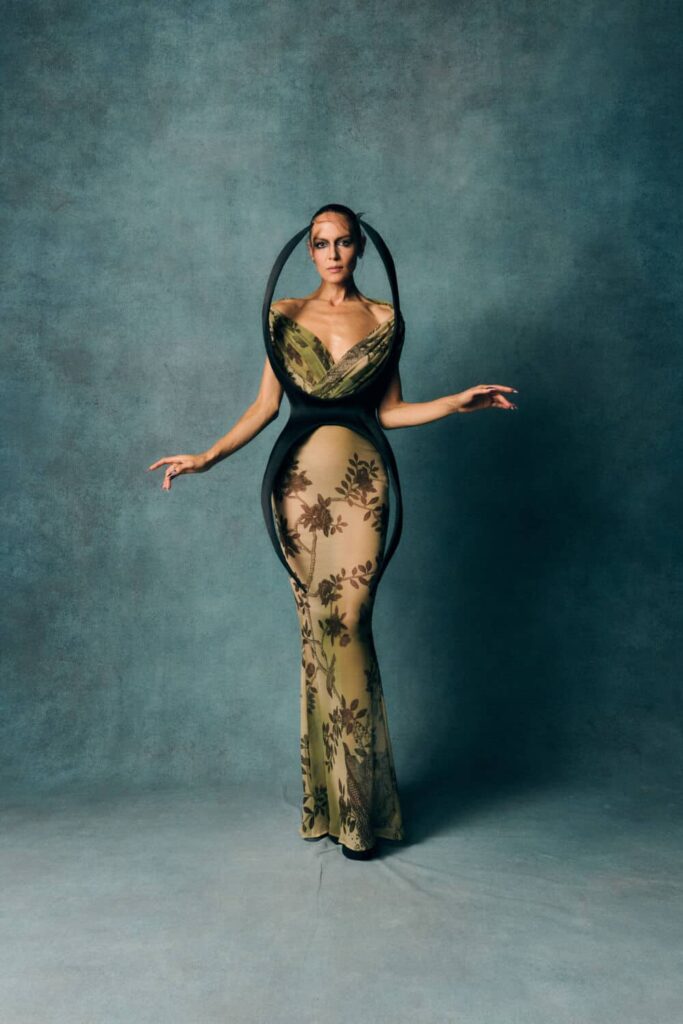
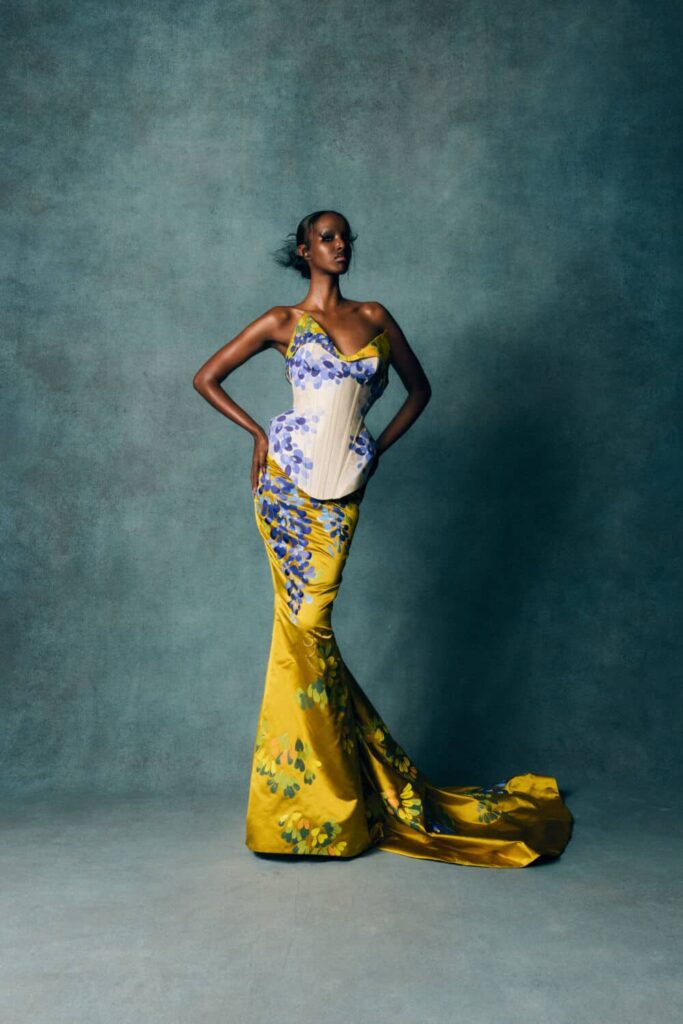
Silhouettes lifted like sculptural birds: corsets cinching torsos, skeleton-like crinolines framing hips, skirts prowled with tiger print and brocade, yet there was a softness in how fabric fell, a brush-stroke of vulnerability amid the grandeur. Embroidered brocades, lush velvets, duchess satin, each material bore weight, but only just enough so it could tremble. Whimsy came in feathered extensions, graphic motifs, in how sleeves ballooned or cutouts settled. But Reed never allowed spectacle to swallow the garment’s core. Every exaggerated extension, every winged accent felt anchored by tailoring, by a structure that both supports and challenges.
Beauty, for The Aviary, mirrored that duality. The makeup drew from film noir: eyes fiercely defined but pulled back in color, skin lit from within, brows blocked out and gilded in gold glitter. Hair played its part, a slick foundation with wispy edges, unnatural symmetry given life through subtle chaos. Nails carried whispers of story: black frames, ombré blues, pale pink interrupted by singular black lines.
The Aviary is not just its visual poetry, but its insistence on storytelling through structure. It asks: what does it mean to be adorned and armoured, to want to fly yet be held down, to show fragility and insist on power? Reed isn’t simply designing dresses; he’s constructing mythologies. In an age hungry for identity and yearning for artistry, The Aviary was Reed’s avian fable, a reminder that true fashion flies not by floating, but by knowing when to anchor.