Story by Editor-in-Chief Carolina Ogliaro
Zuhair Murad has never been shy about beauty. In a fashion system increasingly suspicious of it, his couture continues to insist that splendour still matters. For Spring–Summer 2026, titled Chiaroscuro, Murad pushes that conviction further, framing beauty not simply as adornment but as a moral response: an act of resistance after darkness.
The collection arrives freighted with symbolism. Rebirth. Renaissance. Humanist Italy. The 1950s. Hope after collapse. In lesser hands, such an accumulation might buckle under its own seriousness. Yet Murad’s fluency in the language of couture allows these references to remain legible because they are, first and foremost, worn. Meaning here is carried by the body.
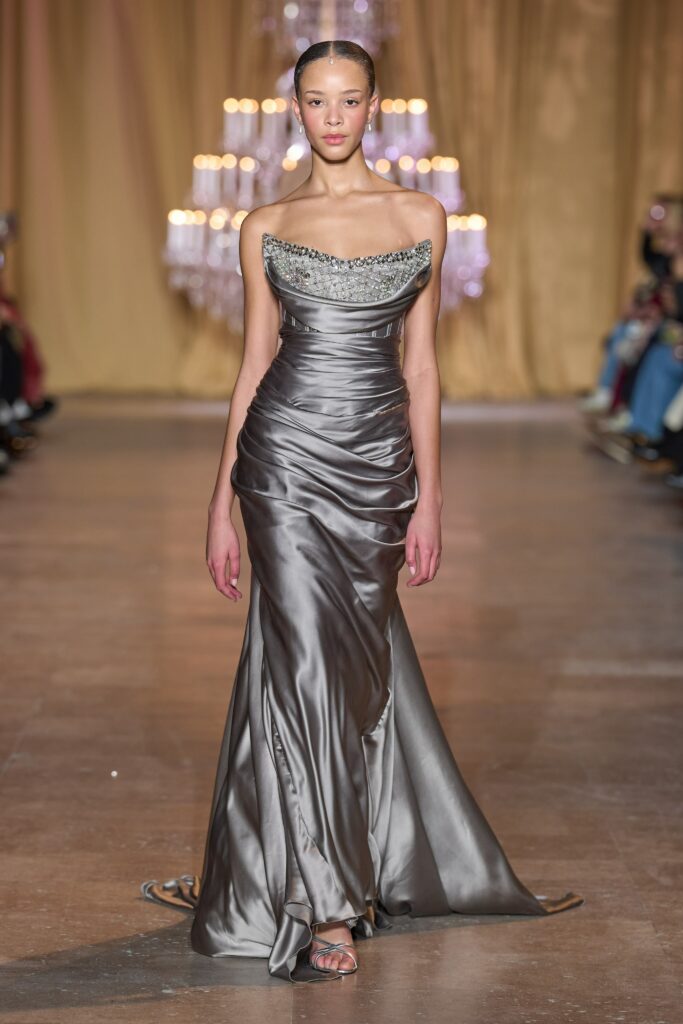
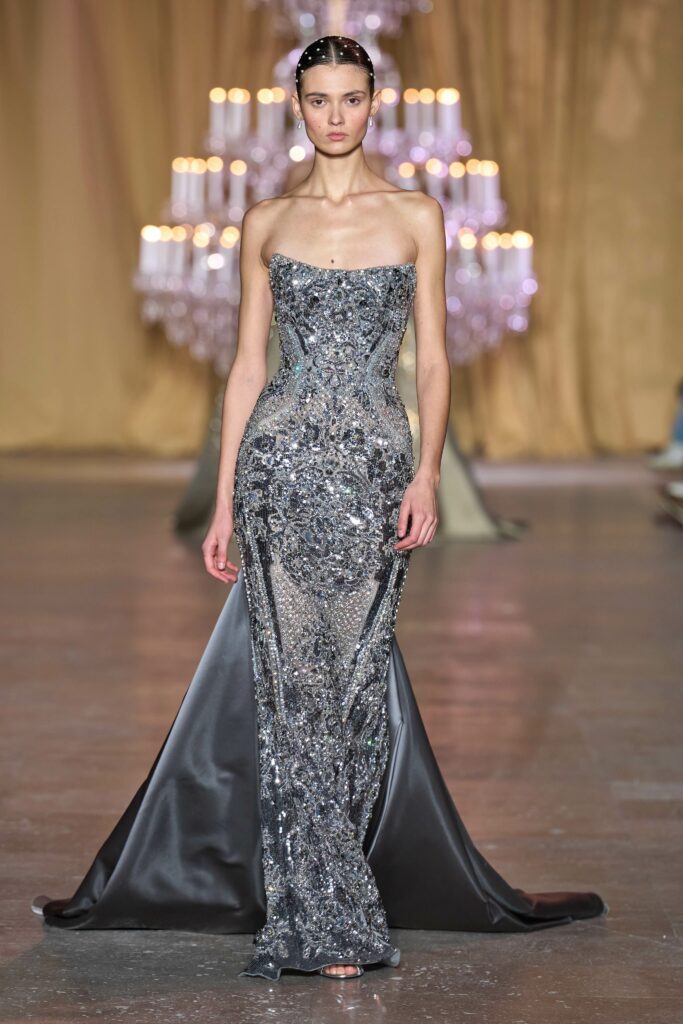
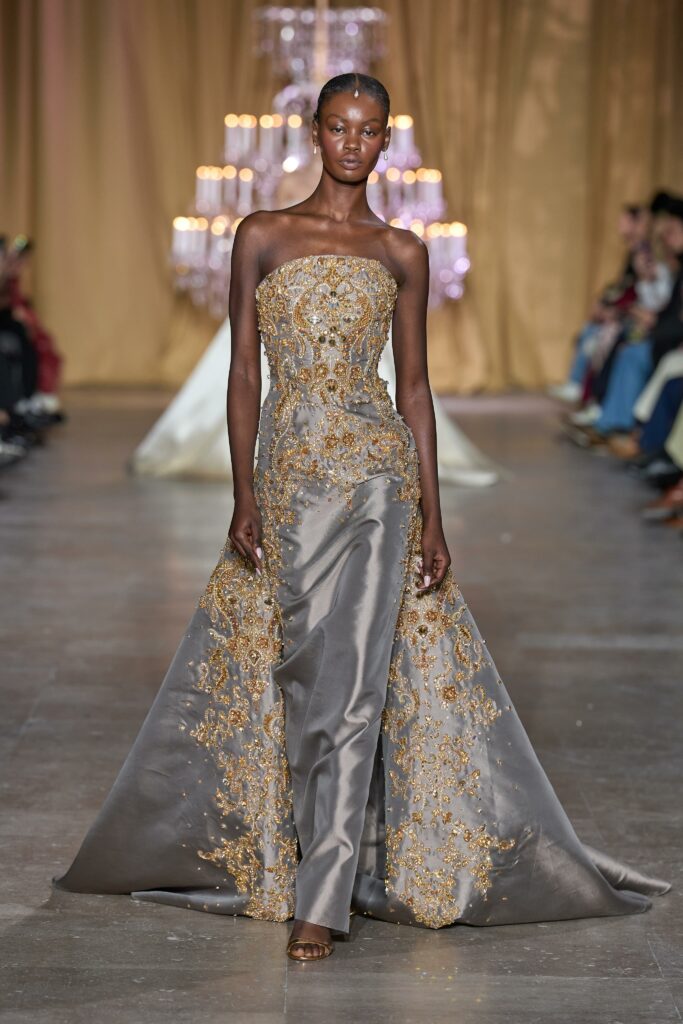
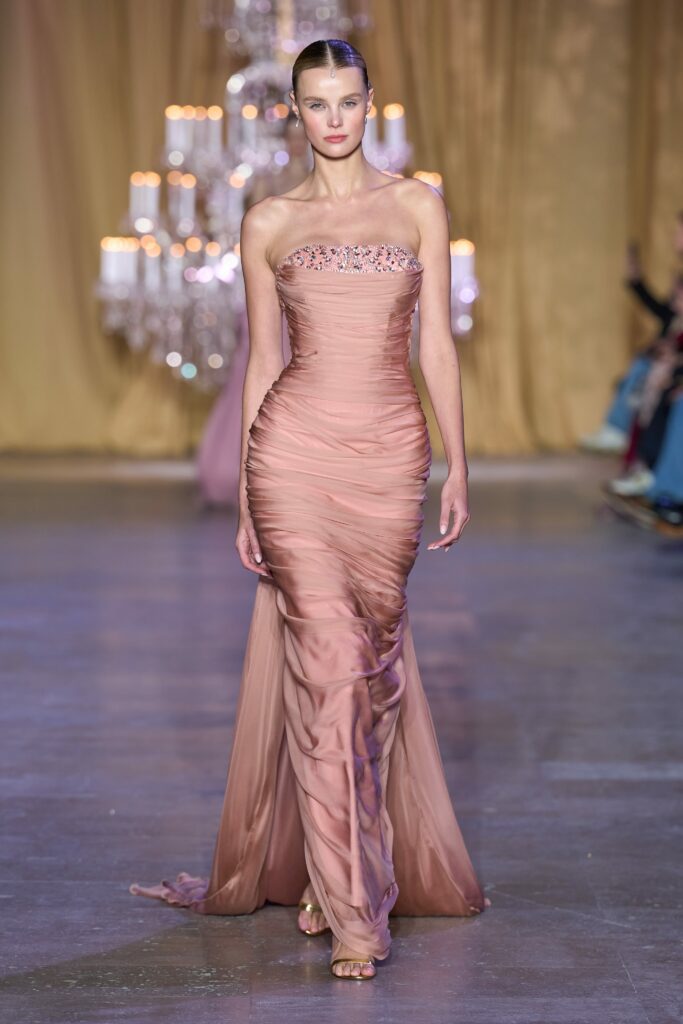
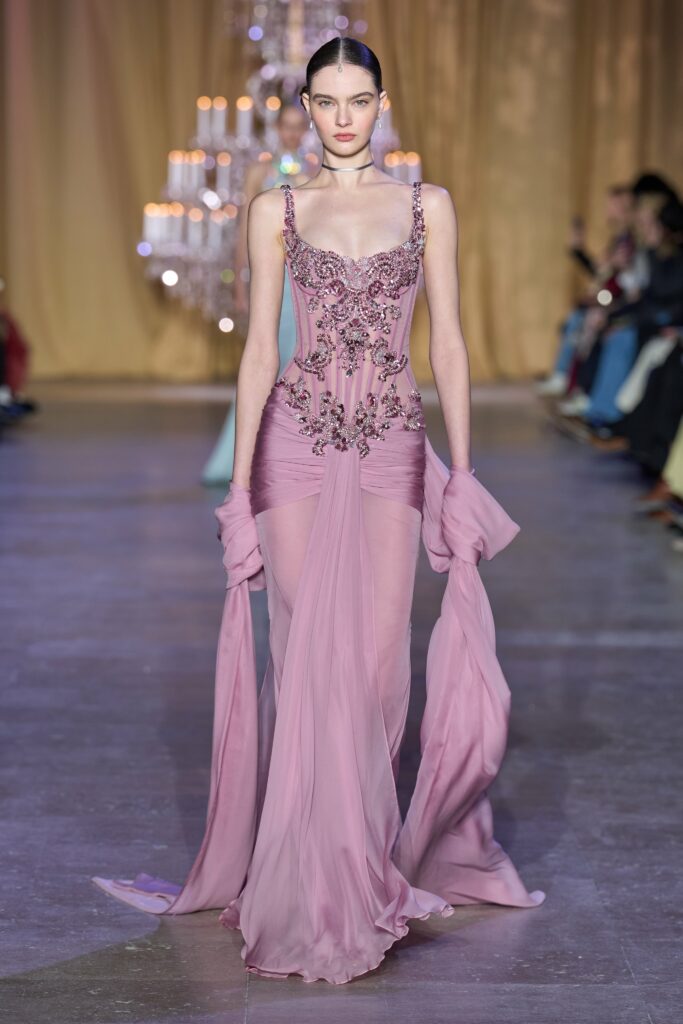
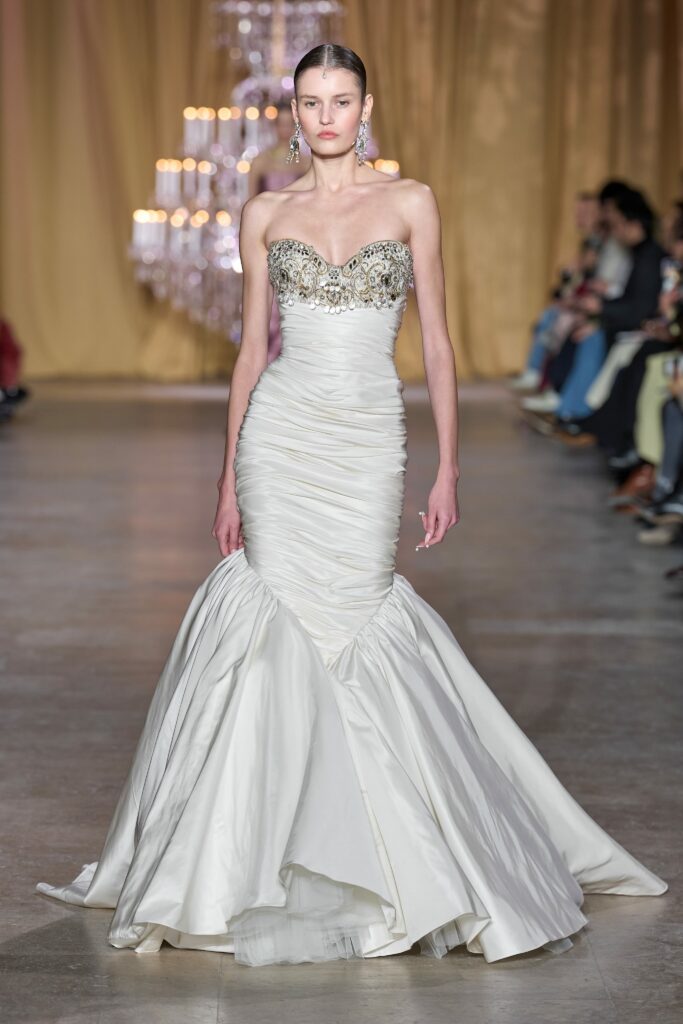
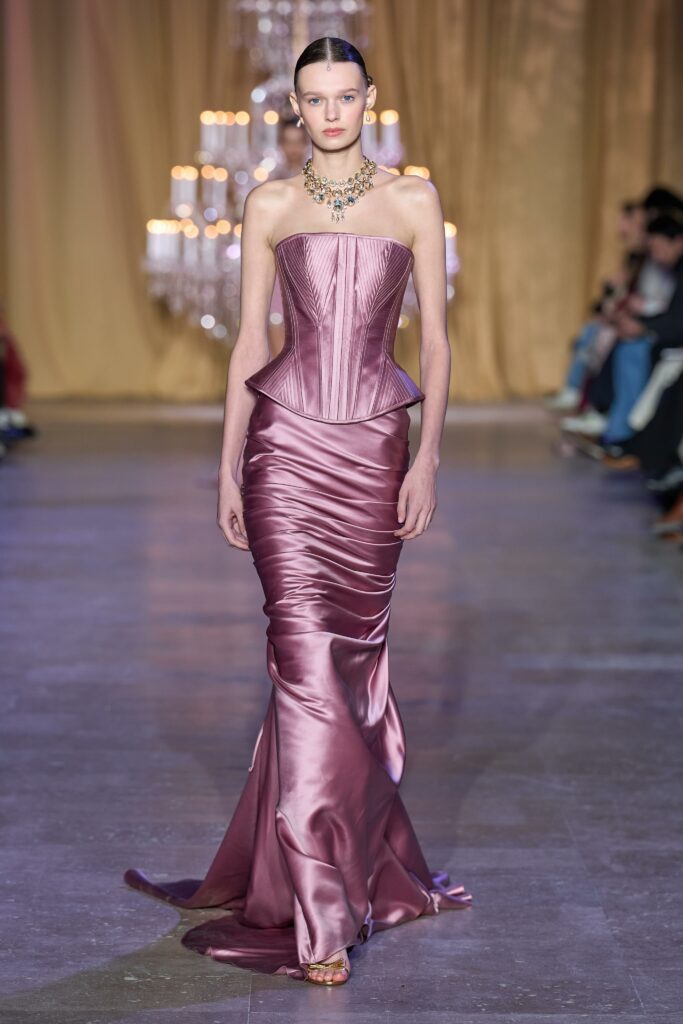
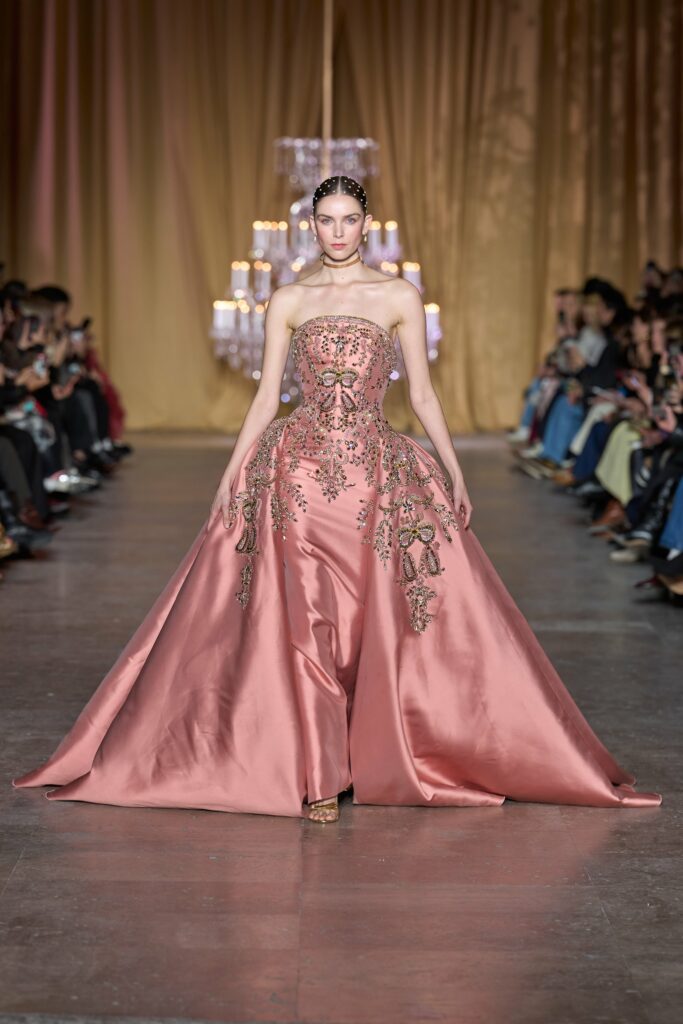
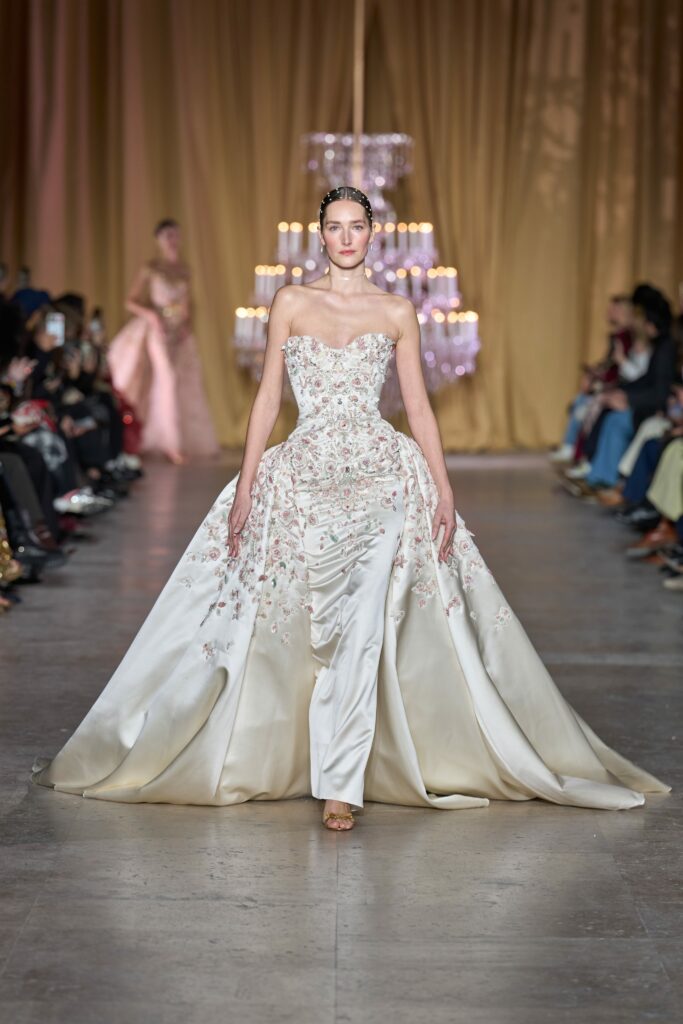
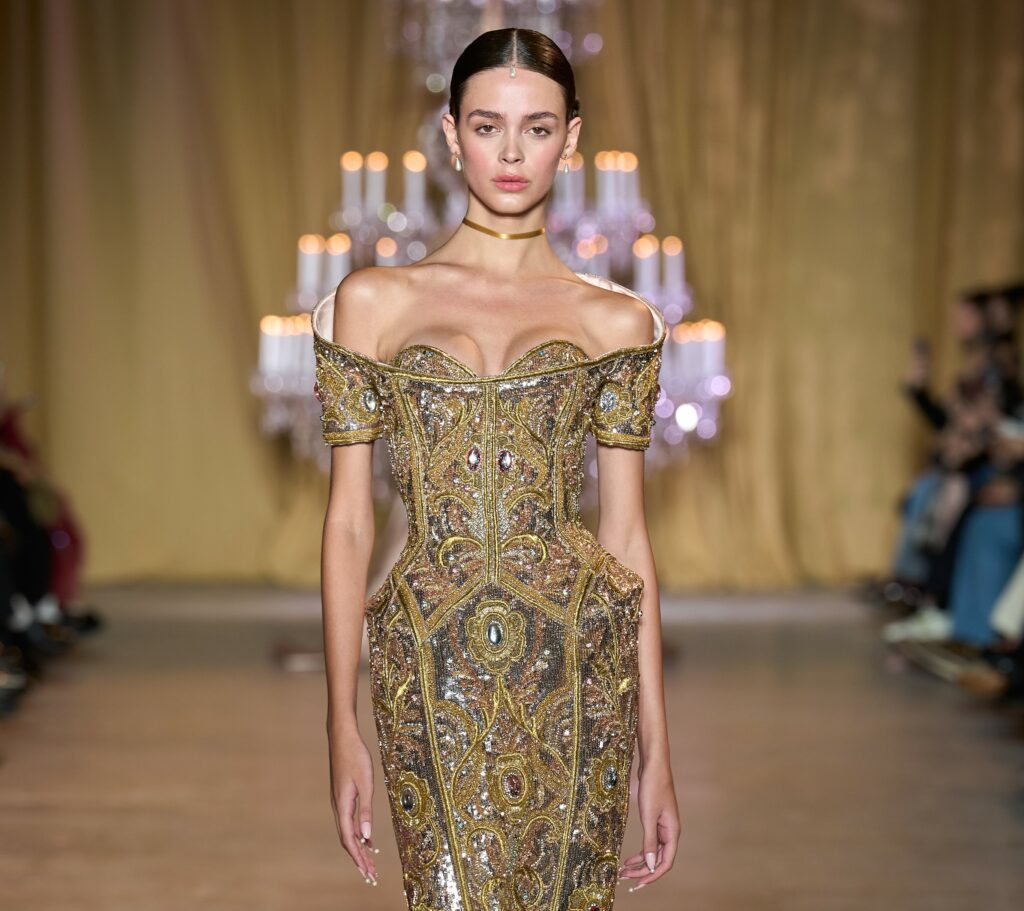
The silhouettes are unmistakably Murad but newly disciplined. Conical corsetry and sculpted waists recall the postwar ideal, when fashion reshaped the female form as optimism incarnate. Volumes bloom around the hips, skirts swell and float, and overskirts hover like afterimages. These are not fragile women. They are armoured in silk and satin, clothed in conviction. The hourglass silhouette, long dismissed as retrograde, is reclaimed as strength.
What is striking is the pacing. The clothes do not shout. They advance slowly like figures emerging from a half-lit fresco. Chiaroscuro is not only a palette but a mood: colour held in suspension, pastels softened as if filtered through centuries of dust, shadows holding onto light rather than erasing it. Illumination here never blinds, but it reveals.
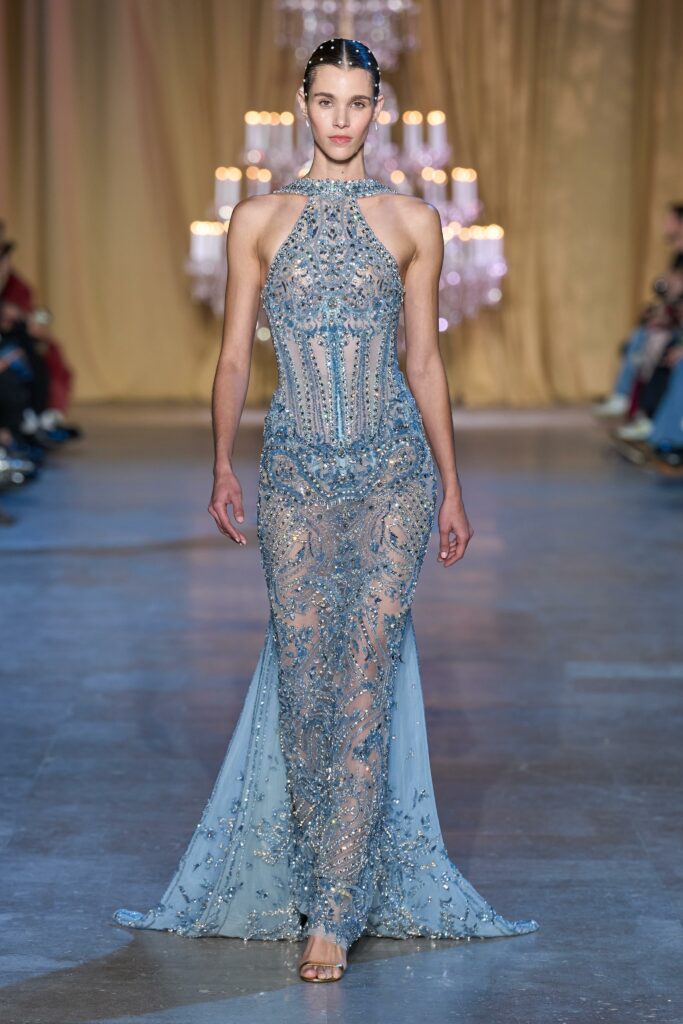
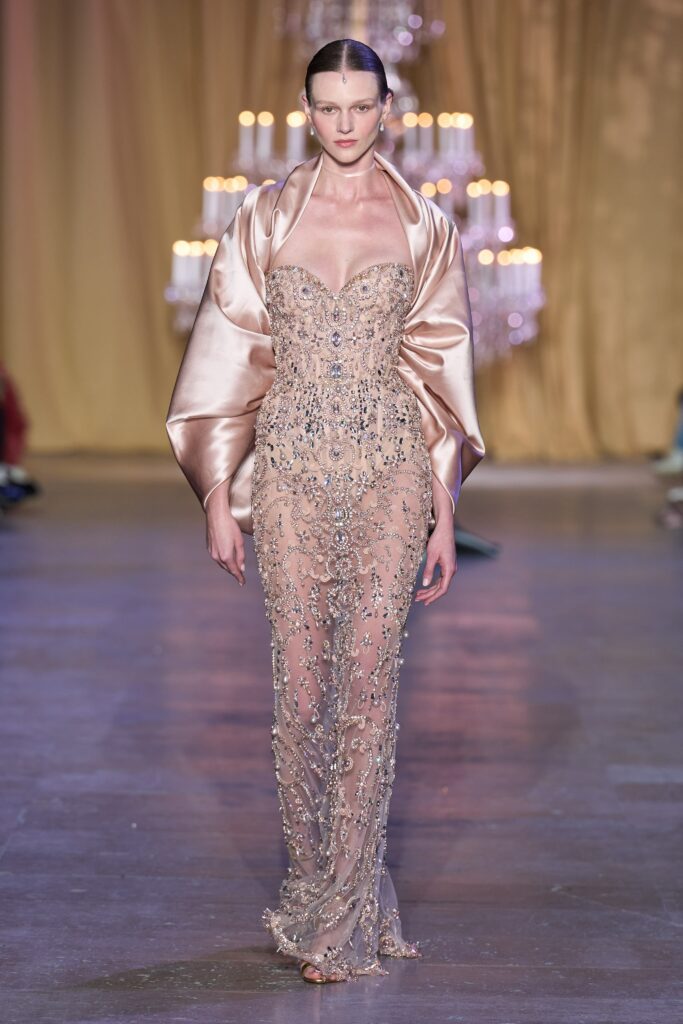
Murad’s atelier craftsmanship, long his most persuasive argument, is allowed to breathe. Embroidery references Renaissance ceilings and worn gilding without slipping into costume. Metallic threads glint discreetly. Cabochons feel devotional rather than decorative. Chains drape the body like relics, suggesting protection rather than provocation. This is embellishment with intention, not excess for its own sake.
Fabric choice reinforces the collection’s sense of gravity. Mikado and duchesse satin provide architectural certainty; faille captures light with soft authority; chiffon grazes the skin, barely there; jersey reintroduces intimacy. These gowns are conscious of the body beneath them.
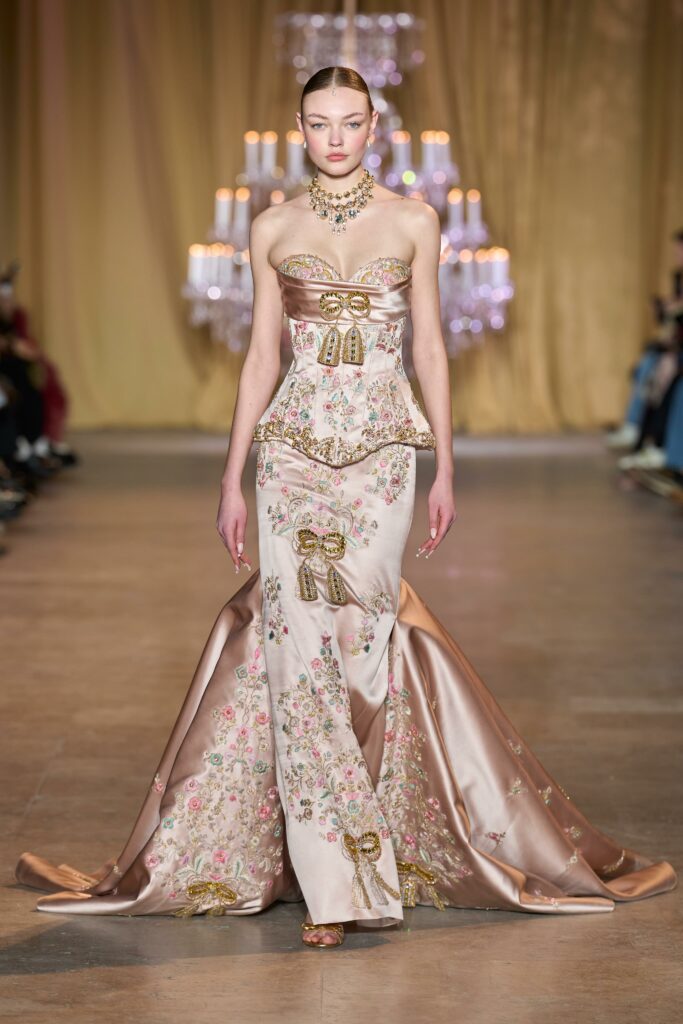
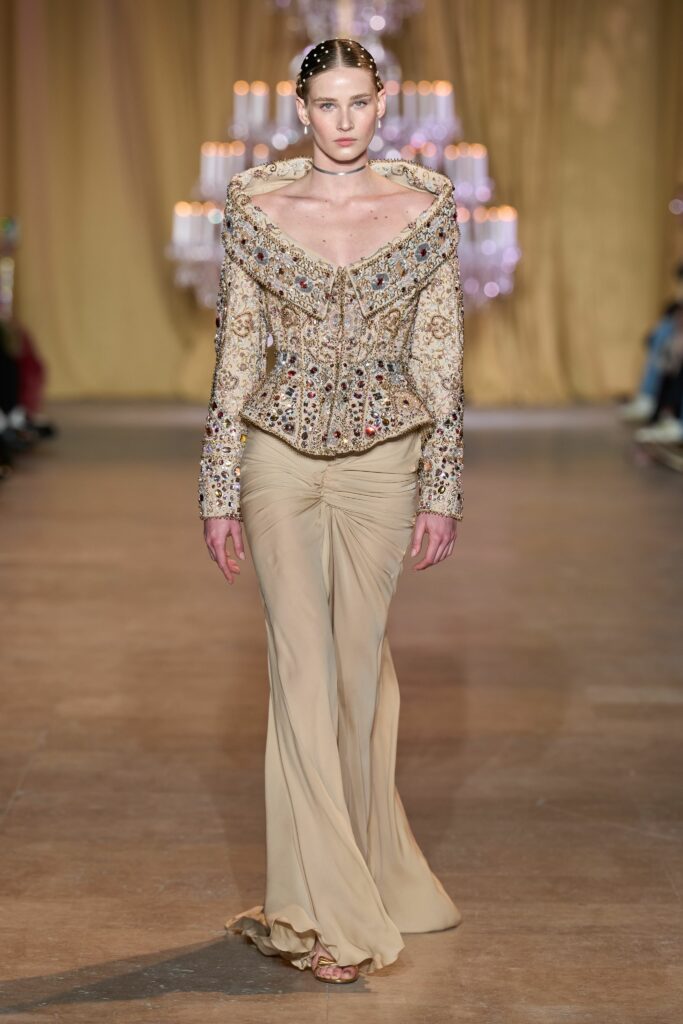
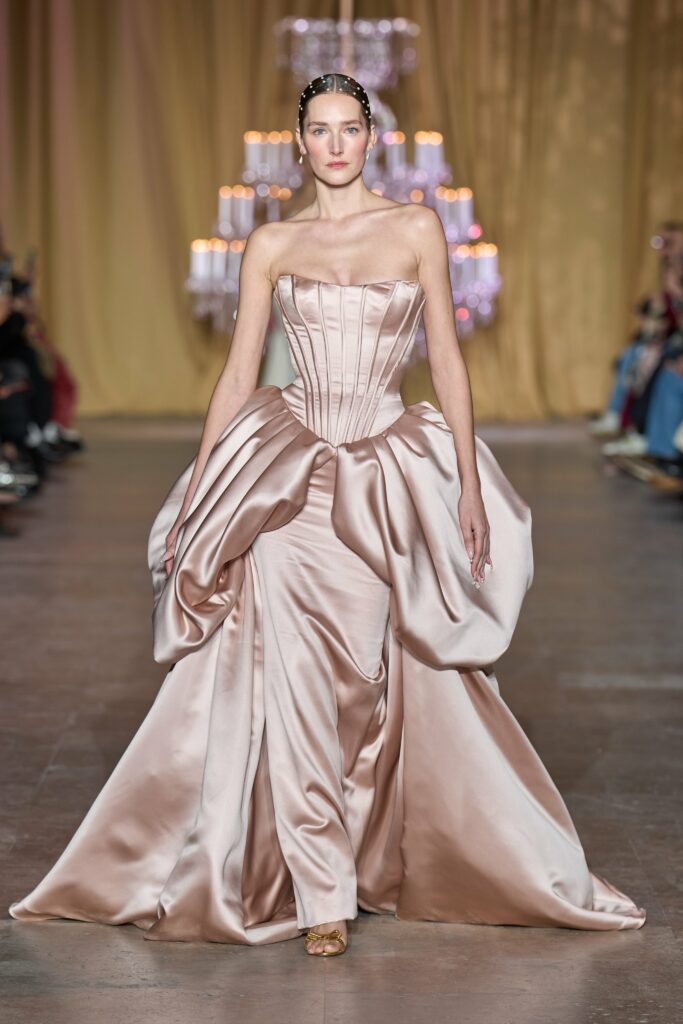
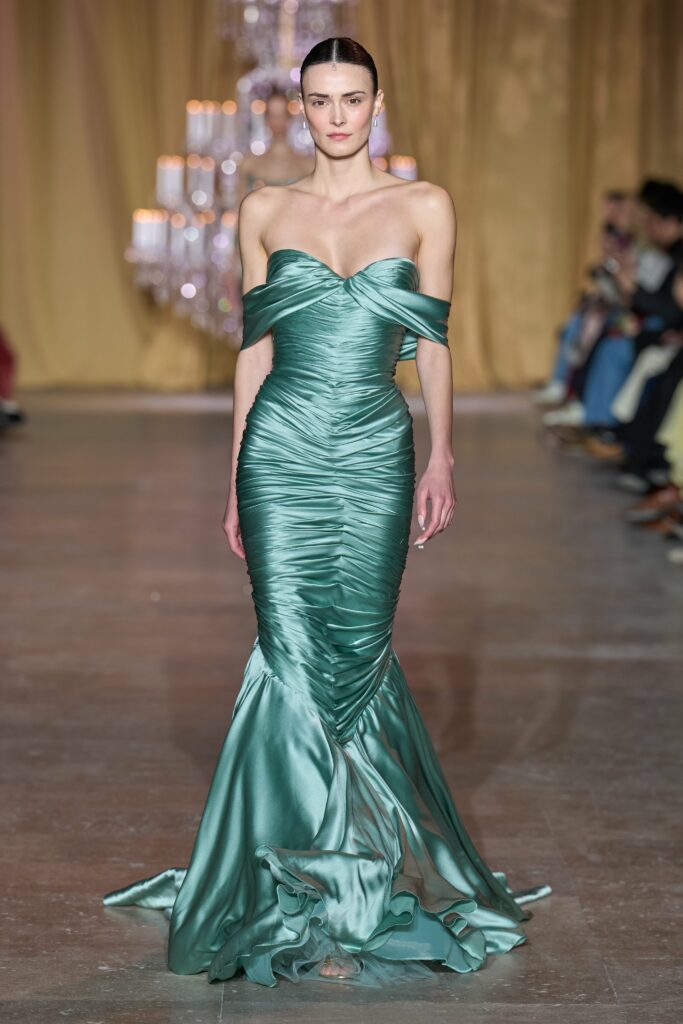
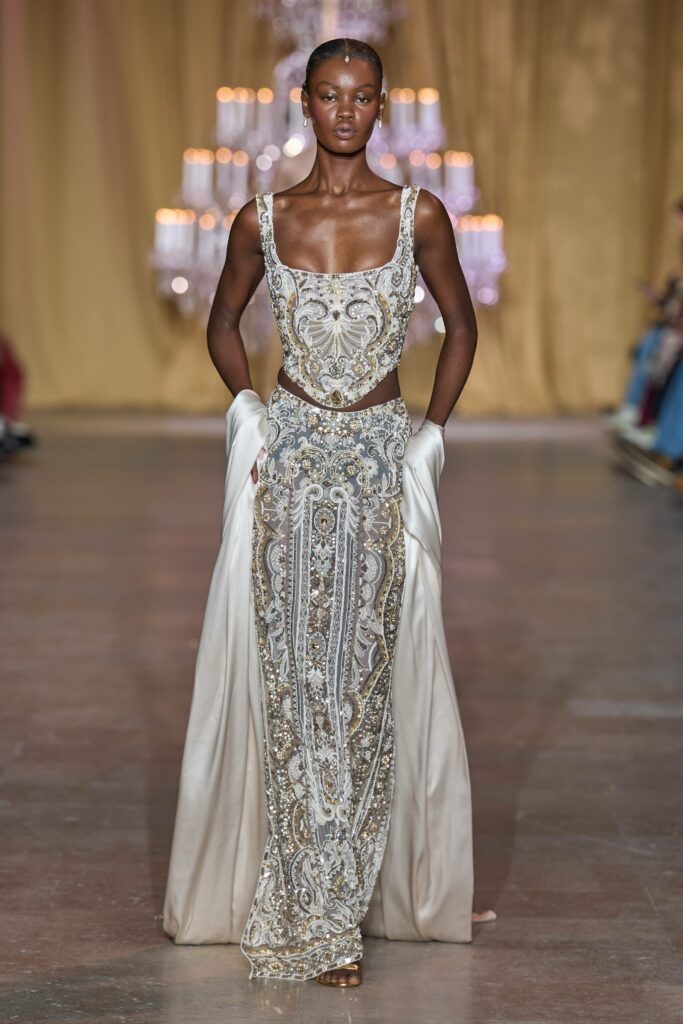
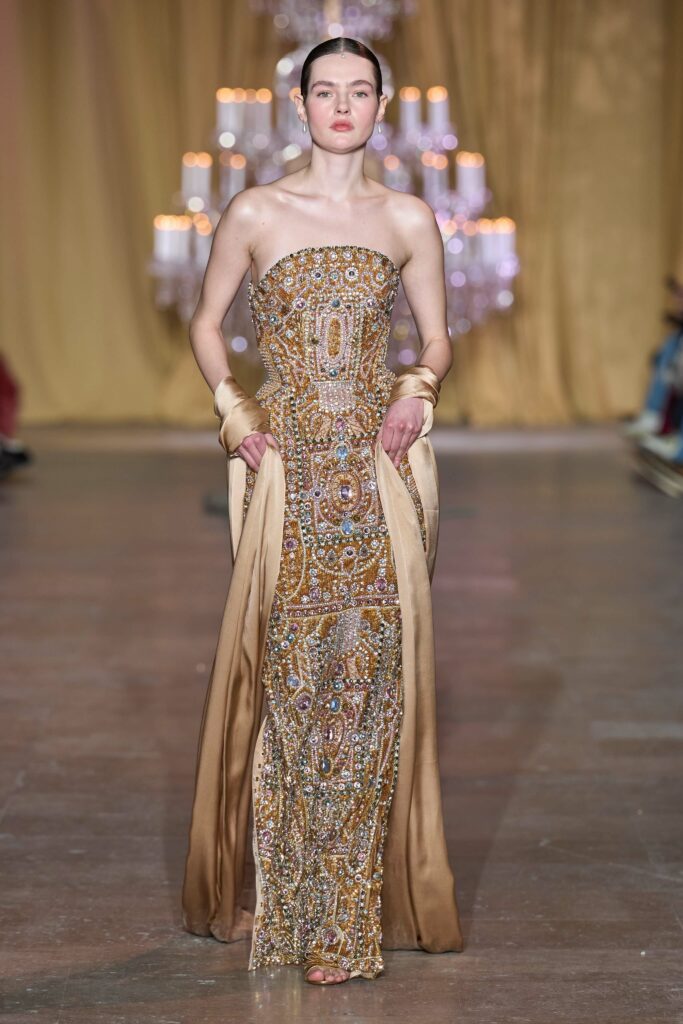
Across 45 looks, the collection opens as a procession: women moving forward together, sovereign and contemplative, not hurried, not hesitant. In the near silence of the ateliers, where dozens of embroiderers work patiently by hand, time itself becomes part of the narrative. Nothing is concealed. Slowness is the point.
And yet, one cannot ignore couture’s enduring paradox. Chiaroscuro proposes beauty as a reparative force, thread by thread, world by world. It is a noble idea, sincerely executed, even as it aspires to universality within an inherently rarefied system. Still, Murad does not chase relevance through provocation or novelty. Instead, he argues elegantly that patience, hard work, and historical memory remain radical gestures.
After the night comes the light, Murad tells us. In this collection, the light does not blaze. It glows. And perhaps that restraint, measured and enduring, is its most convincing form of hope.