Story by Editor-in-Chief Carolina Ogliaro
There is a point at which luxury stops being about possession and becomes about perception. Not what something is, but how it is encountered and how it stays.
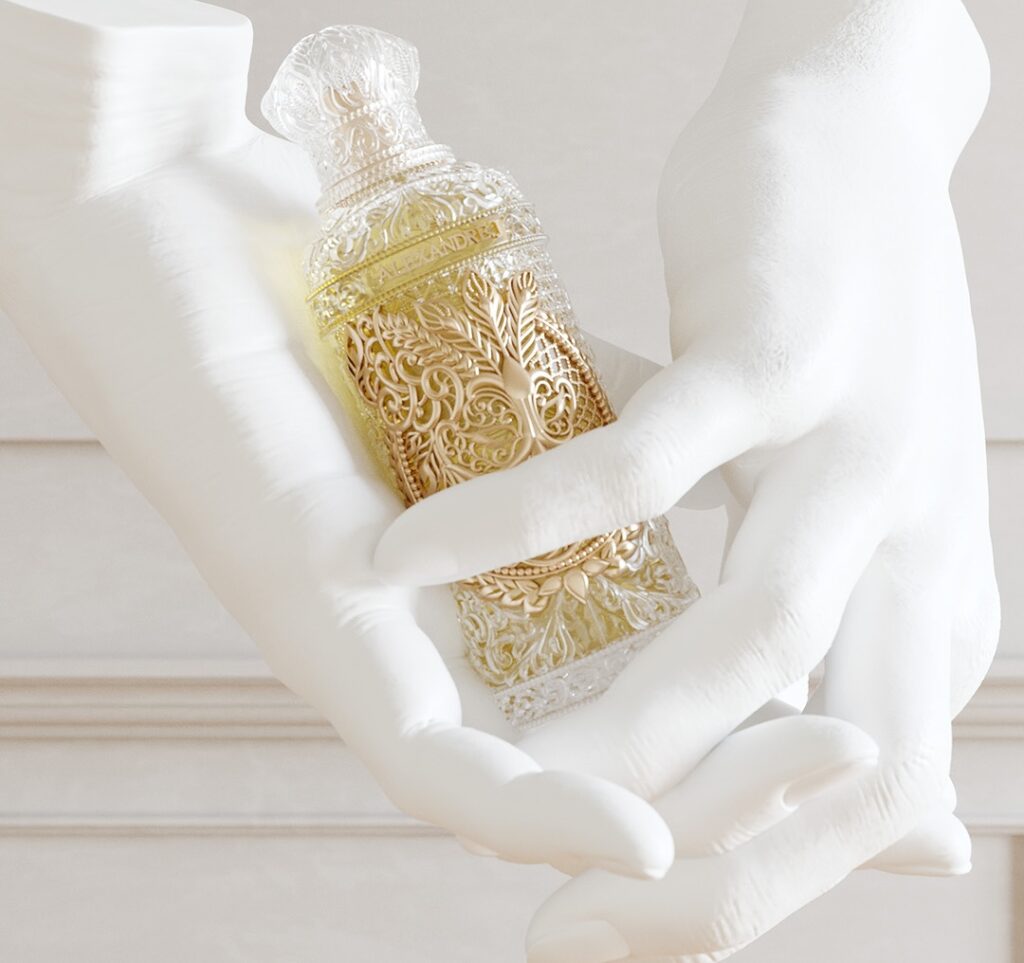
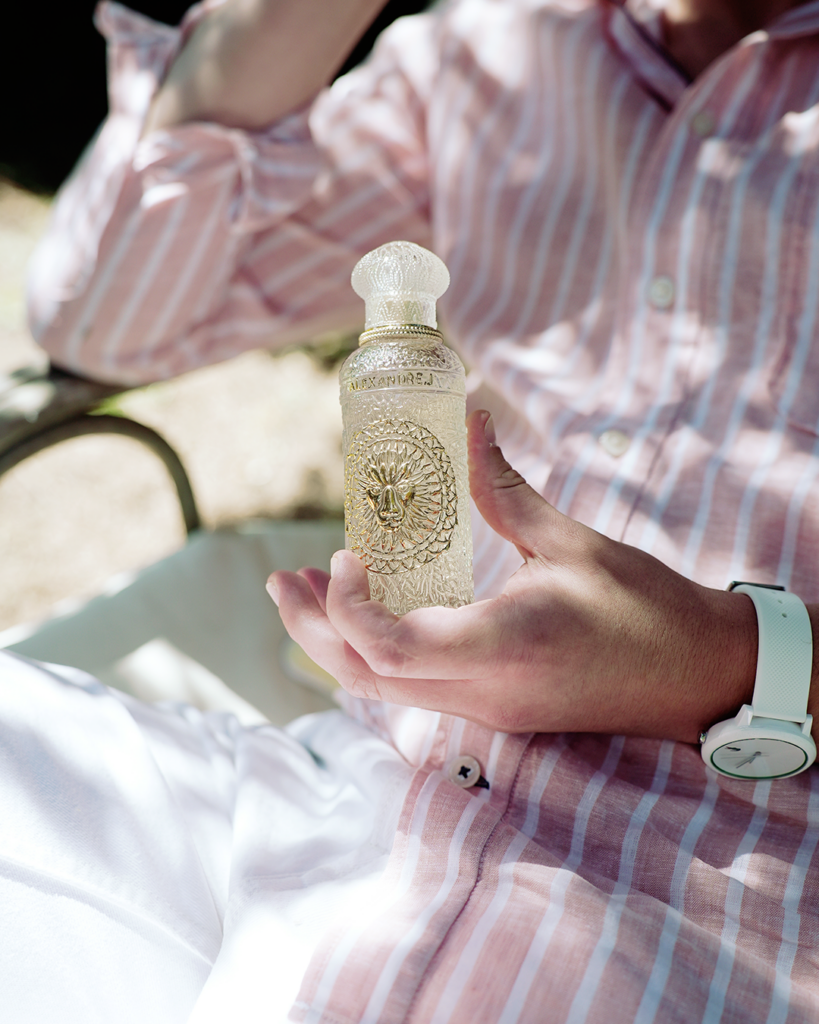
At Alexandre.J, this idea is not theoretical. It is built into every layer of the product. Under the direction of Amélie Jabban, fragrance is treated less as an isolated formula and more as a composition in the broader sense: visual, tactile, olfactory. This is not new, perfumery has always flirted with ornament, but what differentiates Alexandre J is the willingness to hierarchize. The bottle is not there to compensate for the scent, nor is the scent designed to justify the object. Instead, the two operate in parallel, each carrying part of the narrative.
If the market is currently polarized between minimalism and maximalism, this approach positions luxury as expressive without being excessive and detailed without becoming diffuse.


CM: As the Global Brand Director of Alexandre.J, how do you define the essence of luxury in perfumery today, and how does the house embody this vision?
A: Today, luxury in perfumery goes far beyond the fragrance itself. It is about creating a complete experience where scent, object, and emotion become one. At Alexandre.J, we place great importance on the presentation of the product. Each bottle is conceived as a true work of art, almost like a jewel. This idea of the “perfume jewel” lies at the very heart of our identity. It is also what makes Alexandre.J a true gifting destination: every creation is designed to evoke emotion from the very first glance, even before the fragrance is discovered.
Alexandre.J is celebrated for its deep connection to art and history, particularly the Art Deco movement. How do these influences translate into the development of a new fragrance?
At Alexandre.J, every creation begins with an artistic inspiration that defines the story we wish to tell. This vision first takes shape through the visual universe and the design of the bottle. The fragrance then brings this story to life. The perfumers’ role is to translate this inspiration into an olfactory language, selecting notes that express the intended emotion with precision. The goal is always to create perfect harmony between the artistic inspiration, the olfactory composition, and the object itself, so that each fragrance becomes a complete sensory experience.
You’ve spoken about perfume as a dialogue between past, present, and future. How do you ensure each creation remains relevant while honoring heritage?
The heritage of Alexandre.J is first and foremost a family legacy, rooted in an eclectic artistic universe where styles and eras freely converge. The house embraces a certain level of sophistication in both its bottles and its compositions, without seeking to simplify its identity. Modernity acts as a means to keep this heritage alive—whether through contemporary approaches in perfumery or through the visual expression of the brand. Our philosophy is to create a dialogue between tradition and modernity, drawing inspiration from the past to nourish the present and reinterpret timeless artistic influences.
The niche fragrance market is increasingly competitive. How do you navigate this landscape as an independent house?
The perfume industry has become extremely competitive. Many brands are now part of large groups with significant resources in terms of distribution, visibility, and marketing investments—particularly in the digital space. For an independent house like Alexandre.J, the challenge is to continue standing out in this environment. Our strength lies in our international presence and in the direct relationship we cultivate with our clients. Encounters, dialogue, and emotion remain at the heart of our development, allowing us to build a genuine connection between the brand and its audience.
How important is the visual and tactile experience in shaping the perception of a fragrance?
At Alexandre.J, packaging is part of a 360-degree sensory experience. The first encounter is visual: color, finishes, and the intensity of the design must immediately capture the eye and spark curiosity.
Sight naturally leads to touch—the desire to hold the bottle, to feel its texture and details. A sensual relationship with the object begins to form. Finally comes the discovery of the fragrance itself. Packaging, therefore, plays a crucial role: it creates desirability and prepares the emotion of the olfactory experience.
Your personal connection to perfumery is rooted in family. Was there a defining moment that shaped your perspective?
My passion for perfumery is first and foremost a family story, inspired by my father. From a very young age, I grew up surrounded by a unique creative universe where everyday objects—like Christmas ornaments—could suddenly become perfume bottles. I witnessed the alchemy between object, imagination, and fragrance within a highly eclectic visual environment. Beyond the fragrance itself, what fascinates me most is everything it represents: the discovery of cultures, the search for raw materials, the dialogue with perfumers, and the collaboration with artisans. In many ways, this creative DNA has always been part of me.
The Middle East and the US are key markets. How do you approach such distinct audiences?
The United States is a strategic market that we are approaching with great care. It is a highly structured market where partnering with the right experts—particularly in digital—is essential. It is also a market where the customer experience is paramount. American consumers are not drawn to a brand simply because it is French; they seek a strong identity and values they can truly connect with. The Middle East, meanwhile, remains a historic market for the house, where close relationships with local partners and a deep understanding of cultural nuances are key to long-term success.
In an increasingly digital world, how do you maintain a sense of intimacy?
Closeness with our clients is extremely important to us. We take the time to engage with them directly and respond to their messages. We also invite them to take part in certain moments of the brand’s life—through events, creative shoots, and exclusive encounters. By sharing the behind-the-scenes of our creative process, we allow our community to discover our universe and feel genuinely connected to the brand.
If you had to define the Alexandre.J wearer in one feeling?
The Alexandre.J woman or man is, above all, a true individual—someone who values creativity, elegance, and a strong sense of identity. Our fragrances are designed to reflect personality and emotion rather than follow trends. Each creation becomes a signature that reveals a part of the wearer’s character. The feeling I would associate with Alexandre.J is timeless creativity: a refined balance between artistry, individuality, and emotion.
What excites you most about the future of perfumery?
What fascinates me most is the arrival of new technologies in the creation of fragrances. The real challenge will be to preserve tradition and artisanal craftsmanship in a world where everything can be produced faster. Perfume will always remain essential, but it will be crucial to preserve its exclusivity while continuing to create unique visual and olfactory experiences.
What trends are you currently observing?
We are witnessing the rise of passionate communities forming around fragrances and brands. More and more young men—particularly between 18 and 25—are embracing perfume as a way to express their identity. Fragrance has become almost an “invisible outfit,” allowing individuals to reveal different facets of themselves. At the same time, consumers are increasingly seeking cleaner compositions, while still gravitating toward comforting, gourmand scents.
What advice would you give to those entering the world of luxury and creativity?
The world of perfumery is extremely competitive. In luxury, everything is about creating desire.
True creation often means breaking conventions and proposing something new. You must therefore be willing to take risks and stand firmly behind a strong creative vision.

Under Amélie Jabban’s global direction of her family business, the question is not whether the object matters more than the fragrance, or the opposite. It is how the two can exist without cancelling each other out.
In that sense, the house suggests something more exacting: that luxury does not reside in a single statement but in the accumulation of decisions, each conscious, each essential, resolving into a coherent whole.