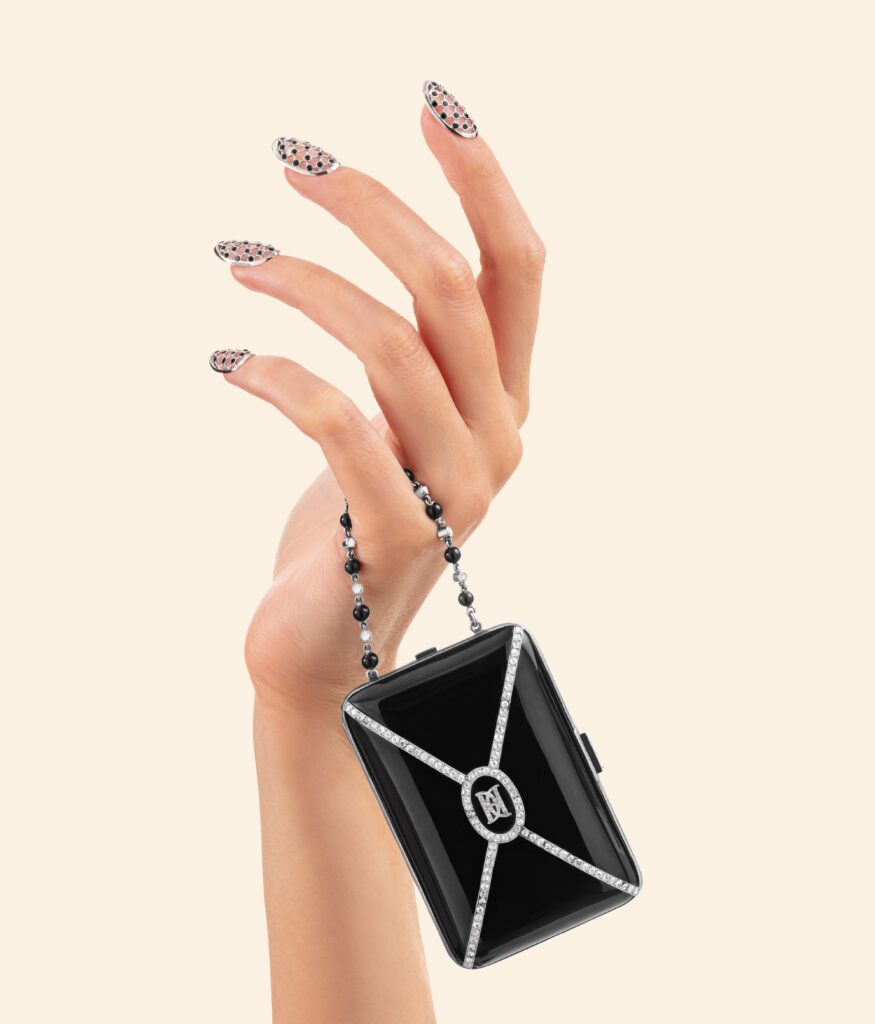
Every so often, an accessory arrives that rewrites where jewelry is allowed to live on the body. This season, that shift is happening at the very tips of the fingers. Manicures have spent the last several years graduating from grooming ritual to genuine style statement: chrome finishes, hand-painted micro-art, gemstone tips glued on for a single red-carpet appearance. But the house making the boldest, most historically loaded claim on this territory isn’t a nail brand at all. It’s Mellerio, founded in 1613, and the oldest jewelry house on earth, and its new diamond-set nail ornaments arrive like an unfiled patent, finally exhumed.
Because that, remarkably, is exactly what they are.
A Seventy-Five-Year-Old Idea, Finally Realized
In 1951, an engineer somewhere inside Mellerio’s ateliers filed a patent for a “garniture décorative pour ongles”, a decorative nail trim, palladium frames set with diamonds, contoured to follow the curve of the natural nail. It was, by any measure, decades ahead of its cultural moment: nail art as fine jewelry, imagined in a Paris still recovering from war rationing, at a time when the idea of adorning a fingertip with anything beyond polish would have seemed, to most, faintly absurd. The patent was granted. The pieces were never sold. For most of a century, they existed only as a curiosity behind glass in the Maison’s Rue de la Paix archive, the object a house keeps because it’s proof of how far ahead of itself it once dared to think.
This is the file that fourteenth-generation artistic director Laure-Isabelle Mellerio reopened for 2026, and the timing is not incidental. Nail jewelry, once a novelty confined to editorial shoots, has become one of the most fluent vocabularies of personal expression in contemporary style, because it offers what a ring or a bracelet cannot: a canvas that changes daily, that can be as loud or as simple as the wearer chooses on any given morning. Mellerio reached into its own archive and discovered it had already predicted it, a rare, almost unnerving position for a heritage house to occupy.
What’s Different and What Isn’t
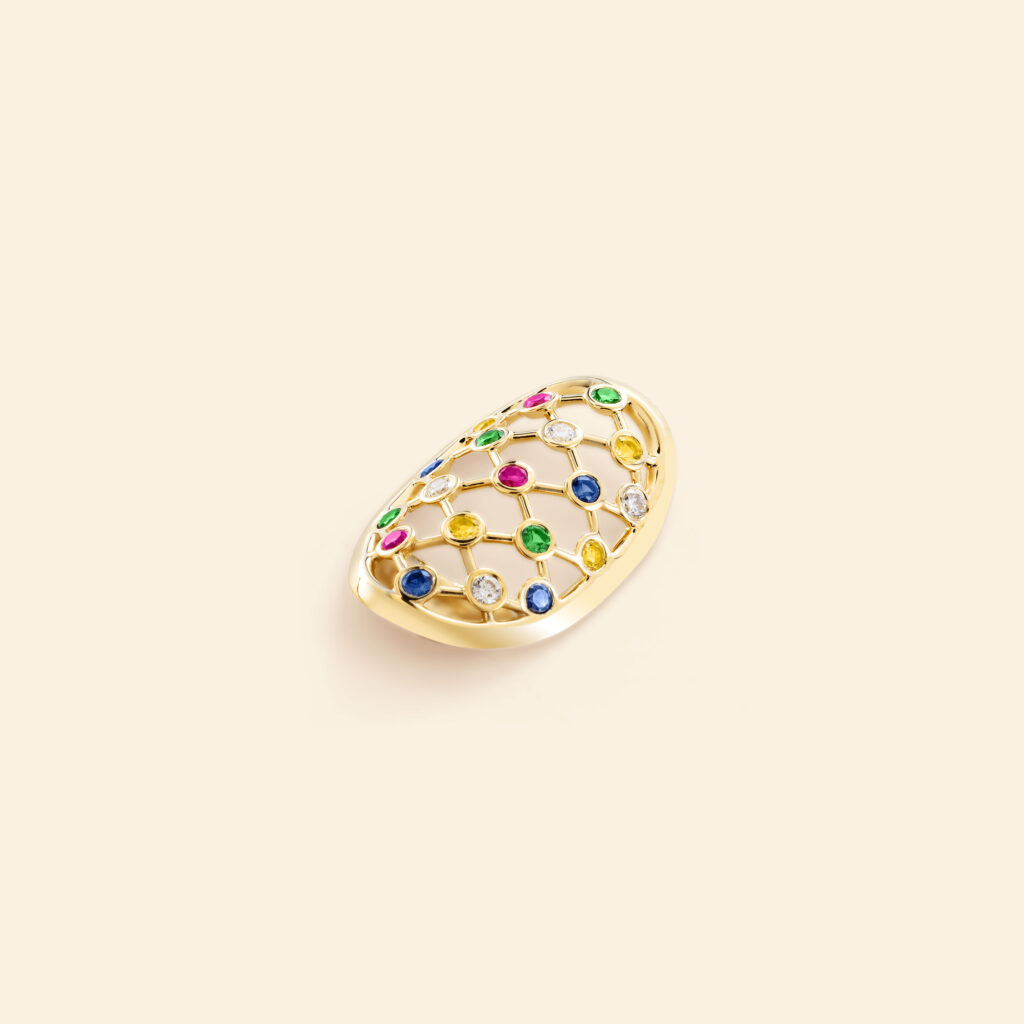
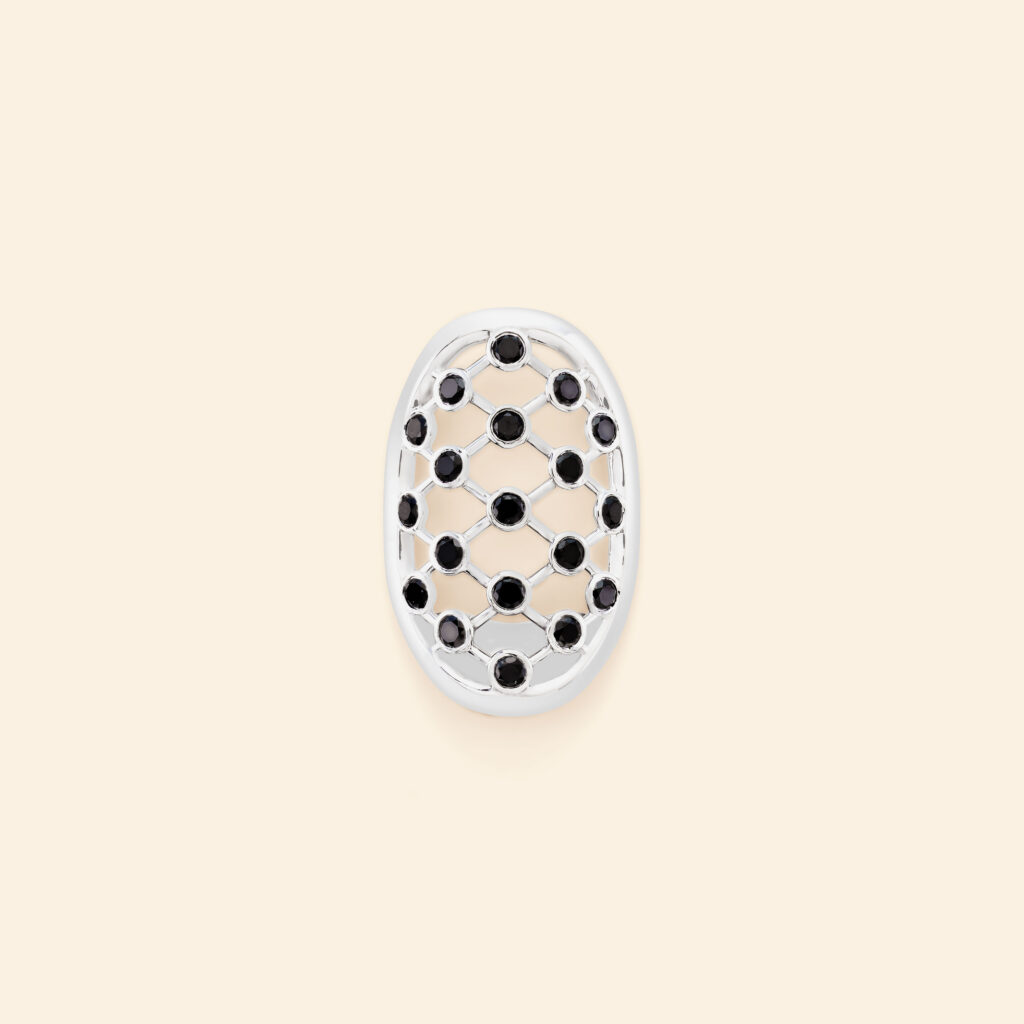
Two details separate the 2026 pieces from their 1951 ancestors, and both are softly telling. The original nails were fashioned from palladium; the new ones are 18-karat white or yellow gold, set entirely with diamonds in a fine, almost lace-like open mesh that catches light with the precision only hand-set stones allow. And where the originals relied on rubberized seals to stay in place, the new versions use a suction-based system, solving, at last, the very practical problem that likely kept this idea shelved for seventy-five years: how do you make a piece of fine jewelry that clings convincingly to something as small and curved as a fingernail and still comes off cleanly at the end of the night?
The collection expands into two new palettes beyond the original white-gold-and-diamond design: a more graphic white gold paired with black diamonds and a yellow gold “tutti frutti” version awash in color, a nod to the multicolored gem combinations that defined Art Deco jewelry’s most exuberant decade and a manifesto that Mellerio’s archive has range far beyond simplicity. Crucially, the house is explicit that these are not meant to be worn as a uniform set of ten. A single ornament on one finger reads as a confident statement; several layered unevenly across both hands reads as something closer to armor. The freedom is the point.
The House Behind the Hand
It’s worth pausing on which house decided nail jewelry deserved this level of seriousness. Mellerio’s founding charter dates to 1613, when Marie de’ Medici. then regent of France, granted the Italian-immigrant family trading privileges in gratitude for uncovering a plot against her son, the future Louis XIII. That royal proximity never really left the house’s bloodstream: Marie Antoinette was a documented client; Empress Joséphine and Empress Eugénie both frequented the boutique; and across fourteen generations, Mellerio has remained the last independent, family-run jewelry house in France, still headquartered a block from Place Vendôme on the Rue de la Paix. This is also, notably, the house that has crafted the Ballon d’Or trophy since 1956 and the Roland-Garros championship trophy since 1981, proof of an institutional appetite for objects that exist at the exact hinge between prestige and function, between something you display and something you use.
That lineage matters here, because it reframes what could easily have been dismissed as a gimmick. A younger, buzzier jewelry label launching gold press-on nails would read as a trend chase. A four-hundred-year-old royal jeweler doing the same thing, from a design it patented before rock-and-roll existed, reads instead as historical vindication, the Maison reminding the industry that it was thinking about wearable, ungendered, endlessly reconfigurable jewelry long before “self-expression” became a marketing term.
Why This Is the Accessory of the Season
Fashion’s accessory cycles tend to move in decades-long swings between the maximal and the minimal. Big bags giving way to micro bags, statement earrings giving way to bare lobes. Nail jewelry sidesteps that pendulum entirely, because it isn’t really competing with rings, cuffs, or earrings at all. It’s a new axis of adornment, one that changes as fast as a manicure appointment and asks nothing of the rest of the outfit. Expect it to move quickly from red-carpet curiosity to a genuine ready-to-wear habit, not as a replacement for fine jewelry but as its most intimate, most fleeting extension. Mellerio, having literally held the patent on the idea since before most of its competitors were founded, isn’t late to this moment. It’s simply on time.