
Photos Courtesy of Company
Balenciaga’s Le City turns 25 with a global celebration, a Damien Hirst capsule and a question worth asking: how does a handbag built to blend in become the one everybody remembers?
Most It bags arrive with fireworks, but this specific one arrived with a shrug.
On November 10, Balenciaga begins its worldwide celebration of Le City’s 25th anniversary: archival rarities and collectors’ ephemera staged in flagships, bespoke personalization, a chaptered campaign with well-known fans in major cities, and a limited-edition collection with Damien Hirst. It is the kind of program usually reserved for a fragrance or a founder. For a slouchy leather bag with studs, it is a statement, and the story behind it is worth telling properly.
In 2001, Nicolas Ghesquière sent a bag down the runway inspired by a classic motorcycle jacket: supple Arena lambskin, long leather laces on the zipper pulls, metal buckles and flat-topped conical studs. The house’s stakeholders were reportedly reluctant to put it into production, worried that its slouchy shape and tough hardware would not appeal to the masses. Only 25 were made for the Fall/Winter 2001 show, gifted to friends of the house, editors, stylists, and Kate Moss. Moss asked Ghesquière for one after the show, and when the brass heard that the trendsetting model approved, they committed. Ghesquière later summed up its appeal in a single line: you could be a Balenciaga girl with that bag.
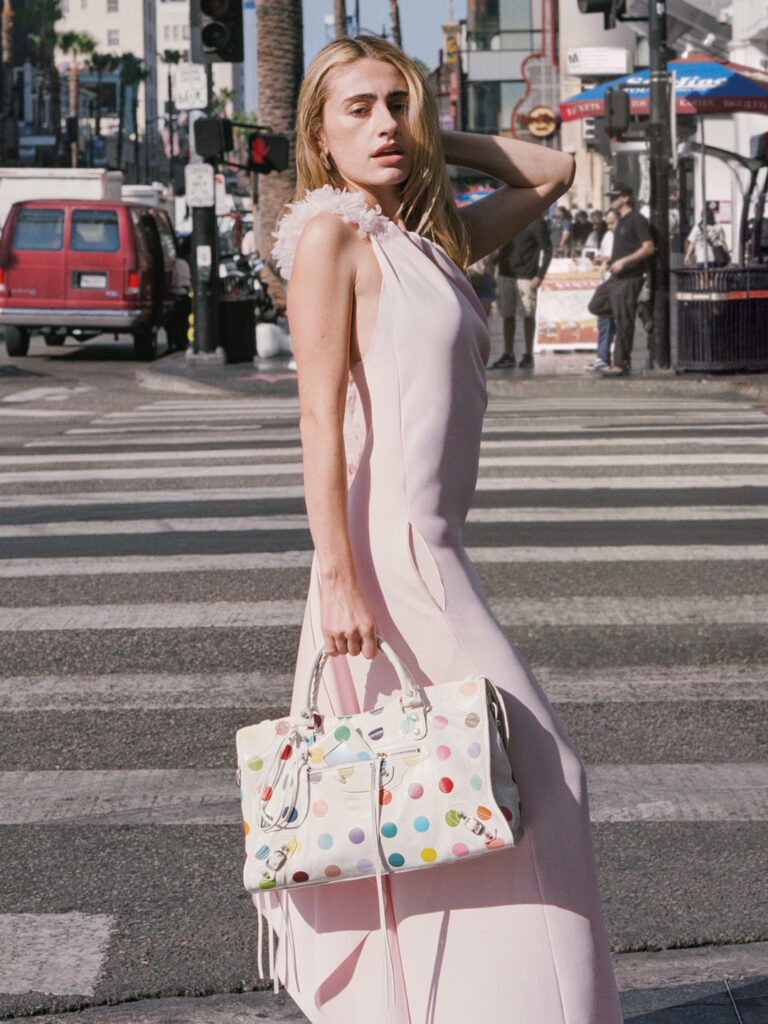
What followed was the original organic campaign. Through the early aughts, the bag was photographed on the arms of Gisele Bündchen, the Hilton sisters, the Olsen twins, Sarah Jessica Parker, Nicole Richie and Carine Roitfeld, creating a media frenzy before any official advertising. In fact, this version of the bag featured in only one campaign, shot by David Sims in 2006. It had no overt logo and enough room for the new portable technology of the day, so journalists gave it a name that stuck: the Anti It Bag. There was no hashtag, no brand deal and no styling brief, only a paparazzi frame, repeated until it became a look.
Heritage is a conversation, and every Balenciaga creative director since Ghesquière has done something with the Le City. Demna rearticulated its codes first as the sleek Neo City and later as the maximalist Le Cagole. The bag’s official return came in 2024, with a campaign starring one of its first champions, Kate Moss. Subsequent campaigns recognized something about its audience: in January 2025, one used altered vintage paparazzi shots, finished with a watermark that echoes stock-photo sites. Another brought in Paloma Elsesser, Devon Lee Carlson and Dixie D’Amelio, a cast aimed squarely at the generation that found the bag on resale platforms and Tumblr nostalgia long before it came back to stores.
Then came Pierpaolo Piccioli. Le City made its official runway debut in his first collection for the house, reworked for Summer 26 with a softer structure and lighter construction, and it anchored his first campaign, again photographed by Sims. If you read that as a full-circle moment, the house certainly does.
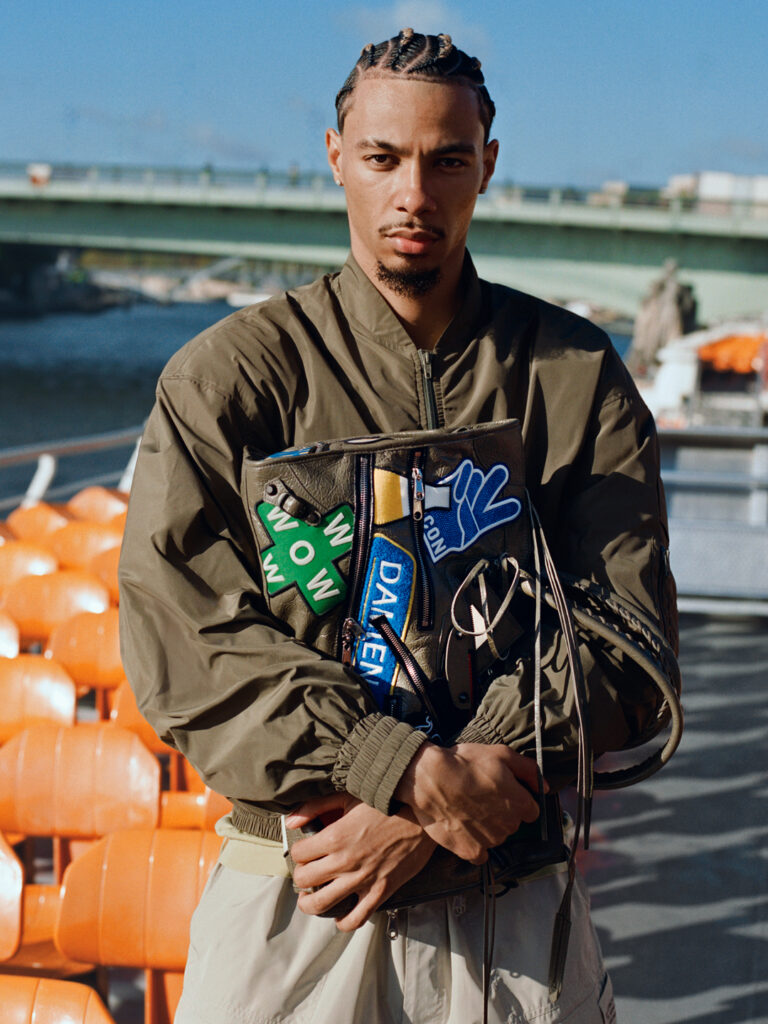
The Hirst capsule opens with a Triple S sneaker made more like a souvenir, its body covered in chenille peace-sign patches and other jokey flim-flam, the kind of graphic miscellany you collect while traveling. Highsnobiety called the occasion a celebration of more than a handbag, and the press materials agree: the people are the point. The anniversary honors designers, early instigators and a new generation of friends, with collectors’ ephemera sharing the stage with the archive.
That framing may be the smartest thing about it. A generation that shops resale, hunts for vintage references and treats a bag’s history as part of its value does not need to be sold a logo. It needs a lineage, and a house that can show where a piece came from, who carried it, and how it changed. Le City, a bag with almost no branding, turns out to be a very effective way of telling that story.
Cristóbal Balenciaga founded his house in 1917 and, as the historian Mary Blume put it, he didn’t follow the scene because he was the scene. A quarter-century later, his house’s most unlikely best-seller shows that lesson still holds. Le City arrived with no logo to chase and no trend to follow, and it was picked up by the people who actually wore it. Twenty-five years on, the idea is the same: a point of view, a very good zipper pull, and enough confidence to let the rest follow.