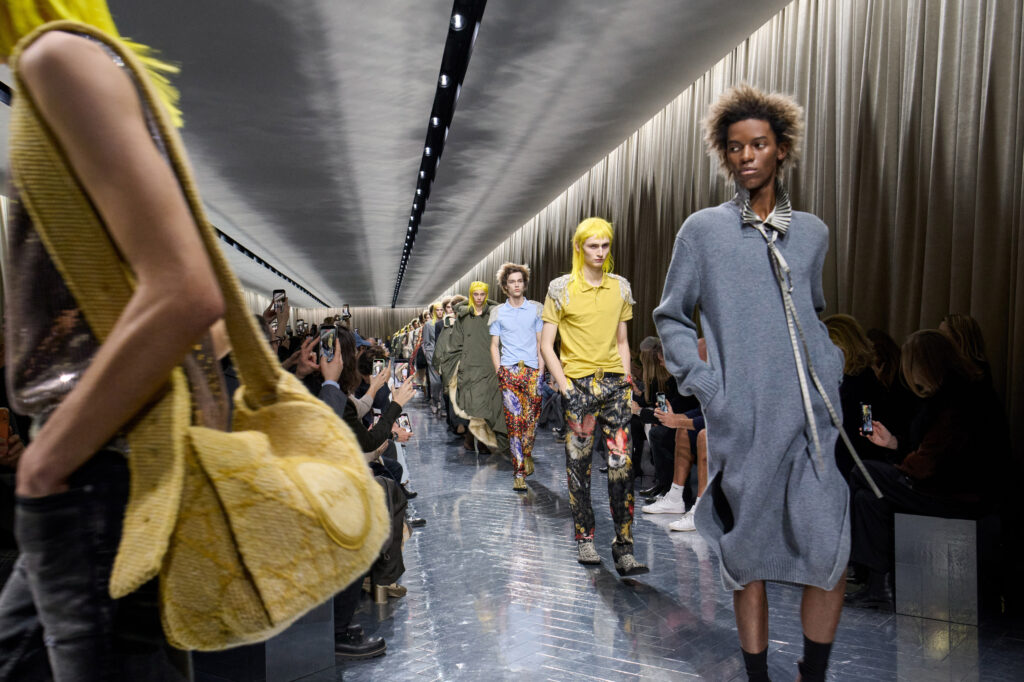
There was a time, not so long ago, when Fashion Weeks were vibrant stages of innovation, global crossroads where creativity flourished, and emerging talent found its voice. A moment when, as many have rightly observed, “people had even briefly an international stage.” Today, much of that magic seems to have faded, swallowed by commercial agreements, increasingly extravagant productions, and an understandable yet overwhelming focus on celebrities. But what exactly have we lost in this transition, and can fashion reclaim its authentic soul?
The Reign of MIV: When Numbers Overshadow Art
The rise of Media Impact Value (MIV), now one of the industry’s most influential metrics, has transformed Fashion Weeks from artistic showcases into highly sophisticated marketing exercises. MIV quantifies the impact of media mentions across social platforms, publications and influencer channels, assigning a monetary value to every interaction. While it provides brands with a clear measurement of return on investment, it has also fueled an intense race for visibility, one that (too) often prioritizes reach over substance.
Recent industry reports have consistently shown that celebrities and influencers generate the largest share of MIV during Fashion Weeks. K-pop stars, global ambassadors, and digital creators frequently outperform the designers themselves in terms of media exposure. This is not inherently problematic. However, when maximizing MIV through celebrity attendance becomes the primary objective, design, craftsmanship, and authentic storytelling risk becoming secondary considerations.
The Celebrity Effect: Spotlight or Shadow?
Celebrity and influencer attendance has become an indispensable part of the modern Fashion Week ecosystem. They provide global visibility, bringing international audiences to collections that might otherwise remain within industry circles. Yet this dependence comes at a cost.
Runway shows are increasingly at risk of becoming social spectacles where garments serve as accessories to the celebrities wearing them, rather than the focal point of the event. The debate remains unresolved: are celebrities a necessary bridge to a wider audience, or have they become a veil obscuring fashion’s true essence?
Interestingly, while celebrities generate significant media value, authenticity drives consumer behavior more effectively. Among Gen Z consumers in particular, influencers frequently inspire stronger purchasing intentions because they are perceived as more relatable and credible. This suggests that while celebrities deliver scale, authentic voices create deeper engagement and more meaningful connections. The challenge for Fashion Week lies in balancing star power with a genuine commitment to design and creative integrity.
Beyond “Show Dressing”: Rediscovering Storytelling
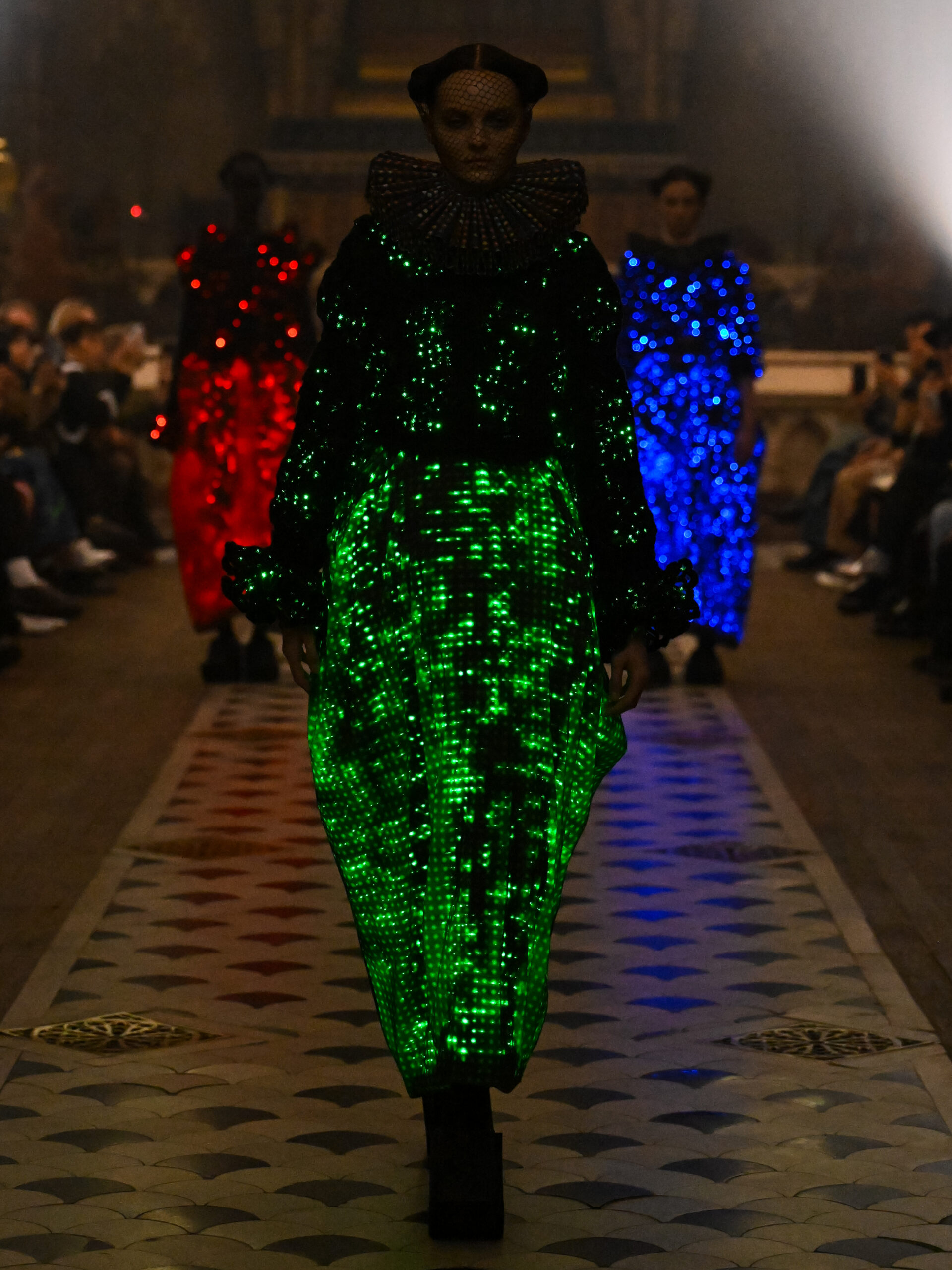
The concept of “show dressing” evokes increasingly elaborate and expensive productions designed to captivate audiences and generate viral content. Yet these spectacles can sometimes overshadow the collections themselves.
At its core, fashion is storytelling. It is the narrative of a designer, an inspiration, a cultural dialogue, and a creative process. When that narrative becomes buried beneath excessive theatricality or marketing-driven priorities, fashion loses a fundamental part of its identity.
Fashion Weeks were originally conceived as platforms where designers presented their visions, buyers placed orders, and journalists interpreted emerging trends. Today, their purpose has become fragmented. They exist simultaneously as business platforms and consumer entertainment, as artistic expressions and commercial vehicles, as exclusive industry gatherings and globally accessible digital events. This complexity demands a deeper reflection on how priorities should be rebalanced.
The Future: A Return to Humanity or a New Evolution?
The question is not whether Fashion Weeks should eliminate celebrities and influencers. Rather, it is how they can incorporate them without sacrificing their essence.
Maybe the answer lies in a more thoughtful and intentional approach:
- Rigorous Curation: Selecting celebrities and influencers not solely for their reach but for their genuine alignment with a brand’s values and their ability to communicate a designer’s vision authentically. Included a true devotion and knowledge of the brand itself.
- Spaces for Pure Creativity: Creating dedicated environments within Fashion Week where craftsmanship, innovation, and design take center stage, away from the pressures of instant media performance.
- Multidimensional Storytelling: Using digital platforms not only to amplify visibility but also to explore the stories behind collections, creative processes and fashion’s cultural significance.
- Empowering Designers: Returning designers to the center of the conversation and celebrating their vision as the industry’s most valuable asset.
The Fashion Weeks of the future should not be forced to choose between art and commerce, exclusivity and accessibility. They must learn to reconcile them. The goal should be an ecosystem where authentic creativity can thrive, where the international stage remains a place of discovery, and where the emotional power of fashion continues to resonate far beyond any MIV score.