
|Story by Editor-in-Chief Carolina Ogliaro
There is a particular challenge in translating Italianità without slipping into caricature. Too often, the visual shorthand is immediate and expected, a cypress here, a marble fountain there, a sign toward Renaissance grandeur polished into something decorative and harmless. What is rarer, and considerably more difficult, is finding a way to make heritage feel unsettled again: alive, unresolved, in conversation with the present, rather than embalmed by it.
This is the tension that animates Giardino all’Italiana, the new wallcovering project designed by Matteo Menotto for CO.DE Contemporary Design Wallcoverings, the experimental arm of Jannelli&Volpi. Here, what is offered is not a nostalgic tableau of Italy’s most photogenic cultural symbols, but Menotto approaches the Italian garden as an architectural language that is disassembled, fragmented, and rewritten.
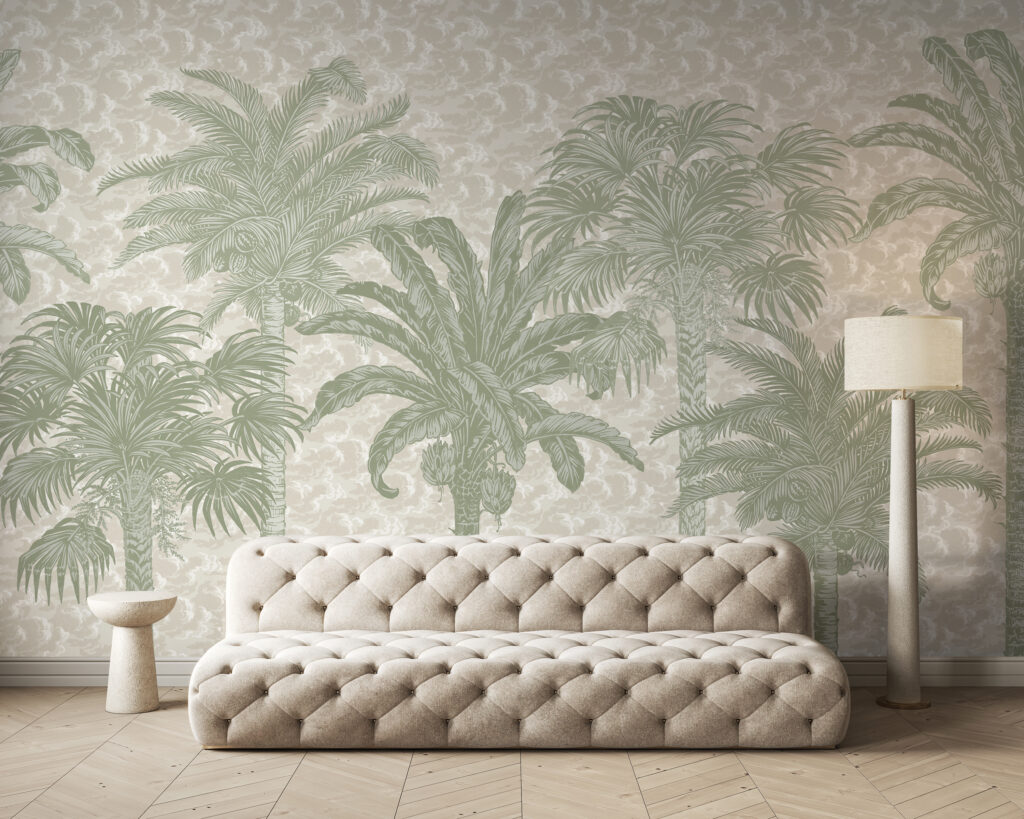
The Italian garden, after all, was never simply about flowers. Born in the Renaissance as a highly coded environment of proportion, perspective, and intellectual control, it represented one of Italy’s earliest expressions of domesticated infinity: nature disciplined into geometry, landscape transformed into philosophy. Entrances were designed as thresholds of anticipation; belvederes framed not only views but authority over the horizon; labyrinths suggested both play and disorientation; nymphaea carried the cool theatricality of myth; fountains performed movement as ornament. These were gardens intended to be read as much as admired.
Menotto understands this and wisely avoids reproducing them as literal scenery.
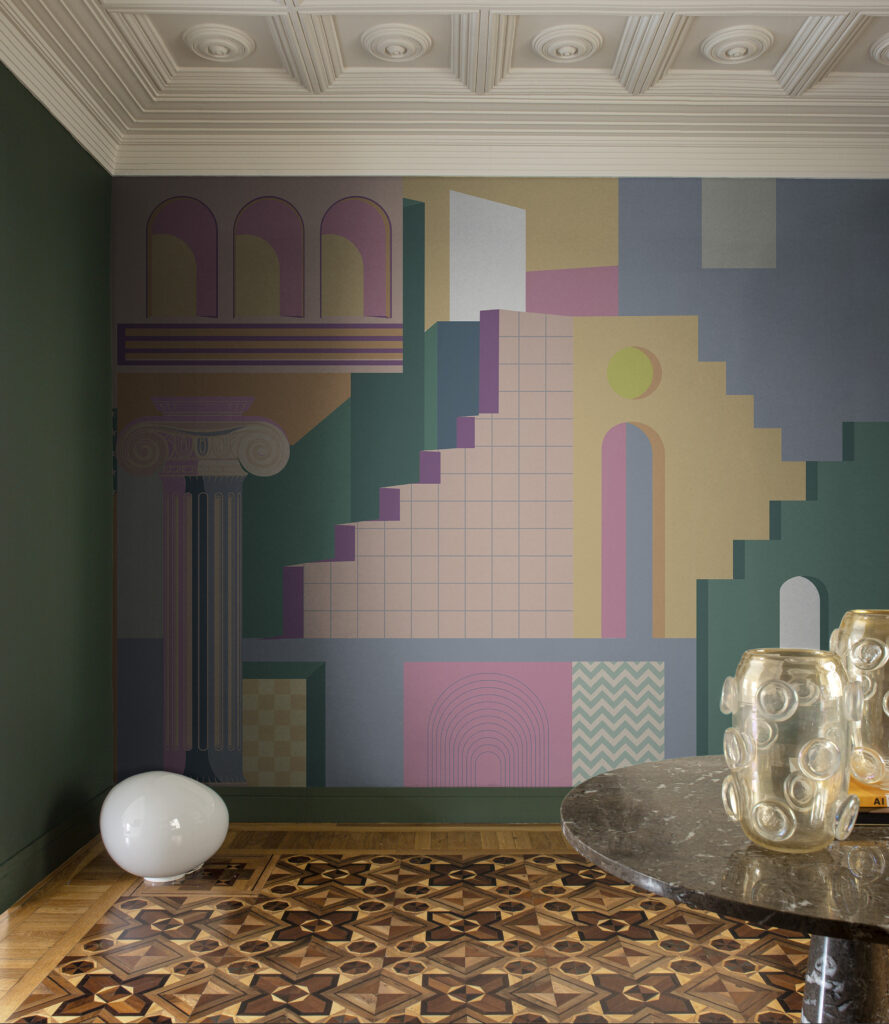
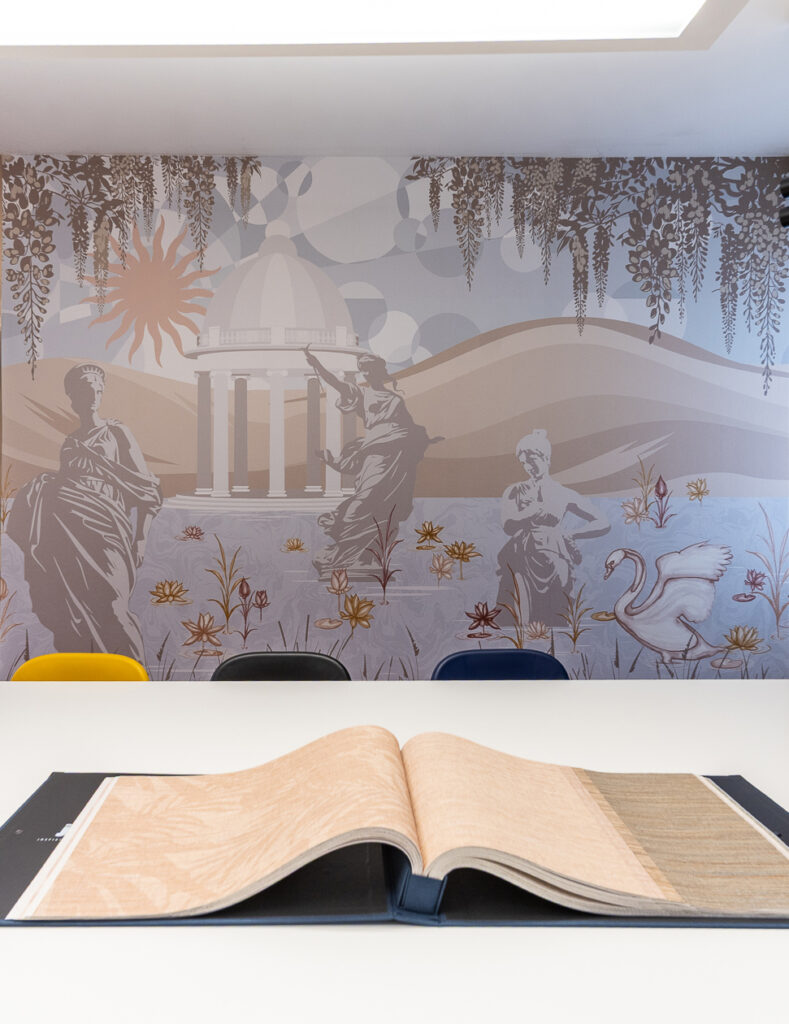
Instead, Giardino all’Italiana behaves like an archaeological collage. Classical Renaissance engravings dissolve into abstract silhouettes; ornamental details are enlarged beyond recognition; vegetal motifs appear interrupted, almost windblown; symmetry is preserved only to be subtly destabilized. The eye recognizes fragments of inherited Italian iconography but never settles into passive familiarity. This is true heritage presented as material.
And that distinction matters.
Because what arose from the collection is not wallpaper in the conventional sense of domestic backdrop but a form of spatial narrative, walls that do not contain a room but insist on participating in it. The five symbolic zones of the historical giardino all’italiana become immersive visual chapters, translated into monumental panoramas and repeat motifs where memory and distortion coexist. One sees the past but through the lens of digital manipulation, graphic interruption, and chromatic exaggeration.
Particularly striking is the treatment of the fountain, positioned as the emotional nucleus of the collection. Traditionally, the theatrical heart of the Italian garden, a site of reflection, surprise, and hydraulic virtuosity, here it is rendered in fluid, almost kinetic compositions. Water is no longer a fixed sculptural element but a moving graphic force, interacting with architecture and foliage in layered rhythms that feel closer to contemporary visual art than decorative design. It suggests freshness and impermanence: the idea that beauty is something in motion.
That is absolutely Menotto’s deepest act. He does not ask the viewer to admire Italy’s past, but he asks what can still be extracted from it.
The phrase that hovers over the collection, “the past speaks to us,” could easily have sounded like a sentimental cliché. Yet in this context, it reads differently, not as reverence but as a matter of insistence. The past is not behind us, neatly archived in villas and museums, but beside us, interrupting contemporary aesthetics whether we acknowledge it or not. Menotto treats history not as an image bank but as an active collaborator.
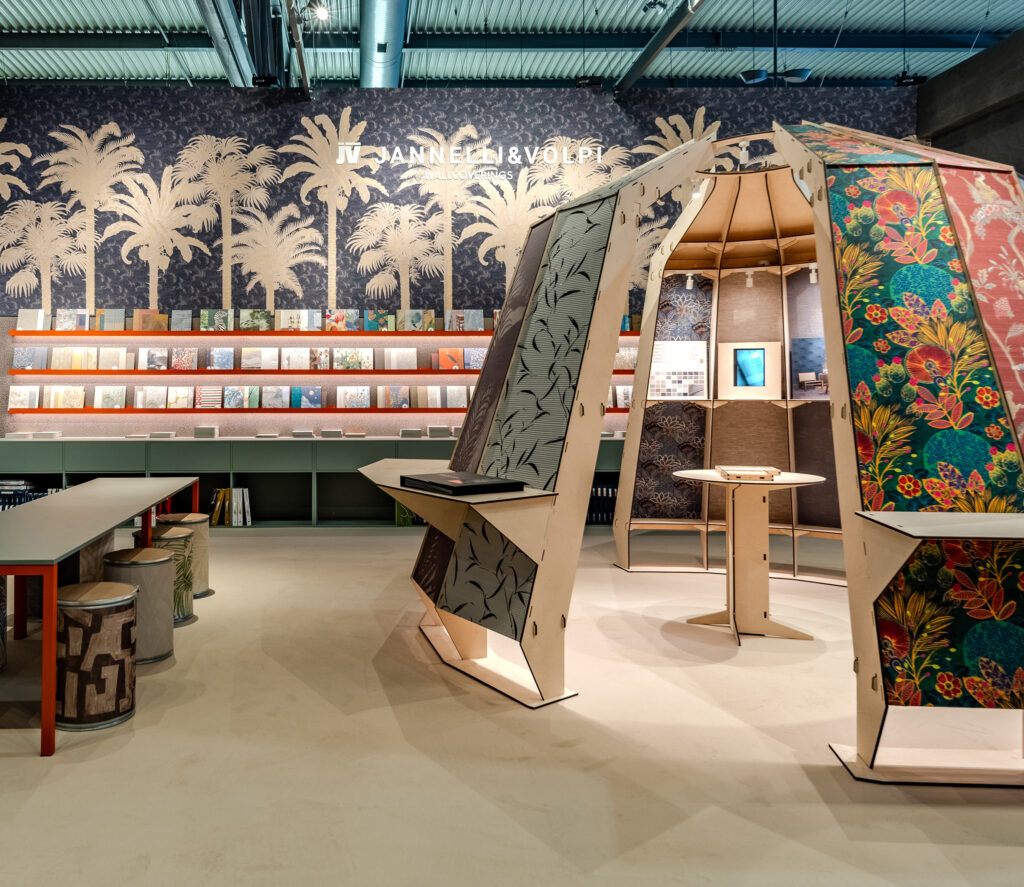
The materiality of the project reinforces this refusal of flat nostalgia. CO.DE’s technical vocabulary, fifteen print substrates ranging from raffia, silk, and linen to vinyl and high-performance PVC-free supports , allows the imagery to shift according to tactile context, while layered inks and textured finishes create visual depth that resists the smoothness of mere digital print. Even functionality enters the equation through the brand’s JV Wet System, a waterproofing and antibacterial treatment that permits these highly artistic surfaces to exist in humid environments, showers, spas, and saunas without compromising chromatic integrity.
Which is to say: this is decoration with infrastructure.
And that combination feels increasingly relevant in a design landscape split between two extremes, sterile minimalism on one side, historical pastiche on the other. Giardino all’Italiana proposes a third possibility: ornament as cultural inquiry. It understands that maximalism can be cerebral, that beauty can still carry historical density, and that walls, often the most neglected planes of an interior, can become sites of visual thought.
There is something distinctly Italian in this ambition, though not in the obvious postcard sense. Italy’s greatest aesthetic legacy has never been beauty alone but beauty organized by intellect, the ability to make ornament feel rigorous. Menotto taps into that lineage while refusing to freeze it in amber.
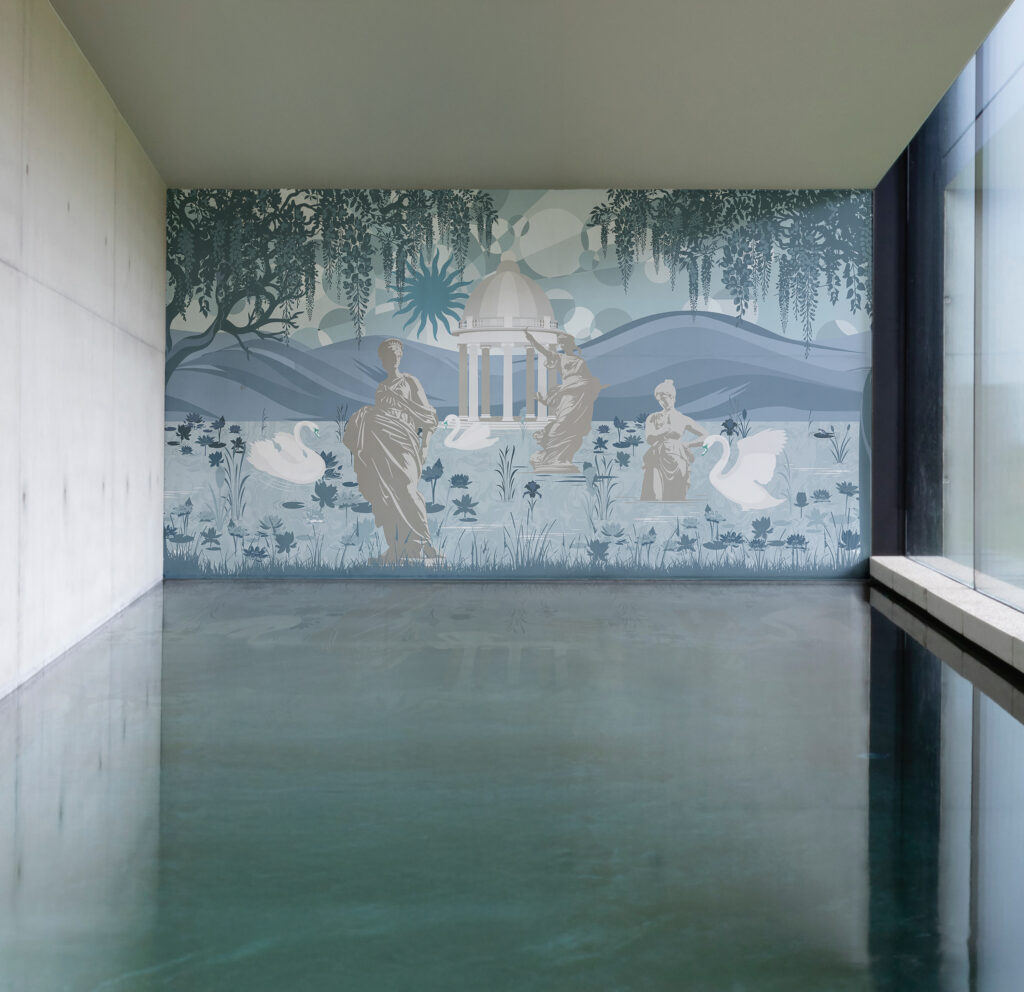
In the end, these wallcoverings do what the finest contemporary design should do: they do not simply embellish a space, but they alter its temperature. They make a room feel haunted, not by ghosts but by centuries of form, memory, water, stone, and human attempts to choreograph nature into permanence.
The wall remembers.And, in Menotto’s hands, it finally learns how to speak again.