Story by Editor-at-Large CAROLINA OGLIARO
On a rain-soaked Parisian afternoon, history was rewritten, not with a rupture, but with a refined recalibration. In his highly anticipated debut as Artistic Director of Dior Men, Jonathan Anderson stepped into one of fashion’s most storied houses and, rather than overturning the table, he rearranged it with wit, precision, and curatorial grace.
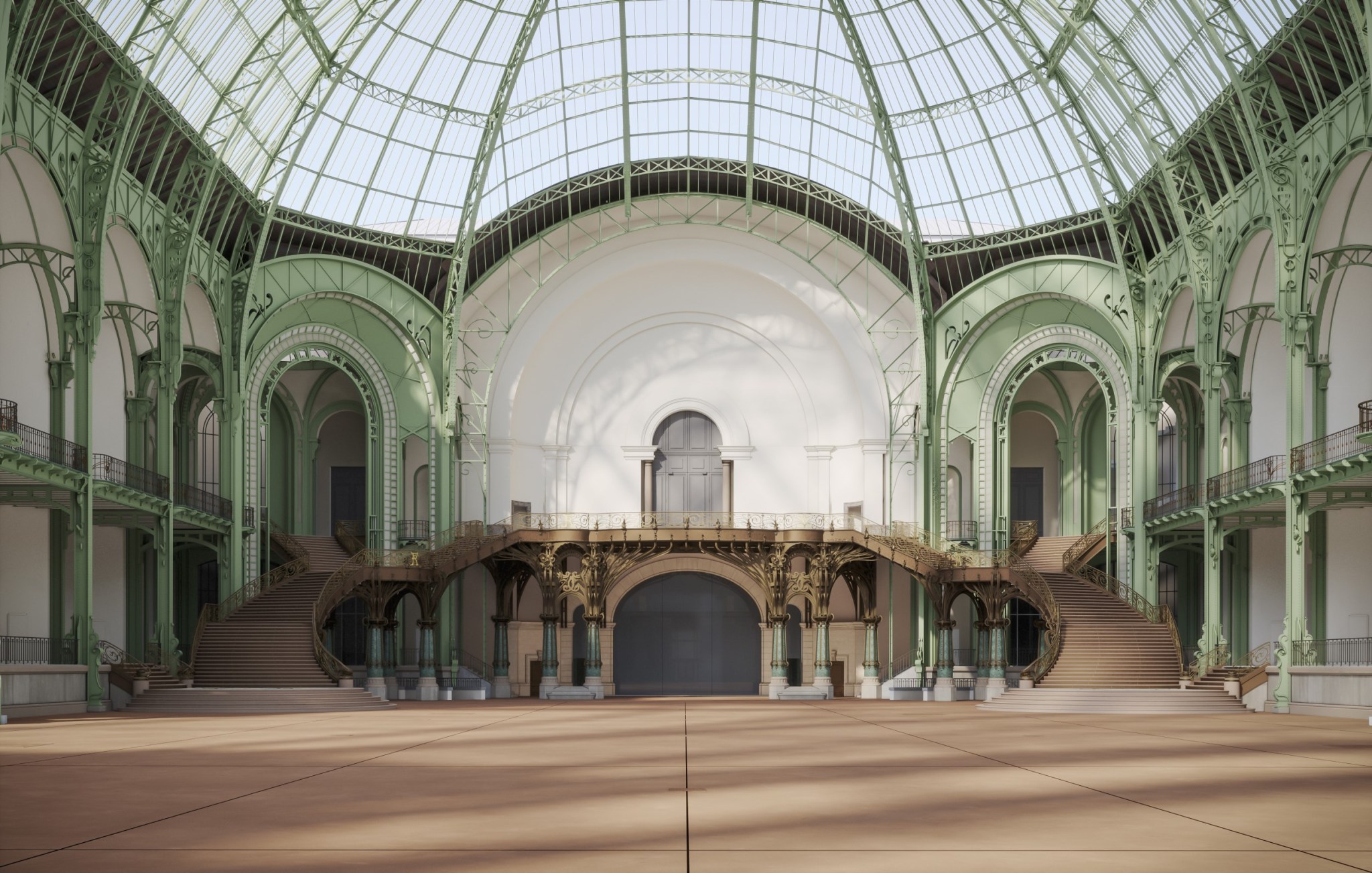
Presented under the gilded dome of Les Invalides, a location as steeped in gravitas as the brand he now helms, the Spring/Summer 2026 collection unfurled like a conversation between time periods, between codes, and between the ghosts of couture and the pulse of now.
The Anderson Method: Quiet Subversion in a Tailored Frame
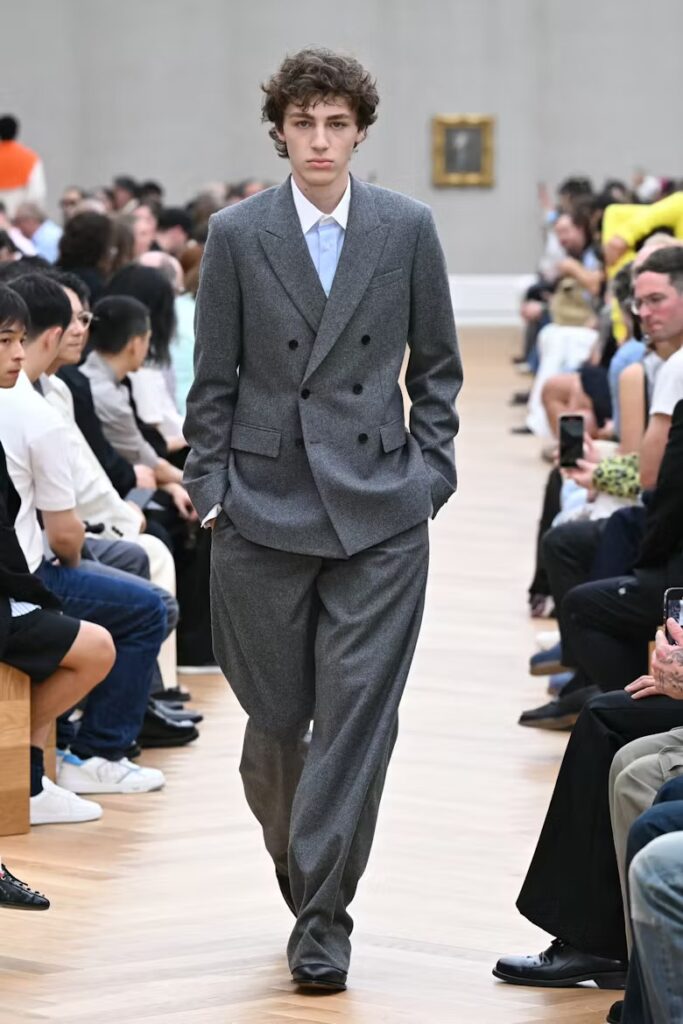
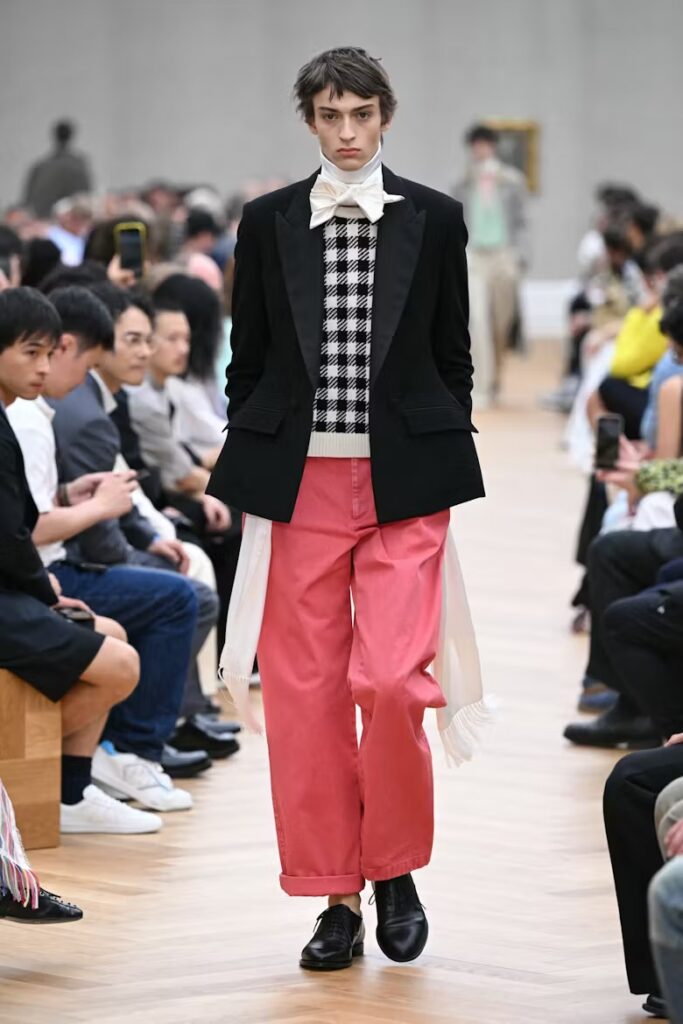
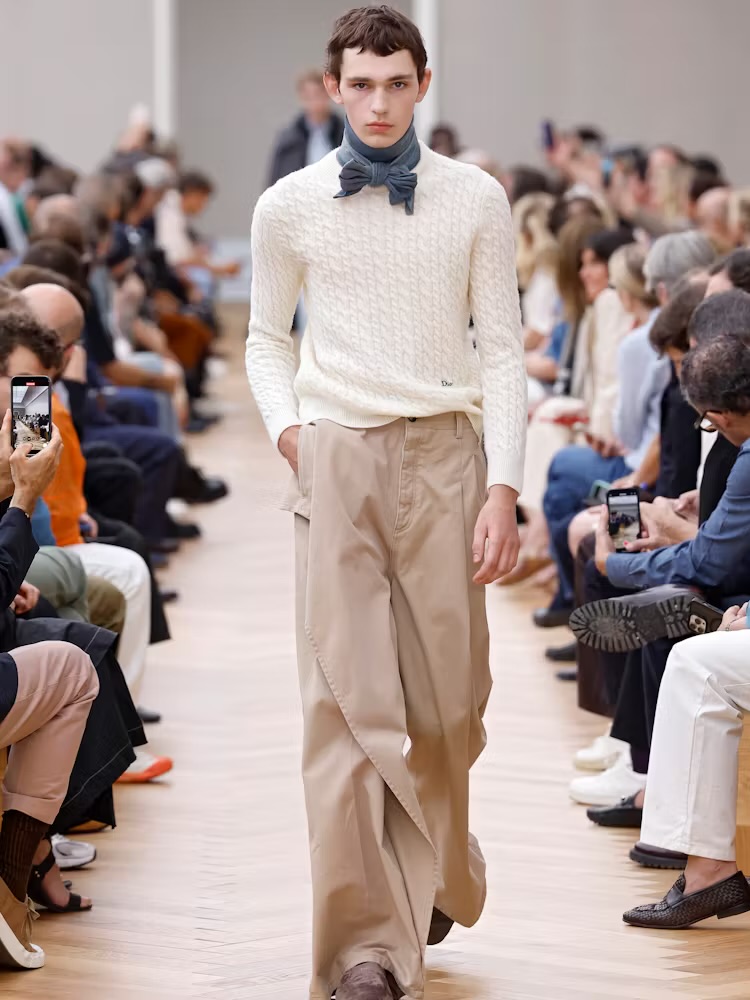
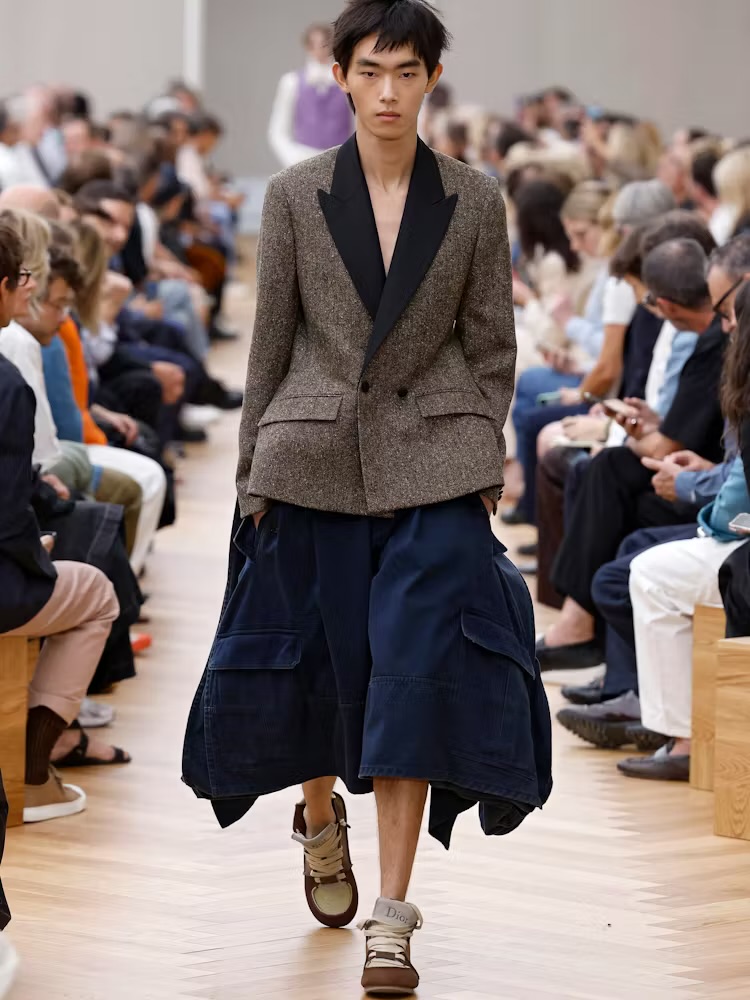
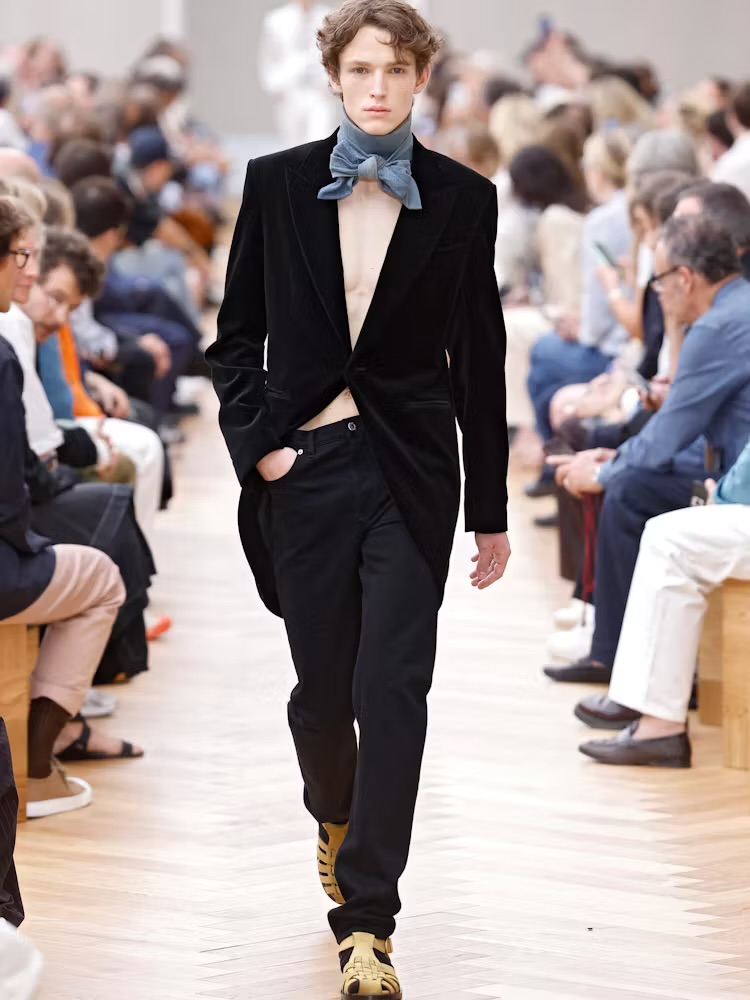
From the first look, it was clear: this was not a designer seeking shock value. Anderson, always a cerebral storyteller, chose instead to let the garments speak with nuance. The Bar Jacket, a pillar of Dior’s post-war rebirth, was refitted for modern masculinity, its nipped waist and curving hips translated into menswear tailoring with sculptural clarity. It wasn’t ironic, nor was it nostalgic. It was investigative. What does elegance look like in 2026? Anderson’s answer: form meets function in silhouettes that honor craft, not costume.
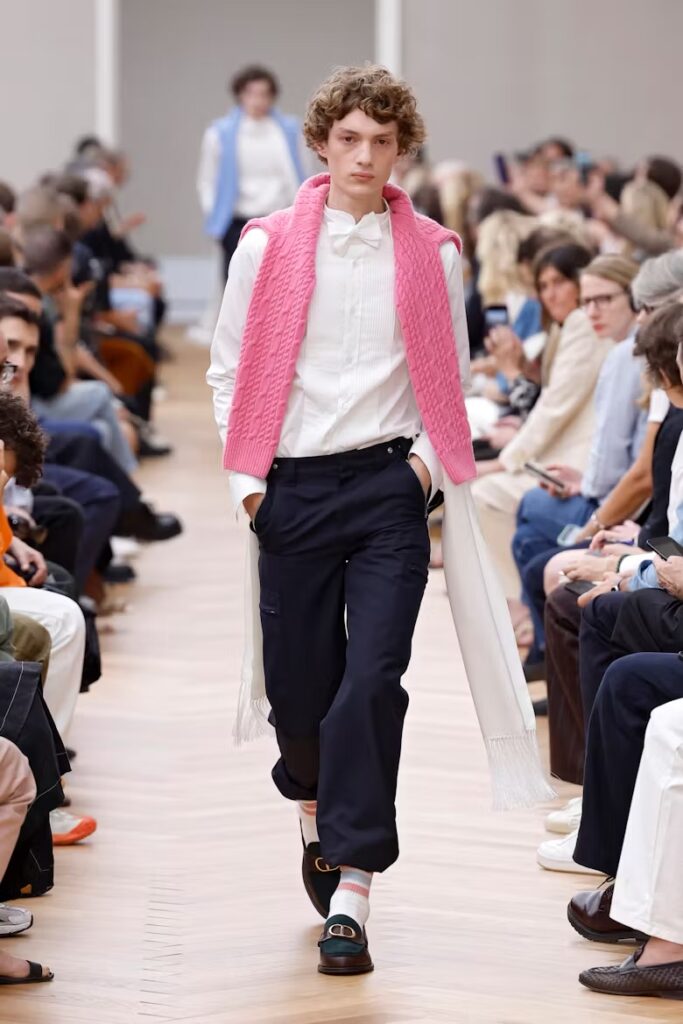
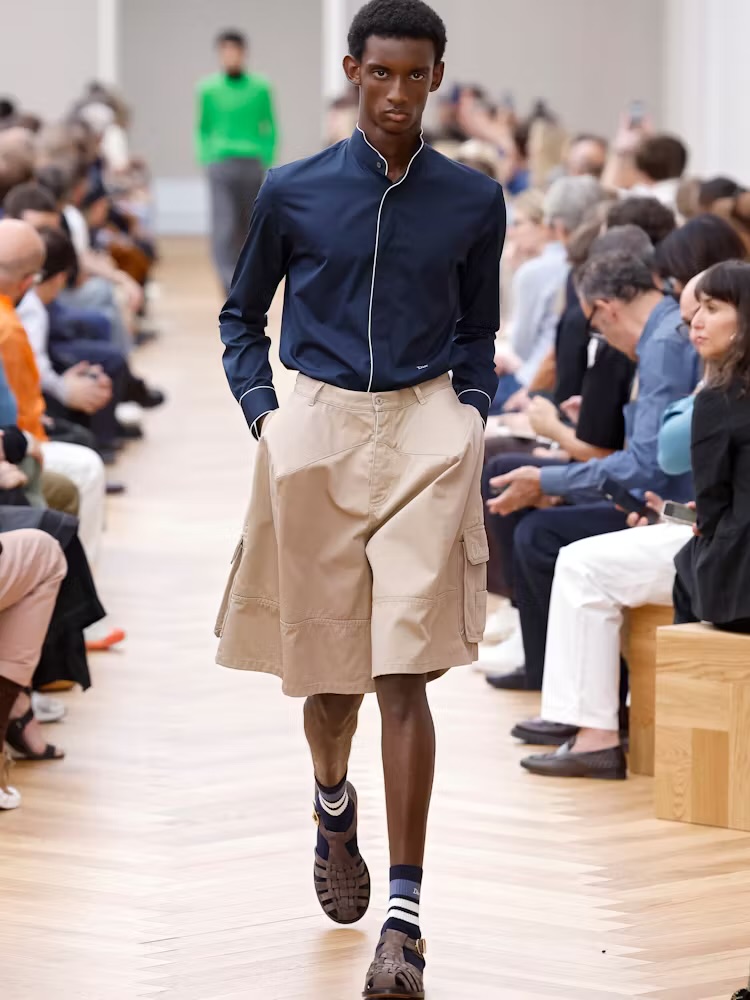
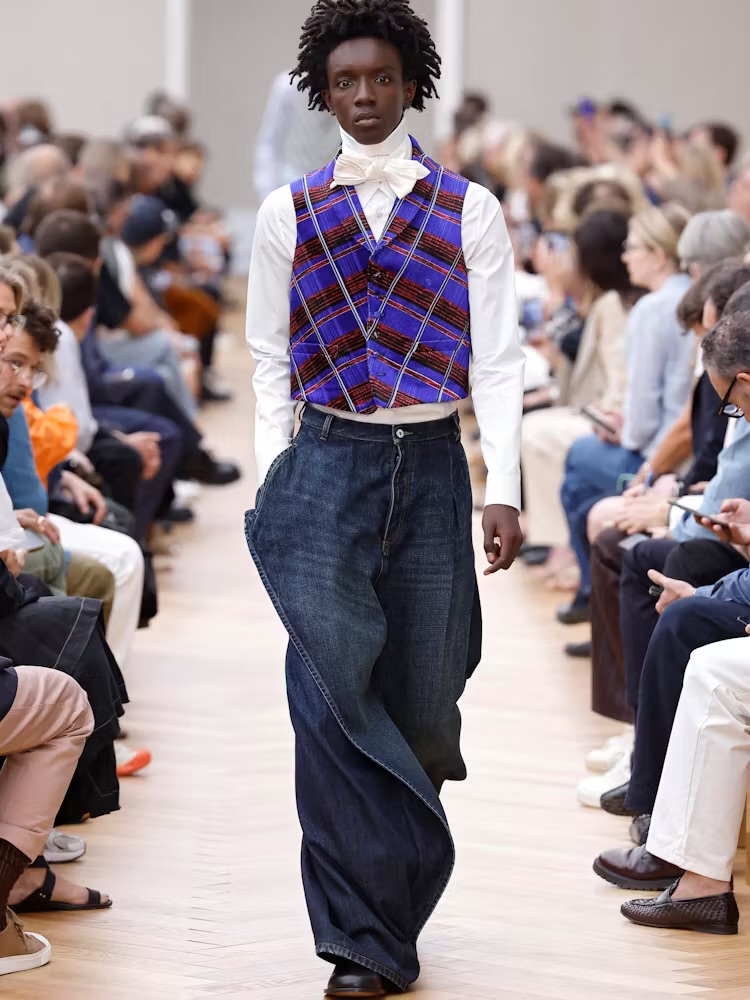
Waistcoats appeared elongated and panniered, not as affectation, but as design proposition. Shorts billowed with volume yet walked with the gravitas of eveningwear. The collection asked questions about proportion, gender, and ceremony, without raising its voice.
The Palette: Poetic, Restrained, Precise
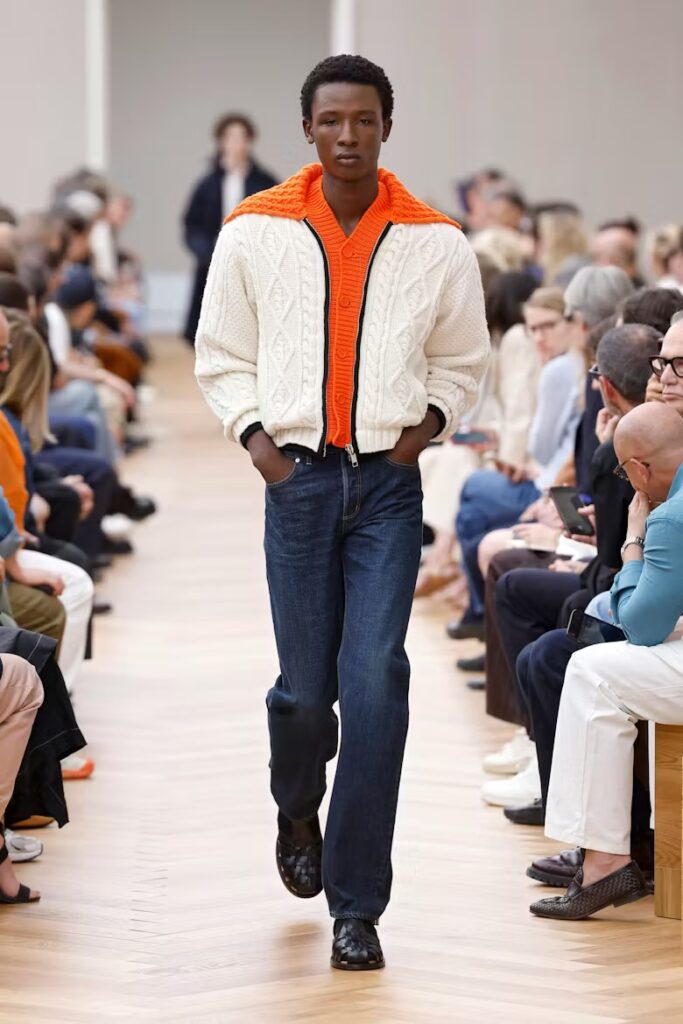
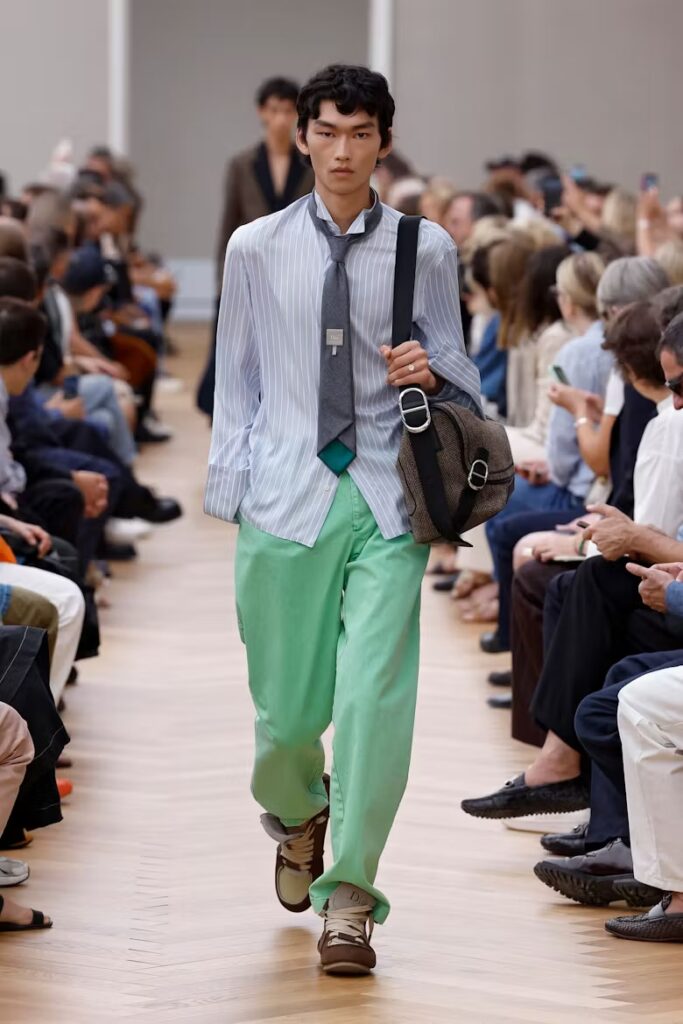
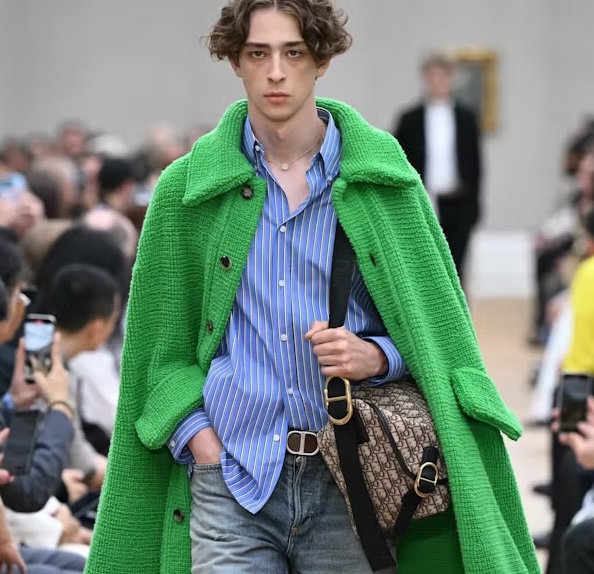
There was a softness to the show that should not be confused with timidity. A palette of mineral greys, soft lilacs, powder blues and mint greens anchored the collection in an emotional register that felt resolutely adult, almost painterly. It suggested subtle power, not dominance, but presence.
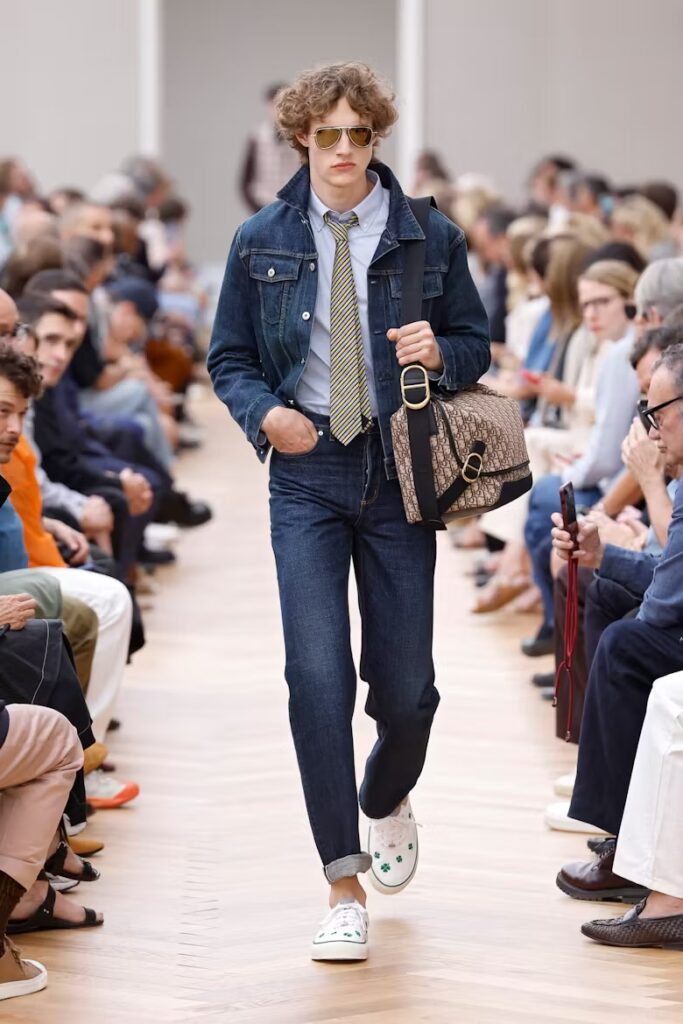
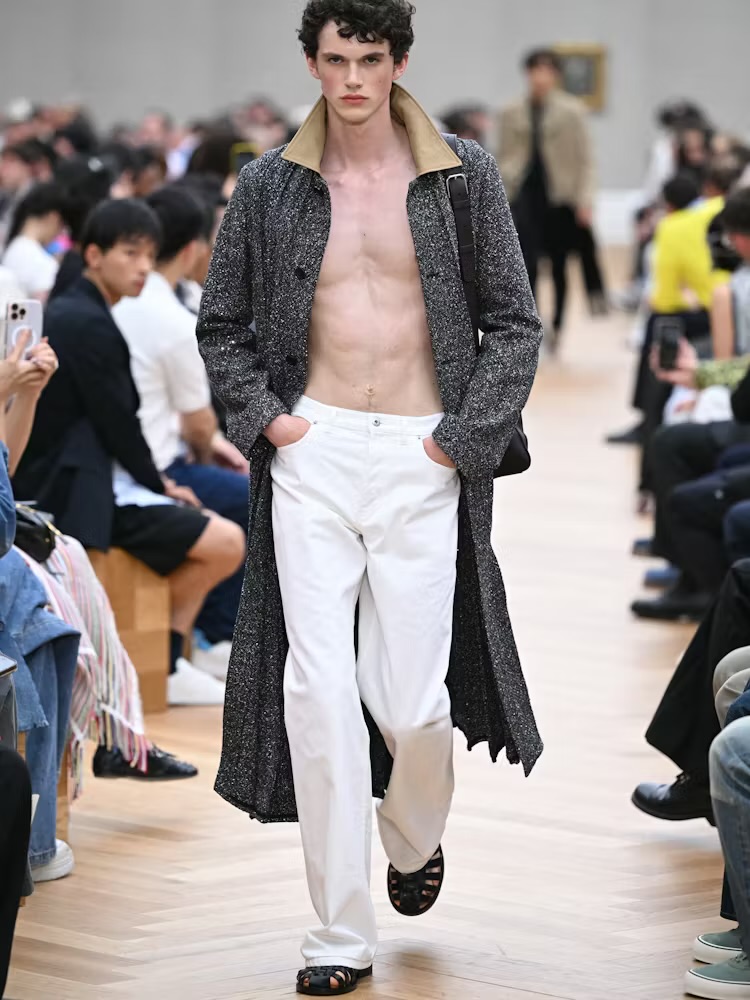
Fabrics told their own story. Moiré silks, Prince of Wales checks, washed denim, and hand-embroidered canvas gave the collection texture both literal and conceptual. The craftsmanship whispered rather than shouted, a confident choice from a designer who knows his hand is steady enough to let the house speak.
Accessories as Semiotics
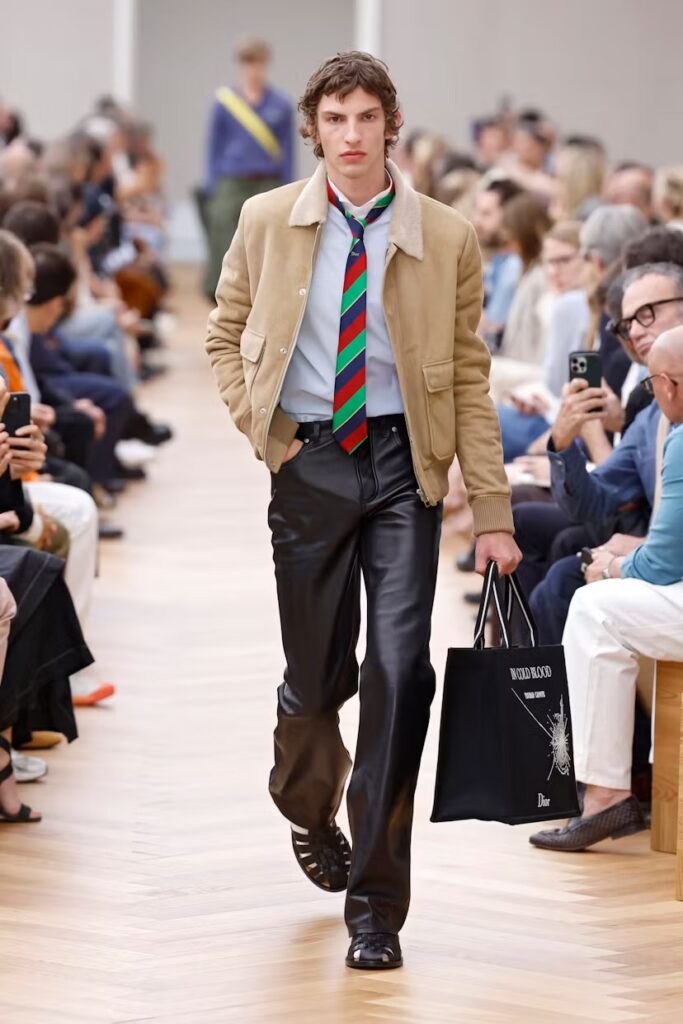
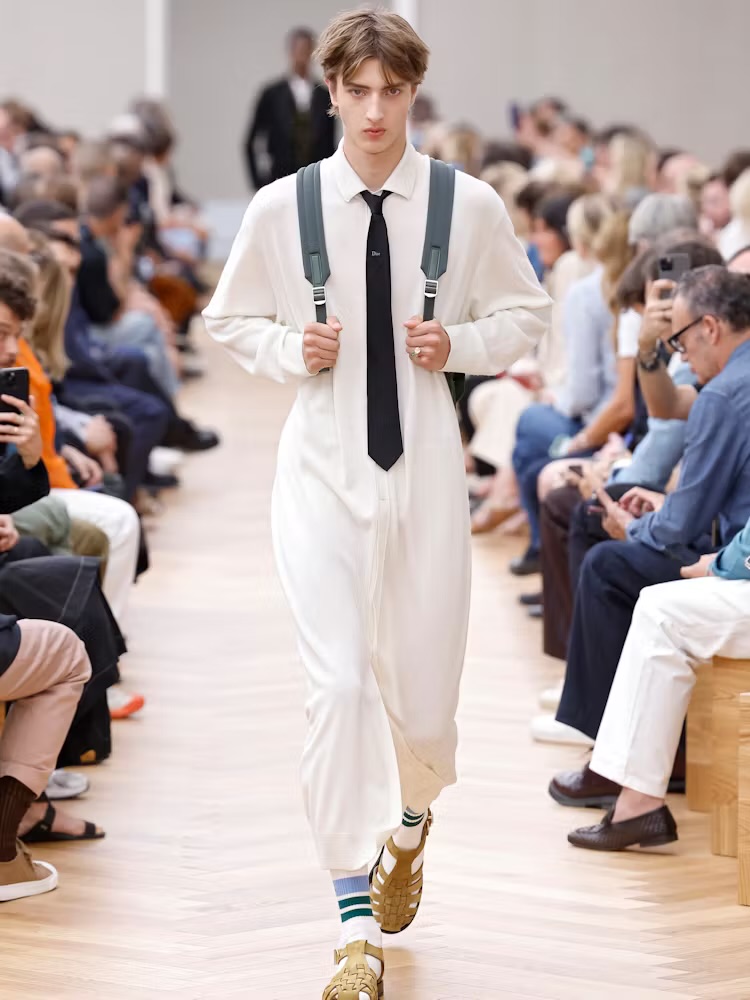
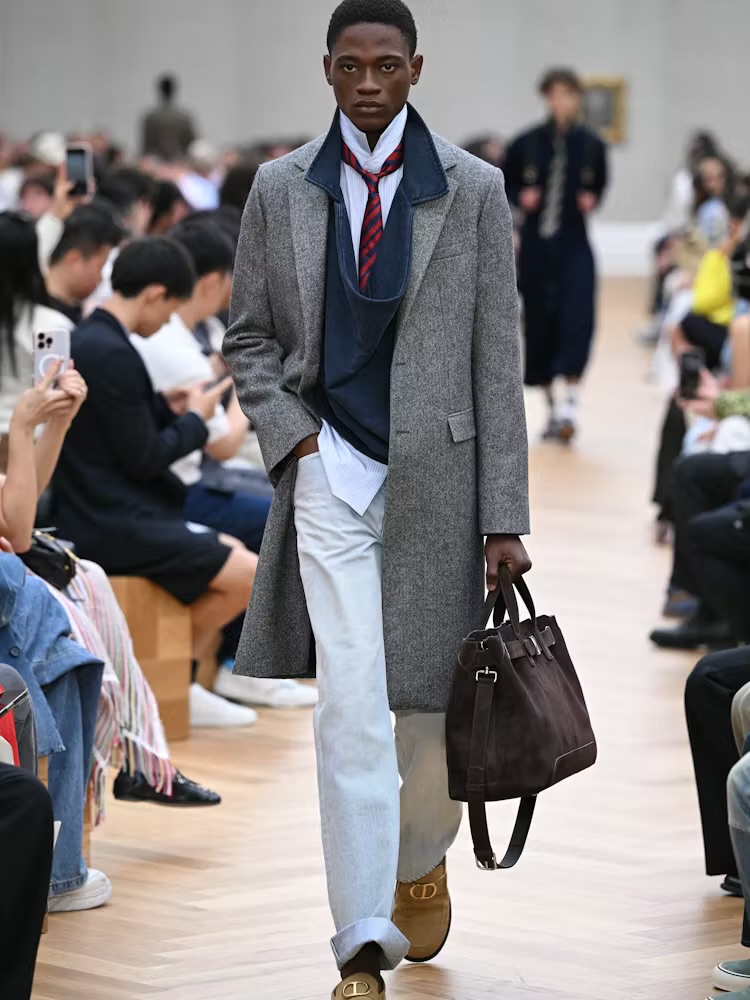
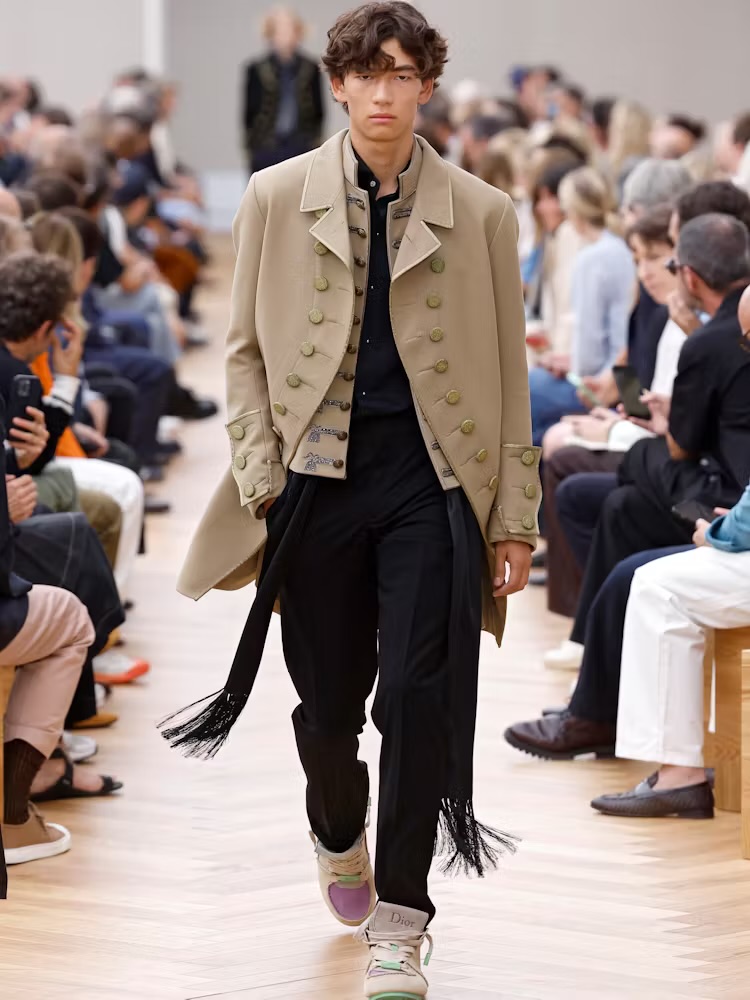
Anderson’s Dior doesn’t see accessories as afterthoughts, they are punctuation. Flat-top leather satchels evoked schoolboy rigour with adult restraint. The iconic Saddle Bag was deconstructed and stiffened, now almost architectural. Footwear ranged from brogues with vibram soles to hybrid moccasin-sneaker hybrids, resolutely grounded, but never predictable.
And then there were the ties, sometimes worn backward, other times tucked like secret codes beneath waistcoats. In Anderson’s Dior, even a tie is an act of narrative.
References and Reverence
There was something thrilling about the way Anderson folded in historical cues, not as decoration, but as dialogue. The influence of 18th-century court dress was refracted through a contemporary lens: pannier-like structures, decadent draping, and jacquards reminiscent of upholstery were recontextualized, not replicated.
But this was not a pastiche. It was a live conversation between eras, expressed in tailoring and tempered by irony. No powdered wigs here, just silhouettes that hint at decadence without indulging in parody.
A New Masculinity: Complex, Romantic, Unrushed
Anderson’s vision of masculinity for Dior is not binary. It is not hypermasculine nor aggressively fluid. It is complex, inquisitive, reflective. The collection embraced vulnerability without spectacle. It invited men to dress with curiosity, to play with volume, and to consider proportion as an expression of self.
This is menswear for the man who doesn’t need to overstate who he is. For the man whose elegance lies in his ability to hold contradictions, formal and casual, historic and new, romantic and intellectual, all in one silhouette.
The Verdict: Not a Reinvention, But a Refined Rewriting
If one expected a rupture, Anderson offered instead a resonance. His debut was not about reinventing Dior, it was about reading it deeply, and then annotating it with intelligence and respect. In a time where fashion often confuses noise with impact, Anderson reminded us that influence can come in whispers.
There’s a reason Kim Jones left such large shoes to fill at Dior Men. But Anderson, in his typically oblique manner, didn’t try to step into them. He built his own. And in doing so, he laid the foundation for a new chapter, one defined by craft, vision, and intellectual clarity.
Jonathan Anderson’s Dior is not trying to be everything to everyone. It is trying to be something true. And in that truth lies its brilliance.